7 Best Adjustable Loom Stands for Ergonomic Posture
Improve your weaving comfort with our top 7 adjustable loom stands. Discover ergonomic designs that reduce strain and boost productivity for every weaver.
Weaving, much like long-session knitting, is a craft that demands hours of repetitive motion, often leading to neck strain and shoulder fatigue. A high-quality adjustable loom stand transforms your workspace from a cramped kitchen table setup into a professional-grade studio environment. By raising your warp to the correct height, you protect your posture and extend the longevity of your weaving practice. Investing in the right support system is just as vital as choosing the correct reed or shuttle for your project.
KB Looms Adjustable Universal Loom Stand


The KB Looms Adjustable Universal Loom Stand is a workhorse designed for versatility, particularly for those who transition between different loom sizes. It features a sturdy, multi-positional frame that allows you to tilt your loom to the exact angle needed to prevent hunching over your work.
Because it is designed to be "universal," it accommodates a wide range of frame looms, making it a smart choice if your studio space is limited. You can adjust both the height and the tilt, which is crucial when you are working on a long warp and need to maintain a clear line of sight to your shed.
However, keep in mind that universal stands often require more frequent tightening of knobs and bolts compared to dedicated, brand-specific stands. If you find yourself constantly adjusting the angle, keep a small hex key or screwdriver nearby to ensure everything remains rock-solid.

Ashford Universal Craft Loom Stand Review

Ashford is a gold standard in the fiber arts world, and their Universal Craft Loom Stand reflects that reputation for durability. It is built from beautiful, solid silver beech wood that feels substantial and stable under the weight of a heavy warp.
What I appreciate most is the thoughtful design of the cross-bracing, which provides excellent lateral stability. When you are beating your weft firmly into place, you do not want your loom wobbling or shifting, as this can lead to uneven tension across your fabric.
This stand is particularly effective for those who use rigid heddle looms for long-duration projects like blankets or yardage. It offers a wide range of height adjustments, allowing you to sit in your favorite ergonomic chair rather than forcing yourself to adapt to the loom.
Schacht Flip Rigid Heddle Loom Stand

The Schacht Flip stand is specifically engineered to integrate seamlessly with the Flip rigid heddle loom, creating a unified, stable system. It is remarkably easy to assemble, and once it is locked in, it feels like an extension of the loom itself.
The standout feature here is the integrated foot pedal system that can be added, allowing you to control the shed with your feet. This mimics the mechanics of a floor loom, significantly reducing the amount of repetitive arm movement required during a long weaving session.
If you are a weaver who struggles with shoulder tension, the ability to offload the shedding process to your feet is a game-changer. It allows you to keep your posture neutral while your hands focus purely on the rhythmic passing of the shuttle.
Kromski Harp Forte Loom Stand Features

The Kromski Harp Forte stand is as aesthetically pleasing as it is functional, featuring the signature European styling of the Kromski brand. It is designed to hold the Harp Forte loom securely, providing a steady base that handles the tension of even the tightest warps.
One of the most practical aspects of this stand is its ability to fold up with the loom attached. For weavers living in apartments or sharing a craft room, being able to tuck your loom away without having to disassemble the stand is a massive logistical advantage.
The height adjustment is intuitive, though it relies on a pin-and-hole system that is very secure but slightly less granular than a sliding track. It is a fantastic choice for the weaver who wants a reliable, beautiful piece of equipment that doesn’t dominate the room when not in use.
Leclerc Adjustable Floor Loom Stand
Leclerc is synonymous with professional-grade, heavy-duty equipment, and their adjustable floor loom stands are built to last a lifetime. These stands are heavy, which is a major advantage for preventing movement during the vigorous beat of a heavy rug or tapestry.
The adjustability here is geared toward precision; you can dial in the exact height and tilt to match your body’s unique geometry. This level of customization is essential if you have pre-existing back or neck issues that require a very specific ergonomic alignment.
While these stands are a significant investment, they are the "buy it once" option for serious weavers. They provide a level of structural integrity that allows you to tension your warp as tightly as your fiber allows without worrying about the stand buckling under the pressure.
Glimakra Standard Loom Bench and Stand
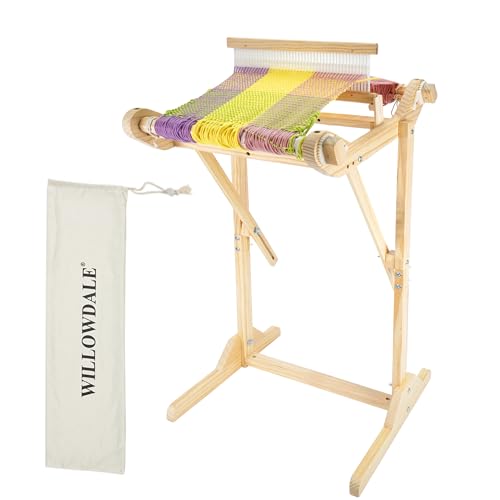
Glimakra is the gold standard for traditional Scandinavian weaving, and their benches and stands are designed for the dedicated weaver who spends hours at the loom. The bench is just as important as the stand, as it provides the foundation for your entire ergonomic experience.
The Glimakra system is designed to keep your feet flat on the floor and your knees at a comfortable 90-degree angle. This is the "goldilocks" position for weaving, as it encourages you to sit upright rather than slouching toward the breast beam.
When you pair a high-quality stand with a bench that allows for height adjustment, you eliminate the "weave-hunch." This setup is ideal for those working on complex patterns that require intense concentration and long, uninterrupted periods at the loom.
Mirrix Loom Treadle Stand and Setup
Mirrix looms are unique because they are vertical, which changes the ergonomic requirements entirely. The treadle stand is a specialized piece of equipment that allows you to operate a vertical loom with foot pedals, keeping your hands free for intricate beadwork or tapestry weaving.
The setup can be a bit more involved than a horizontal loom, but the payoff is a significantly more efficient workflow. By using your feet to switch sheds, you cut your physical effort in half and allow for a much faster, more rhythmic weaving pace.
If you are doing fine-gauge tapestry or bead weaving, this stand is essential for maintaining your focus. It keeps your hands in the "sweet spot" of the warp, preventing the fatigue that comes from constantly reaching up or down to change your shed manually.
Why Ergonomic Posture Matters for Weaving
Weaving is a repetitive motion sport, and without proper ergonomics, you risk developing chronic strain in your wrists, shoulders, and lower back. Just like a knitter who ignores their tension or needle grip, a weaver who ignores their posture will eventually pay the price in physical pain.
Your goal should be to keep your spine neutral and your shoulders relaxed, with your elbows close to your sides. If you are constantly reaching forward to reach the shed or hunching your neck to see the warp, you are putting unnecessary stress on your muscles and tendons.
Investing in an adjustable stand is not just about comfort; it is about longevity. By setting your loom to the right height, you ensure that you can continue to enjoy your craft for decades without the limitations of repetitive strain injuries.
How to Adjust Your Loom Stand for Comfort
Start by sitting in your regular weaving chair and noting where your hands naturally rest when you are relaxed. Your loom’s breast beam should be at a height that allows your forearms to be roughly parallel to the floor while you are working the heddles or passing the shuttle.
If you find yourself lifting your shoulders to reach the loom, your stand is too high; if you are leaning forward, it is too low. Small adjustments of even half an inch can make a massive difference in how your neck feels after a two-hour session.
Always test your setup with a small amount of tension on the warp before committing to a long project. It is much easier to adjust your stand now than it is to realize your posture is poor halfway through a 10-yard warp.
Essential Tips for Loom Stand Maintenance
Treat your loom stand like the precision instrument it is by keeping all moving parts clean and properly tightened. Dust and loose fiber can accumulate in the adjustment tracks, making it difficult to change your settings smoothly over time.
Periodically check all bolts, wing nuts, and tension knobs to ensure they haven’t vibrated loose during heavy weaving sessions. A quick "tightening check" before you start a new warp is a great habit to adopt to prevent sudden shifts while you are in the middle of a delicate pick-up pattern.
If you have a wooden stand, keep an eye on the humidity levels in your studio. Wood can expand and contract, which might make the adjustment mechanisms feel stiff; a light application of furniture wax can often keep the sliding components moving freely.
Finding the right loom stand is a deeply personal process that depends on your loom type, your studio space, and your unique physical needs. By prioritizing adjustability and stability, you are making a commitment to your long-term health as a fiber artist. Take the time to dial in your setup, and your body will thank you with years of pain-free, creative weaving. Happy weaving, and may your tension always be consistent!