6 Best Magnifying Lamps For Low Light Knitting
Struggling to knit in dim light? We review the 6 best magnifying lamps to improve visibility, reduce eye strain, and ensure precision for every stitch.
Knitting with dark-colored yarns, especially in low-light conditions, is a notorious challenge that can lead to eye strain and dropped stitches. A quality magnifying lamp acts as a dedicated spotlight for your work, helping you track complex cable crosses or delicate lace patterns. By combining magnification with high-CRI lighting, these tools transform frustrating dark-fiber projects into enjoyable, stress-free sessions. Choosing the right lamp is an investment in your long-term comfort and the precision of your handiwork.
Brightech LightView Pro: Best Overall Magnifier
The Brightech LightView Pro strikes the perfect balance between magnification power and desk footprint. For those working with fingering weight wool or dark mohair, the 2.25x magnification is just enough to see the stitch definition without causing motion sickness or dizziness.
Its standout feature is the highly adjustable swing arm, which allows you to hover the lens directly over your needles. If you are working on a stranded colorwork project where you need to keep your tension consistent, this lamp provides a stable, flicker-free light source that won’t distort your view.
The real-world tradeoff here is the weight of the base; it is substantial enough to prevent tipping, but it takes up a fair amount of desk space. If your knitting station is a small side table, ensure you have the clearance before purchasing. The bottom line: It is the most reliable workhorse for daily, multi-hour knitting sessions.
Neatfi XL 2,200 Lumens LED Magnifying Lamp
If you are a serious maker who spends hours on intricate lace or micro-knitting, the Neatfi XL is your best friend. The massive 7-inch lens provides a wide field of view, meaning you don’t have to constantly shift your project to see the next row.
With 2,200 lumens, this lamp is incredibly bright, which is essential when working with black or navy superwash wool that tends to absorb light. The brightness is adjustable, so you can dial it back if you are working with lighter, reflective fibers that might otherwise cause glare.

Be aware that this lamp is industrial-grade and quite large. It is better suited for a dedicated craft desk than a living room armchair setup. If you have the space, the sheer visibility this lamp provides is unmatched.
OttLite Dual-Shade LED Magnifier Floor Lamp

OttLite has long been the gold standard for color-accurate lighting in the fiber arts community. This dual-shade floor lamp is ideal for those who knit in a recliner or on a sofa, as it reaches over your shoulder to illuminate your needles from above.
The dual-shade design allows you to direct light exactly where you need it, minimizing shadows that often hide dropped stitches. Because the light mimics natural daylight, you will find it much easier to distinguish between similar shades of yarn, such as charcoal and deep espresso.
The magnification is a secondary feature here, providing a helpful boost rather than a heavy-duty zoom. This is the best choice for the knitter who prioritizes color accuracy and ergonomics over high-powered magnification.
Tomons Swing Arm LED Desk Magnifying Lamp

The Tomons lamp offers a sleek, modern aesthetic that fits well in a home office or a shared living space. Its swing arm is exceptionally fluid, making it easy to push out of the way when you are finished knitting for the evening.
It features a smaller lens diameter, which is perfectly fine for checking your gauge or inspecting a complicated cable twist. It isn’t designed to cover your entire project, but it works beautifully as a focused "spotlight" for the specific area where your needles are currently working.
Because it is lightweight, you may need to tighten the tension knobs occasionally to keep the arm from drooping. It is an excellent, budget-friendly option for the occasional knitter who needs a bit of extra help during evening sessions.
Carson DeskBrite 200 LED Magnifying Lamp
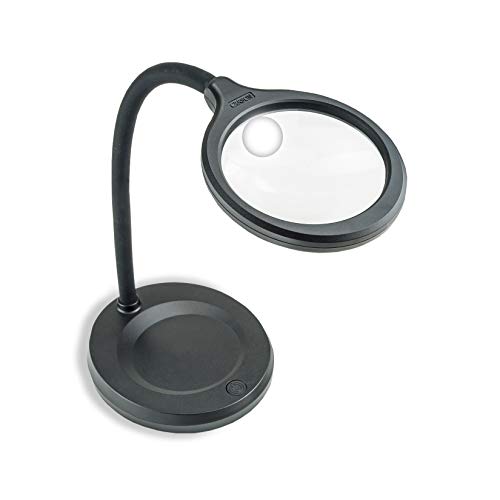
The Carson DeskBrite is compact, portable, and surprisingly powerful for its size. If you often take your knitting to guild meetings, retreats, or on vacation, this is the lamp you want in your project bag.
It runs on batteries or an AC adapter, giving you the flexibility to knit anywhere in the house without worrying about cord placement. The magnification is crisp and clear, providing a sharp view of your stitch structure without the "fisheye" distortion found in cheaper plastic lenses.
The tradeoff for portability is the smaller lens size and lower lumen output compared to the larger floor models. It is the perfect companion for the traveling knitter who needs a reliable visual aid on the go.
Vekkia Professional LED Magnifier Desk Lamp

The Vekkia lamp is designed with the user’s eye health in mind, featuring a flicker-free light that reduces fatigue during late-night knitting. The lens is made of high-quality glass, which is far more scratch-resistant than the acrylic lenses found on entry-level models.
This lamp is particularly good for knitters who struggle with the "fuzz" of alpaca or angora fibers. The clarity provided by the glass lens helps you see through the halo of the yarn to identify the actual stitch loop, which is critical for correcting mistakes.
The clamp-style base is very secure, but it requires a sturdy surface edge to attach to properly. It is a professional-grade tool that offers excellent durability for the dedicated craft enthusiast.
Essential Features for Knitting Magnifying Lamps
When shopping for a lamp, don’t just look at the magnification power; look at the Color Rendering Index (CRI). A high CRI (90+) is vital for knitters because it ensures the colors you see under the lamp are the same colors you will see in natural daylight.
- Lens Material: Always opt for glass over acrylic; glass is clearer and resists scratches from your knitting needles.
- Arm Flexibility: Look for multiple pivot points so you can position the lens at any angle.
- Brightness Control: Dimming capabilities are essential to prevent glare on shiny fibers like silk or bamboo.
- Mounting Options: Decide if you need a weighted base for mobility or a clamp for a permanent desk setup.
Remember that magnification is a secondary benefit to the lighting itself. If the light is poor, even the best magnification in the world won’t help you see your dark yarn.
Why Lighting Quality Matters for Dark Yarn Work
Dark yarns are notorious for "swallowing" light, making it nearly impossible to see the individual stitches of a purl row or a complex decrease. When you cannot see your work clearly, your hands instinctively tense up, leading to hand fatigue and uneven gauge.
Poor lighting also makes it difficult to spot split plies or dropped stitches until you are rows past the error. By using a high-lumen, high-CRI lamp, you illuminate the texture of the yarn, making the stitch structure "pop" against the background.
This is especially important when working with dark, matte fibers like wool or cotton. Without proper illumination, you are essentially knitting by feel alone, which is fine for stockinette but disastrous for lace or colorwork.
How to Position Your Lamp for Maximum Comfort
The goal of positioning is to eliminate shadows on your needles while keeping the lamp out of your direct line of sight. Position the lamp so the light hits your work from the side or slightly behind your shoulder.
If you place the light directly in front of you, the reflection off the lens can create a blinding glare that makes it harder to see. Instead, tilt the lens at a slight angle so the light reflects away from your eyes, but the magnification remains focused on the needle tips.
Experiment with the height of the lamp; you want it close enough to provide clarity but high enough that you aren’t constantly bumping your needles against the lens. Your neck should stay relaxed, with the lamp doing the work of bringing the stitches to your eyes, rather than you leaning into the lamp.
Maintenance Tips to Keep Your Lens Crystal Clear
Your lamp lens will inevitably collect dust, lint, and the occasional smudge of hand cream. Because knitting involves constant contact with fibers, your lens acts as a magnet for microscopic debris that can obscure your vision over time.
- Use Microfiber Only: Never use paper towels or tissues, as these can leave tiny scratches on the lens surface.
- Lens Cleaning Solution: Use a dedicated optical cleaner or a mix of mild soap and water; avoid harsh chemicals like ammonia.
- Check the Tension: Periodically tighten the wingnuts on the lamp arm to ensure the lens stays exactly where you put it.
- Store Covered: If your lamp has a cover, use it when not in use to keep the lens free of dust.
A clean lens is just as important as a sharp needle. Taking sixty seconds to wipe your lens before starting a new row will save you minutes of frustration trying to decipher your stitches.
Investing in a quality magnifying lamp is one of the most effective ways to prolong your knitting hobby and improve your stitch quality. By choosing a model with high-CRI lighting and a durable glass lens, you ensure that even your darkest yarn projects remain a pleasure to work on. Take the time to set up your lighting station properly, and your eyes will thank you for years to come. Happy knitting, and may your stitches always be clear and your tension perfectly consistent.