
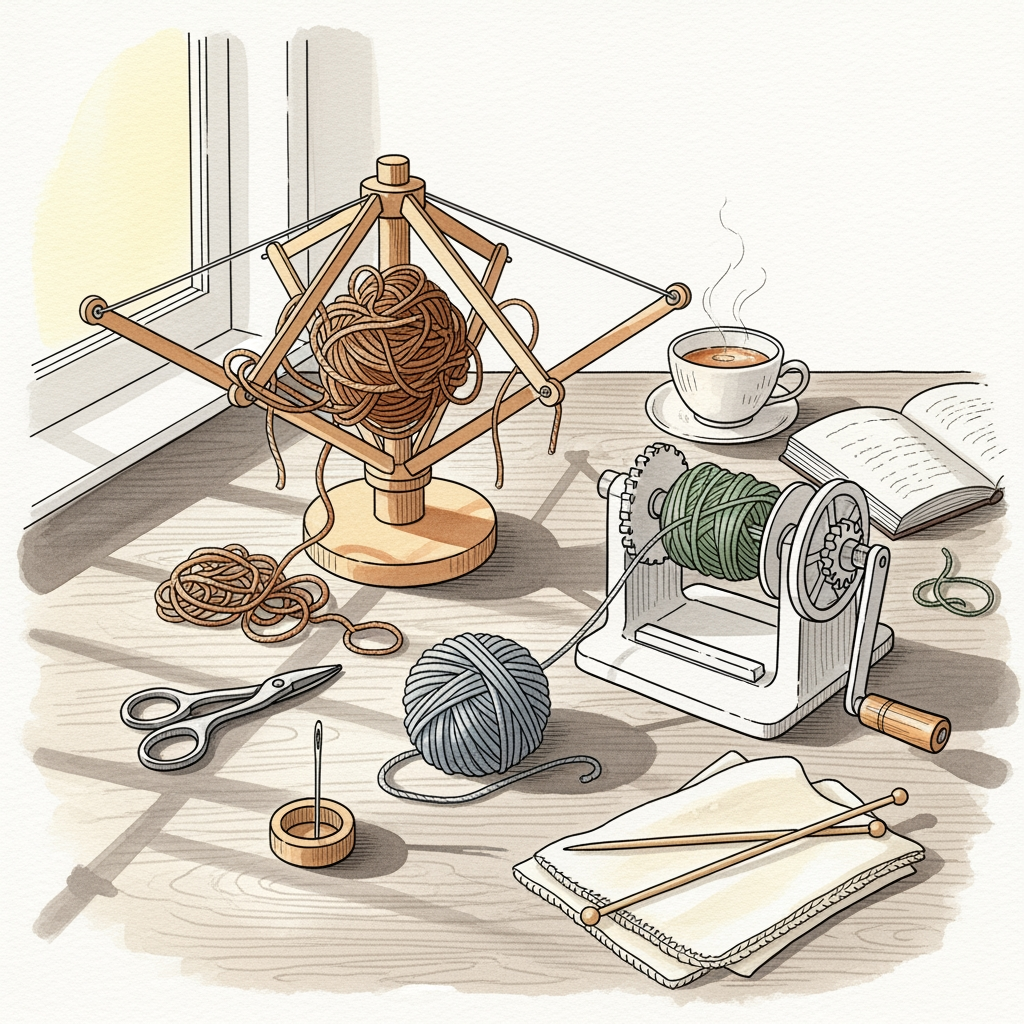
6 Best Yarn Swift Tensioners For Loose Hanks Reviewed
Struggling with tangled yarn? We review the top 6 swift tensioners to help you wind loose hanks smoothly, ensuring tangle-free cakes for every project.
Nothing ruins the meditative rhythm of a new project quite like a tangled mess of yarn collapsing off a loose hank. As someone who has spent two decades detangling hand-dyed silk blends, I know that the right swift is the difference between a joyful start and a frustrating afternoon. This guide breaks down the best tools to help you maintain perfect tension while transforming hanks into manageable cakes. Whether you are a casual hobbyist or a professional maker, your choice of equipment directly impacts the integrity of your fiber.
Stanwood Needlecraft Tabletop Yarn Swift Review


The Stanwood tabletop swift is a favorite in many studios because it manages to be both heavy-duty and incredibly smooth. Its metal construction provides a weight that keeps it firmly planted on your table, even when you are winding a particularly bulky wool.

Because it uses a ball-bearing mechanism, the rotation is almost frictionless. This is a massive advantage when you are working with delicate lace-weight yarns that break easily under sudden tension.
The main tradeoff here is the footprint; it takes up significant space compared to collapsible wooden models. If you have a dedicated craft room, this is a top-tier investment for long-term reliability.
Lacis Wooden Umbrella Swift: The Classic Choice
The Lacis umbrella swift is the quintessential tool that many of us grew up using in our local knitting guilds. Its traditional design is elegant, functional, and folds down into a slim profile that tucks easily into a knitting bag or drawer.
It is particularly effective for those who switch between different hank sizes frequently. The adjustable arms allow you to accommodate everything from small lace hanks to massive 200-gram skeins of rustic Highland wool.
Be aware that because it is made of wood, you should occasionally check for any rough spots or splinters. A light sanding or a coat of wax will ensure your precious hand-dyed yarns never snag during the winding process.
KnitPicks Yarn Swift: Best Value for Beginners
If you are just starting your journey into buying yarn in hanks, the KnitPicks swift is a sensible, budget-friendly entry point. It is lightweight and easy to set up, making it perfect for someone who doesn’t have a permanent space for fiber equipment.
It functions well for standard worsted and DK weight yarns that have a bit of natural elasticity. You don’t need a heavy-duty setup to wind a basic wool-acrylic blend for a simple winter hat.
The limitation is its stability; if you wind too aggressively, it can wobble or tip. Slow and steady wins the race with this model, ensuring your yarn cake doesn’t end up looking like a bird’s nest.
Amish Style Wooden Swift: Sturdy and Portable
The Amish-style swift is a brilliant departure from the umbrella design, utilizing a rotating horizontal rack instead of a vertical umbrella. It is incredibly sturdy and sits flat on your table, which appeals to knitters who prefer a low center of gravity.
This design is often preferred by those who wind yarn for others, as it is nearly impossible to tip over. It is also exceptionally easy to store because it breaks down into flat, stackable pieces.
One thing to keep in mind is that it requires a bit more manual adjustment to get the pegs set to the right diameter. Once it is set, however, it provides a very consistent, reliable rotation for hours of winding.
Strauch Jumbo Ball Winder and Swift Combo Kit

For the serious knitter who frequently works with large quantities of yarn, the Strauch combo is the gold standard. This is an industrial-strength solution designed to handle massive hanks without skipping a beat.
The precision engineering means you can wind a full 400-yard skein into a cake that won’t collapse in the middle. If you are a fan of stranded colorwork and need to manage multiple balls of yarn simultaneously, this kit is a game-changer.
The price point is high, making it a serious commitment for the dedicated fiber artist. However, the durability and time saved make it an invaluable asset for those with an extensive stash.
Nancy’s Knit Knacks Heavy Duty Swift Review
Nancy’s Knit Knacks is known for producing tools that survive decades of heavy use. Their heavy-duty swift is built with high-quality materials that feel substantial in the hand and perform flawlessly under pressure.
It is designed to eliminate the "jerking" motion that often occurs with cheaper plastic swifts. This smoothness is vital for maintaining even tension, which prevents your yarn from being stretched out before it even hits your needles.
If you are working with high-end, non-superwash fibers like alpaca or mohair, this precision is essential. It treats your yarn with the gentleness it deserves, keeping the fibers lofty and undisturbed.
Why Tension Matters When Winding Your Yarn Hanks
Tension is the silent partner in every stitch you knit. When you wind a hank into a cake, you are essentially pre-stretching the fiber; if you wind it too tightly, you are essentially "knitting" with a stretched-out strand.
Once you finish your project and wash it, that stretched yarn will snap back to its original length. This often leads to the dreaded "growth" phenomenon, where a sweater that fit perfectly during casting off becomes two sizes too large after the first soak.
Always aim for a "firm but not tight" cake. You should be able to press the side of the yarn cake slightly with your thumb; if it feels like a rock, you are winding with way too much tension.
How to Properly Set Up a Swift for Even Tension
The setup starts with the placement of your swift relative to your ball winder. You want the yarn to travel in a straight, unobstructed line from the swift to the winder without any sharp angles.
Adjust the swift so that the hank is taut enough to rotate freely but not so tight that it strains the yarn. If the hank is sagging, it will likely catch on the arms and create tangles that lead to frustration.
I always recommend holding the yarn strand lightly between your fingers as it moves from the swift to the winder. This allows you to feel for knots or imperfections in the yarn while maintaining a gentle, consistent guide.
Troubleshooting Common Yarn Swift Winding Issues
The most common issue is the "yarn dive," where the strand slips off the swift and wraps around the center spindle. This usually happens because the swift is rotating faster than you are winding, often due to a lack of friction.
If you find your swift is spinning too freely, a simple trick is to add a small felt pad or a rubber band to the central pivot point. This creates just enough resistance to keep the rotation under your control.
If you are dealing with a particularly "grabby" fiber like sticky mohair, try winding slightly slower. Rushing through delicate fibers is the fastest way to create a knot that takes an hour to untangle.
Essential Tips for Maintaining Your Yarn Tools
Wooden swifts require a little love to keep them running smoothly for years. Once a year, I apply a thin layer of beeswax to the moving joints to prevent friction and keep the wood from drying out.
Check the hardware on your metal swifts periodically to ensure screws are tightened and joints are lubricated. A tiny drop of sewing machine oil can work wonders if your swift starts to squeak or catch.
Finally, always store your swift in a dry place away from direct sunlight. Extreme fluctuations in humidity can cause wood to warp, which will throw off the symmetry of your swift and make your winding uneven.
Investing in a quality yarn swift is one of the best ways to respect your fiber and protect your sanity. By choosing a tool that fits your space and your typical project volume, you ensure that every knitting session begins with ease. Remember that even the best swift requires a gentle hand and a steady pace to keep your yarn in its best condition. Happy winding, and may your yarn cakes always remain perfectly tensioned.
