6 Best Specialized Pliers For Bending Wire Armatures
Find the 6 best specialized pliers for bending wire armatures. Boost your crafting precision and efficiency by choosing the right professional tools today. Shop now.
Creating fiber-based figures or poseable sculptures requires an internal skeleton that balances structural integrity with flexibility. Armature wire serves as the hidden backbone of these projects, allowing for expressive shaping and long-term stability. Selecting the right tools for manipulating this wire is just as critical as choosing the correct needle size for a delicate lace project. Proper pliers transform the tedious task of bending wire into a smooth, precise part of the construction process.
The Beadsmith 3-Piece Plier Set: Best Overall
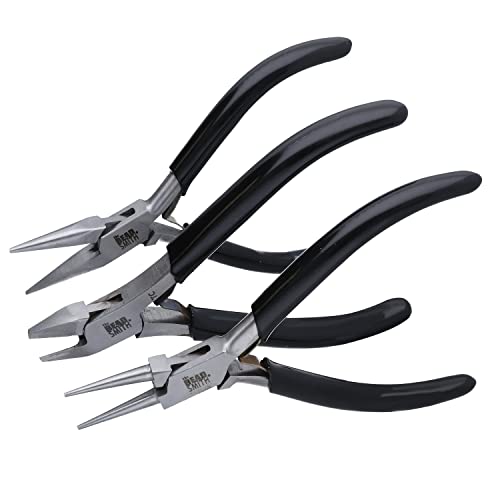

This set provides the foundational tools necessary for almost any sculptural project involving wire. It includes chain-nose, round-nose, and side-cutting pliers, which are the essential trinity for manipulating armature components.
Having all three styles in one package ensures consistency in the grip and tension applied to the metal. It is the most logical choice for those just beginning to experiment with internal supports for their fiber creations.
Consider this set the starter kit that scales with complexity. It offers enough versatility to handle standard copper or aluminum wire without the need for immediate, specialized upgrades.
Wubbers Round-Nose Pliers: For Perfect Loops

Achieving consistent, professional loops at the end of an armature is vital for preventing the wire from poking through delicate yarn fibers. Wubbers are favored for their balanced handle weight, which allows for better control when executing repetitive bending motions.
Unlike cheaper, tapered pliers that often leave unsightly flat spots, these maintain a consistent curvature. This precision is essential when the armature needs to sit flush within a densely stuffed limb or torso.
The ergonomic design reduces hand fatigue, which is an important consideration for those prone to joint soreness from long hours of knitting. Choose these if the project involves intricate, small-scale details that require repetitive loop adjustments.
Xuron TweezerNose Pliers: For Tight Spaces
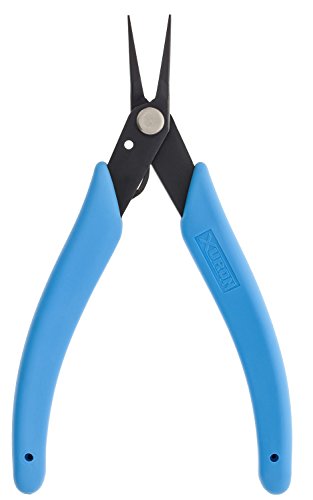
When working on miniature fiber sculptures or tightly crocheted amigurumi, standard pliers often lack the clearance needed to maneuver inside the structure. The Xuron TweezerNose design offers an ultra-slim profile that reaches into narrow openings without distorting the surrounding stitches.
The tip design acts like a precision tweezer, providing a secure grip on thin-gauge wire that would slip from coarser tools. It is particularly useful for making tiny, final adjustments to an armature that is already enclosed within a finished fiber piece.
These are not intended for heavy-duty bending but excel at surgical-level accuracy. Use them for finishing touches where space is at a premium and visibility is restricted.
Hakko CHP-170 Flush Cutter: For Clean Cuts
Sharp, jagged ends on armature wire can catch on internal fibers or tear through fabric over time. A flush cutter is designed to shear wire perfectly flat, leaving a clean end that poses no threat to the surrounding work.
While traditional side cutters leave a pinched, pointed edge, the Hakko CHP-170 creates a smooth finish that feels soft to the touch. This eliminates the need for excessive filing or covering of sharp metal ends.
Consistency in the cut is the key to preventing premature wear on the fiber. Investing in a dedicated flush cutter ensures the structural integrity of the project remains intact throughout its lifespan.
Knipex Combination Pliers: For Heavy-Duty Wire
When constructing larger, structural skeletons that require thick-gauge steel or aluminum, standard jewelry pliers will quickly succumb to the strain. Knipex combination pliers are engineered for high-leverage tasks, making them the superior choice for bending thick, stubborn materials.
The hardened jaws provide an aggressive grip that prevents the wire from sliding during a forceful bend. If the goal is a sturdy base that won’t lose its shape under the weight of heavy wool or thick stuffing, these are the necessary tool.
These are the workhorses of the armature world, built to endure years of heavy use. They are overkill for delicate work but essential for establishing a solid, unmoving frame in larger sculptures.
Stanley Mini Pliers Set: Best Budget Option
Small, basic sets like those from Stanley offer a cost-effective solution for those who are uncertain about how frequently they will engage in wire work. These tools are functional and readily available, making them a pragmatic choice for the casual crafter.
While they may lack the ergonomic refinements of higher-end brands, they get the job done for simple, straightforward armature projects. They are perfectly capable of handling soft aluminum wire, which is the most common material used in beginner fiber art.
If the investment in high-end tools feels premature, start here to learn the mechanics of wire bending. Upgrade only when the limitations of the tool start to impede the quality of the work.
What to Look for in Armature-Bending Pliers
Look for pliers with a comfortable, non-slip grip, especially if you spend long periods crafting. Pliers with internal springs are highly recommended because they automatically open the jaws, reducing the amount of manual effort required during repetitive tasks.
Consider the material of the jaws. Smooth, rounded jaws are best for bending wire without marring the surface, whereas serrated jaws provide a stronger grip but can leave permanent marks on the metal.
Always evaluate the pivot point of the tool; a smooth, stiff-free movement is a sign of quality. If the pliers feel loose or have excessive “wiggle,” the precision of the bends will suffer significantly.
Choosing the Right Wire for Your Fiber Project
The choice of wire is dictated by the desired poseability and the weight of the yarn used. Aluminum wire is the industry standard for most fiber projects because it is lightweight, easy to bend by hand, and corrosion-resistant.
- Aluminum Wire: Best for lightweight figures; very pliable and easy to cut.
- Copper Wire: Offers more resistance; holds a shape firmly but requires more effort to bend.
- Steel/Galvanized Wire: Highly durable; essential for large, heavy projects that require significant structural support.
Ensure the gauge (thickness) matches the scale of the creation. A wire that is too thin will cause the figure to sag, while a wire that is too thick will be nearly impossible to manipulate within the constraints of the fiber density.
Bending Tips: Protecting Yarn From Sharp Ends
Even a perfectly made loop can potentially snag the internal structure of a stuffed piece. To prevent damage, always wrap the ends of the armature with masking tape or self-adhesive medical tape to create a soft, blunt buffer.
If the wire is exposed at the joint, consider applying a dab of hot glue or rubber cement over the cut end to create a protective cap. This simple step prevents the metal from migrating through the yarn over time, preserving the longevity of the project.
Always double-check that every end is tucked or wrapped before closing up the final seam of the fiber work. A small amount of preparation at this stage prevents hours of repair work later on.
How to Care For and Maintain Your Pliers
Keep the pivot points of your pliers clean and lightly lubricated with a drop of machine oil to ensure smooth operation. Wipe the jaws clean after each use to remove any metal shavings or residue that could damage the surface of your next piece of wire.
Store your tools in a dry environment to prevent oxidation and rust, especially if they are made from carbon steel. If the rubber grips start to degrade, a simple application of heat-shrink tubing can restore comfort and provide a fresh, grippy surface.
Treat these tools as an investment in the longevity of your fiber projects. With minimal regular maintenance, a high-quality pair of pliers will remain a reliable part of the kit for decades.
Mastering the use of wire armatures opens up entirely new possibilities for three-dimensional fiber art. By selecting the right tools and maintaining them with care, the technical challenges of internal support become a rewarding part of the creative process. Consistency in technique, paired with the right hardware, ensures every sculpture remains as sturdy and expressive as the day it was finished.