6 Fabric Glues For Decorative Trim That Hold Firm
Struggling to attach trim? Discover 6 fabric glues for decorative trim that hold firm for professional results. Read our expert guide and start crafting today!
Adding decorative trim to a finished hand-knitted garment can transform a simple stockinette sweater into a couture-quality piece. However, traditional sewing often risks pulling at delicate stitches or distorting the drape of the fabric. Choosing the right adhesive ensures that ribbons, lace, or grosgrain stay secure without compromising the integrity of the yarn fibers. This guide explores the most reliable fabric glues tailored for the unique, often porous nature of knitted textiles.
Aleene’s Fabric Fusion: Best for All-Purpose Use


Aleene’s Fabric Fusion stands out as a versatile staple for crafters working with a variety of fiber blends. It behaves much like a traditional white glue but dries with a flexible, rubbery finish that moves in harmony with the natural stretch of a knitted fabric.
This adhesive excels when attaching medium-weight trims like velvet ribbons or crochet borders to wool or acrylic blends. Because it remains somewhat pliable after curing, it prevents the “stiff spots” that often occur when using more rigid adhesives on soft knitwear.
Keep in mind that while it handles most fibers well, very slick synthetic yarns—such as 100% polyester—may require a light scuffing or a test patch for optimal adhesion. It is a reliable, middle-of-the-road choice that balances strength with user-friendly application.
Beacon Fabri-Tac: Pro’s Choice for Quick Grab

Beacon Fabri-Tac is the gold standard for those who prefer working quickly without the need for pins or clamps. Its high-tack formula grabs onto fibers almost instantly, making it ideal for securing trim on curved edges, such as a rounded neckline or an armhole gusset.
For the knitter, this speed is a massive advantage when working on intricate garments where gravity might pull a heavy trim downward before a slower glue can set. The bond is exceptionally strong and resists the natural tension of stretchy bind-offs.
Because it sets so rapidly, precision is paramount. Use a thin, consistent bead along the back of the trim to avoid seepage through open-work lace or loose-gauge stitches, which can be nearly impossible to remove once dried.
Gutermann HT2: Top Pick for Washable Trims

Gutermann HT2 is engineered specifically for textile durability, making it the preferred choice for garments that see frequent wear and laundering. It creates a solvent-based bond that is surprisingly resistant to the agitation of a gentle cycle or hand washing.
When attaching trim to luxury fibers like merino or alpaca, this glue provides a confidence-boosting hold that won’t give way when the garment is wet-blocked or rinsed. It is essentially a “set it and forget it” solution for heirloom-quality pieces.
It is critical to work with this adhesive in a well-ventilated space due to its solvent content. While highly effective, it may be too strong for extremely delicate, cobweb-weight mohair, so always check the backside of the knit to ensure the chemicals don’t affect the yarn’s luster.
Dritz Liquid Stitch: Best for No-Sew Hems
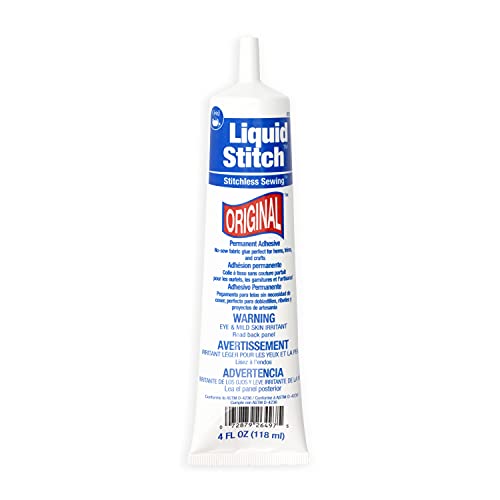
Dritz Liquid Stitch is formulated to act as a liquid alternative to a needle and thread, making it perfect for clean finishing edges. When applied correctly, it mimics the appearance of a hidden slip stitch, making it ideal for securing facings or turned-up hems on cardigans.
This glue is thinner than many counterparts, allowing it to penetrate just enough into the yarn fibers to anchor them without creating a bulky ridge. It works best on tighter gauges, such as items knit on 2.5mm to 3.25mm needles, where the structure is already dense.
Avoid over-applying the product, as a heavy hand will lead to a hardened line that ruins the fluid drape of the garment. Start with a thin, dotted application to maintain the supple feel of the knitted fabric.
E6000 Fabri-Fuse: Strongest Bond for Heavy Trim
E6000 Fabri-Fuse is the heavy lifter of the group, designed for projects involving heavier trims like metallic brocade, leather, or beaded appliques. If the goal is to attach a heavy, non-stretchy material to a sweater knit, this adhesive provides the necessary shear strength to keep the trim in place.
Its thicker consistency allows it to sit on top of the fabric rather than soaking deep into the yarn, which is a major benefit when working with high-loft or fuzzy yarns like angora. This prevents the glue from matting the fibers underneath.
Due to the strength of the bond, this product is essentially permanent. Ensure the trim is perfectly positioned before making contact, as removing a cured bond from delicate yarn is likely to cause structural damage or broken fibers.
Odif’s 505 Spray: Best for Delicate Fabrics
Odif’s 505 Spray offers a unique approach by providing a repositionable, light-duty bond. This is ideal for temporary placement while basting or for projects where you want the trim to be held securely during sewing but don’t want a permanent, stiff glue line.
For knitters, this is invaluable when aligning long lengths of trim that need to be perfectly centered along a long cardigan placket. Once the trim is positioned, you can easily sew over the glued area without damaging your sewing machine needle, as the glue does not leave a gummy residue.
It is a low-tack, temporary solution that should never be relied upon as a permanent finish. Think of it as a chemical alternative to pinning, which is often difficult and prone to snagging on loose-gauge knitwork.
How to Choose the Right Glue for Your Fabric
The choice of adhesive should always reflect the fiber content and the intended use of the garment. For natural protein fibers like wool, silicone-based or water-based glues are generally safest, as they interact gently with the fibers.
- Superwash Wool: These fibers are slippery and smooth; choose a high-tack glue like Fabri-Tac for maximum grip.
- Cotton or Linen: These plant fibers are absorbent and work well with almost any of the adhesives listed above.
- Synthetic Blends: These often resist bonding; scuffing the surface or using a solvent-based glue like HT2 may be necessary.
Always consider the drape of your final piece. A heavy, stiff glue will ruin the elegant fall of a draped cowl or a swingy hemline. When in doubt, perform a test on a swatch of the same yarn used in the project.
Tips for a Clean, Strong Glue Application
Consistency is the secret to a professional-looking finish. Avoid applying glue directly from the nozzle if possible, as it is easy to dispense too much; instead, squeeze a small amount onto a palette and apply it using a toothpick or a fine-tipped paintbrush.
Work in small, manageable sections, especially when using fast-drying glues. This ensures you can adjust the trim’s position before the adhesive sets, keeping your lines straight and even along the fabric’s columns.
If you happen to get excess glue on the surface of your knitting, do not rub it. Allow the glue to cure fully, then gently pick away the residue with a pair of tweezers or a fine needle, which is much easier than trying to wipe away wet, sticky adhesive.
Washing & Caring for Your Glued Garments
Garments with glued trim require a more gentle touch than standard knitted items. Regardless of the glue’s claims, hand-washing in cool water is always the safest method to preserve the bond.
Avoid harsh detergents that contain solvents or strong enzymes, as these can gradually break down the adhesive over time. Laying the garment flat to dry is essential, as the heat and agitation of a tumble dryer will almost certainly degrade the bond, causing the trim to peel or pucker.
If you notice a corner of the trim starting to lift, do not wait for it to detach completely. A tiny dab of the original glue, applied with a toothpick, can usually reactivate and reseal the area if caught early.
Permanent vs. Temporary: Picking Your Bond
The decision between a permanent and temporary bond usually comes down to the longevity of the garment’s design. If the trim is a permanent style choice, choose a high-strength, permanent adhesive like HT2 or Fabri-Fuse.
If the trim is merely a design element that may be swapped out later, or if it is being used as an aid for sewing, stick to temporary solutions like 505 spray. Choosing the wrong type of bond can make a garment impossible to alter or repair in the future.
Never underestimate the value of a physical stitch for extra security. Even with the best glue, a few reinforcement stitches at the start and end of a trim run will prevent the adhesive from failing at the highest-stress points.
Mastering the use of fabric glues allows for a level of design sophistication that sets custom knitwear apart from store-bought items. By selecting an adhesive that respects the unique tension and fiber properties of your knitting, you ensure that every detail remains as secure as the day it was finished. Experimenting with these options on your swatches will reveal which product best complements your specific style and choice of yarn.