7 Best Anti Glare Lights For Glass Topped Tables
Stop dealing with annoying reflections. Discover our top 7 anti glare lights for glass topped tables to brighten your workspace and shop the best picks today.
Glass-topped tables provide a smooth, snag-free surface for laying out delicate lace projects or blocking finished shawls. However, the reflective nature of glass often turns overhead lighting into a source of blinding glare that causes eye strain during long sessions. Choosing the right lamp requires balancing high-quality color rendering with a diffusion system that prevents light from bouncing off the table surface. This guide identifies the top lighting solutions designed to keep your workspace clear, comfortable, and glare-free.
Daylight Lumi Task Lamp: Best for True Color


Color accuracy is non-negotiable when selecting yarn for complex colorwork or stranded projects. The Daylight Lumi features specialized LEDs that mimic natural light, ensuring that the subtle shift between two similar shades of wool remains visible.
This lamp is particularly effective because of its wide shade, which provides an even spread of light across the entire working area. By covering a larger surface, the light source is less concentrated, which significantly reduces the harsh, singular reflections often seen on glass surfaces.
If the primary goal is to distinguish between navy and charcoal or to match dye lots, this lamp is an industry standard. It eliminates the frustration of discovering that a finished sweater contains two slightly different tones.
BenQ e-Reading LED Desk Lamp: Top Premium Pick

The BenQ e-Reading lamp utilizes a unique curved light head designed to illuminate a wider path than a traditional straight-bar lamp. This geometry is a massive advantage for knitting, as it casts light across the entire lap and table without creating a blinding “hot spot” on the desk surface.
The flicker-free technology built into the driver protects the eyes from the invisible strobing common in cheaper LEDs. Over a four-hour session of knitting socks, this reduces fatigue and keeps the stitches clear and well-defined.
While the price point is high, the build quality and the sheer reach of the illumination justify the investment for serious crafters. It is a tool for those who prioritize long-term eye health and professional-grade clarity.
Neatfi Magnifier Lamp: Best for Intricate Work

Knitting lace, especially when using fine cobweb-weight yarn, requires close attention to every yarn-over and decrease. The Neatfi lamp combines a high-quality magnifying lens with a ring light, effectively illuminating the path of the needle tip without creating harsh shadows.
The circular design of the light helps diffuse reflections, making it one of the few options that plays nicely with glass-topped desks. Because the light source surrounds the lens, the glare is broken up rather than reflected back into the eyes.
This is the ultimate choice for fixing dropped stitches in a dark, fuzzy mohair blend where the structure is nearly impossible to see. When clarity is the bottleneck in the crafting process, magnification is the solution.
Phive Architect Lamp: Most Flexible Positioning

The Phive Architect lamp features an ultra-flexible swing arm that allows the light to be moved into any configuration. Being able to swing the arm low or high is vital for adjusting the angle of incidence, which directly influences how much glare reflects off the glass.
Many knitters find that moving the lamp arm to the side—rather than directly over the work—drastically cuts down on surface glare. This lamp’s sturdy clamps and joints hold that position perfectly throughout the day.
It is a utilitarian choice for those who value function over aesthetics. If the workspace is cluttered with yarn bowls, pattern charts, and multiple sets of needles, the ability to tuck the lamp out of the way is invaluable.
Tomons Swing Arm Lamp: Best Budget-Friendly Pick

The Tomons Swing Arm lamp offers a classic wooden design that balances style with reliable functionality. It utilizes a standard E26 bulb base, which is a major advantage for knitters who prefer specific color temperatures that aren’t available in integrated LED models.
By choosing a matte or frosted bulb, the intensity of the light is softened, making it far more forgiving on a glass-topped table. It provides a warm, focused pool of light that feels natural and non-strenuous for evening projects.
While it lacks the high-tech features of premium lamps, it does exactly what is needed for a fraction of the cost. It is an excellent entry point for a dedicated knitting station that won’t break the budget.
Brightech Litespan Floor Lamp: Best Floor Model
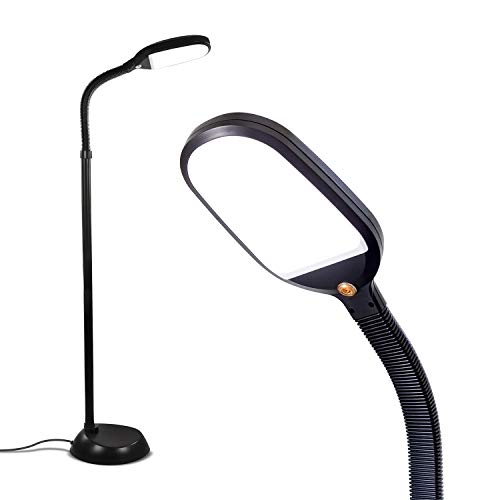
For those with limited table space, the Brightech Litespan offers a floor-standing alternative that removes the need to clamp anything to the desk. Because it stands at a height and projects downwards, the light enters the workspace at an angle that avoids direct reflection.
The neck is adjustable, allowing for fine-tuned positioning that keeps the light concentrated on the hands rather than the tabletop. This is particularly helpful when working with long needles or larger circular projects that take up every inch of the desk surface.
Floor models are often more stable than clamped lamps, ensuring that the light doesn’t vibrate or shift while working. It is a reliable, “set it and forget it” solution for a permanent knitting nook.
OttLite Dual-Shade Lamp: Reduces Glare & Strain
The OttLite dual-shade design is engineered specifically for tasks that require balanced, flicker-free illumination. By using two separate light sources that can be angled independently, the lamp effectively washes out the sharp reflections that create glare on glass.
The light produced by these bulbs is designed to be high-contrast, which helps define the stitch definition of dark or textured yarns. Seeing the loops in a black wool project is notoriously difficult, but the light spectrum here provides the clarity needed to stay on track.
This is a specialized piece of equipment meant for the serious fiber artist. It removes the physical hurdle of poor lighting, leaving no excuses for missed stitches or incorrect cables.
What to Look For in an Anti-Glare Craft Light
When shopping for any craft light, prioritize the Color Rendering Index (CRI) and the diffuser type. A CRI of 90 or higher is essential for true color perception, while a frosted or textured lens will do the heavy lifting to prevent glare.
- Adjustability: Ensure the lamp has multiple pivot points for optimal light direction.
- Color Temperature: Seek lamps that offer a range between 4000K and 5000K for a “daylight” feel that won’t make the eyes sleepy.
- Brightness Controls: Dimmable features are helpful for shifting from morning light to late-night sessions.
- Mounting: Determine if a clamp, base, or floor stand best suits the existing desk layout.
Why Glare Matters for Working With Dark Yarns
Working with dark-colored yarns—like deep indigo, forest green, or black—is a common struggle for even the most experienced knitters. On a glass surface, the reflection of a bright LED acts like a mirror, washing out the already-dim contrast of the dark fibers.
Without proper anti-glare measures, the eye focuses on the reflected light rather than the stitches themselves. This causes rapid onset of visual fatigue and increases the likelihood of missing a stitch or twisting a cable in a high-stakes project.
Anti-glare lighting solves this by softening the light rays so they illuminate the yarn’s texture instead of reflecting off the surface beneath it. Proper lighting is the difference between a productive evening and one spent squinting at the needles.
Positioning Your Lamp to Eliminate Table Glare
The secret to eliminating glare on a glass desk lies in the angle of the light beam. Aim to position the lamp to the side of your dominant hand, angled inward toward the work, rather than pointing the beam directly downward from a high center position.
If the lamp head is too high, it creates a direct bounce-back effect on the glass. By lowering the lamp closer to the project and angling it toward your hands, you create a “shadow-side” approach that maximizes illumination on the yarn while missing the reflective surface.
Experimenting with height and tilt is just as important as the lamp model itself. If a glare persists, a small adjustment of just a few degrees can often redirect the beam away from the eyes and toward the stitches where it belongs.
Finding the right lamp is an investment in both your projects and your eyesight. By combining the right hardware with strategic placement, you can create a knitting station that remains comfortable and clear, regardless of the complexity of the fiber in your hands.