7 Best Embroidery Punch Needles For Textured Designs
Discover the 7 best embroidery punch needles to create stunning textured designs. Read our expert guide and choose the perfect tool for your next craft project.
Punch needle embroidery transforms simple fabric and yarn into lush, three-dimensional textures that rival the finest tapestries. Selecting the right needle is the critical first step in ensuring consistent loop height and preventing yarn breakage during the punching process. Without a tool that matches the weight of the fiber and the density of the base fabric, even the most intricate patterns can quickly unravel or lose their structural integrity. These seven recommendations serve as a reliable guide for navigating the specific nuances of punch needle tools available to today’s makers.
The Oxford Punch Needle: Best for Rug Yarn
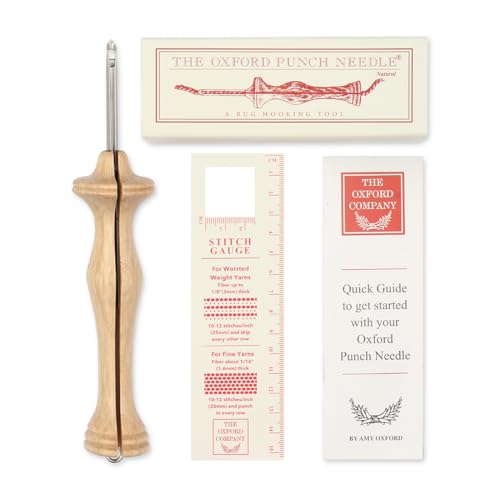

The Oxford punch needle is widely regarded as the gold standard for durability and consistent stitch formation. Its ergonomic wooden handle and stainless steel shank are designed to withstand the physical resistance of heavy rug wool.
When working with thick, bulky yarns or long-fiber wools, this tool shines because it allows for a fluid, natural punching motion. The open channel design prevents yarn drag, ensuring that each loop remains uniform even when working through dense backing fabrics.
While this needle is a higher initial investment, its longevity makes it a sound choice for those committed to rug making. Avoid using it for fine detailing or delicate threads, as the size is calibrated specifically for substantial yarn weights.
Lavor Adjustable Punch Needle: Top Versatility

The Lavor adjustable punch needle is a masterclass in functional design, allowing for multiple loop heights within a single project. This tool features a sliding adjustment mechanism that keeps the needle at the desired depth, providing total control over the texture.
This versatility is invaluable when creating varied relief patterns, such as combining flat stitches with high-pile loops. It accommodates a wide range of yarn sizes, from fine cotton to medium-weight wool, making it a “do-it-all” tool for diverse projects.
Keep in mind that the plastic components require a slightly gentler touch compared to metal-bodied needles. It remains the ideal choice for those who want to experiment with different loop heights without purchasing a full suite of specialized tools.
Ultra Punch Needle Set: Finest Detail Work

Precision is the hallmark of the Ultra Punch needle, which is engineered specifically for intricate, high-definition embroidery. This needle utilizes a fine-gauge tip that functions much like a pen, allowing for tight turns and small-scale patterns.
Using this tool feels remarkably natural, as it mimics the ergonomic grip of a writing implement. It is best paired with embroidery floss or fine tapestry wool, where every single stitch contributes to a sharp, clear image.
Understand that the thin needle requires a tighter, more uniform fabric weave to prevent large holes from forming. If the goal is realistic portraiture or complex botanical designs, this is the most reliable tool for the job.
KnitPro Punch Needle Set: Best for Beginners

The KnitPro punch needle set takes the guesswork out of tool selection by offering a modular approach to embroidery. With interchangeable tips, it allows makers to transition between fine and thick yarns using a single handle interface.
For beginners, the primary struggle is often tension; this tool provides a secure grip that helps maintain a consistent punching angle. The clear instructions included in these sets demystify the loop-forming process, which is often the most intimidating part of the craft.
Be aware that switching tips takes a moment of adjustment, so it is best for projects where the yarn remains consistent throughout. It represents an excellent balance of quality and accessibility for those just starting their punch needle journey.
DMC Punch Needle: Great for Embroidery Floss
The DMC punch needle is specifically calibrated to handle the delicate nature of embroidery floss and pearl cotton. It operates with a smooth flow that prevents the threads from snagging or untwisting during the push-pull motion.
Because embroidery floss is multi-ply, it is prone to fraying if the needle eye is too rough. The DMC tool features a polished finish that protects the fiber integrity, resulting in a cleaner, more refined surface texture on finished pieces.
This needle is not designed for heavy-duty rug yarn, as the shank is too narrow to pull thick strands through the fabric. Reserve this tool exclusively for delicate wall hangings and detailed miniature work.
Milward Adjustable Punch Needle: Budget Choice
The Milward adjustable punch needle offers a practical solution for makers who want to test the craft without a significant financial commitment. It provides adjustable loop settings, allowing for a variety of textures despite its modest price point.
The construction is straightforward and utilitarian, making it simple to operate for those who prioritize function over luxury materials. While it lacks the ergonomic weight of premium models, it performs consistently for occasional projects and craft experiments.
Expect to perform regular checks on the tension screw to ensure the needle height stays locked during extended sessions. It is the perfect “starter” tool to help determine whether the hobby warrants a move toward more expensive equipment.
SKC Punch Needle Set: Most Ergonomic Design
The SKC punch needle set prioritizes comfort, featuring a contoured grip that reduces hand fatigue during long hours of punching. For those who suffer from wrist strain or stiffness, the wide handle provides a broader surface area for the fingers to rest.
Beyond comfort, the set includes various needle sizes that snap in securely, ensuring there is no wobble during use. This stability is essential for maintaining even tension across large surface areas, such as decorative pillows or chair covers.
Note that the handle size may feel substantial for individuals with smaller hands. If comfort is the primary concern for large-scale projects, this design effectively minimizes the physical toll of repetitive motion.
Choosing Fabric for Your Punch Needle Project
The success of a punch needle project depends as much on the fabric as it does on the needle. Monks cloth is the gold standard for rugs, offering an even, balanced weave that allows the needle to pass through without distorting the warp and weft.
For finer work, consider linen or high-quality weaver’s cloth, which provides the necessary resistance to hold loops in place. Never use fabrics with a high stretch factor, as they will cause the backing to buckle and the loops to pull out of alignment.
- Monks Cloth: Best for heavy, rustic projects and rug yarn.
- Linen: Ideal for fine-detail work with floss and thin yarn.
- Weaver’s Cloth: A versatile middle-ground for medium-weight projects.
Matching Punch Needle Size with Your Yarn
A common mistake is forcing thick yarn through a small needle, which leads to breakage and distorted fabric. The yarn must glide through the barrel of the needle without resistance; if it feels tight, the needle size is likely too small.
Conversely, using a needle that is too large for the yarn will result in loops that fall out because they aren’t anchored securely in the fabric weave. Aim for a 20-30% clearance within the needle eye to allow the fiber to move freely as you punch.
- Fine needles: Use with embroidery floss or fine cotton.
- Medium needles: Use with sock-weight or baby-weight wool.
- Large/Rug needles: Use with worsted or bulky rug yarns.
Troubleshooting: Why Your Loops Won’t Stay
If loops are popping out of the back of the project, the issue is almost always a lack of proper tension or improper fabric choice. Ensure the fabric is stretched tight within the frame, feeling as taut as a drumhead before the first stitch is made.
Another common culprit is the punching technique; if the needle is lifted too high off the fabric surface, the loops will be pulled back out. Keep the tip of the needle touching the fabric at all times as you move between stitches, “sliding” it across the surface rather than lifting it away.
Finally, verify that the yarn is feeding freely from the ball without any drag. If the yarn is pulled taut before it even enters the needle, it will naturally snap back and pull the loops out from the foundation.
Mastering punch needle embroidery requires a harmonious relationship between your tool, your fiber, and your fabric. By choosing the right needle for your specific project and maintaining steady, consistent mechanics, you ensure that every loop serves its purpose in your textile design. Success in this craft is found in the details of the process rather than the speed of completion. Enjoy the tactile satisfaction of building your own textures stitch by stitch.