6 Best Wooden Display Shelves For Crafting Rooms
Organize your creative space with our top 6 picks for wooden display shelves. Discover the best sturdy, stylish options for your crafting room and shop now.
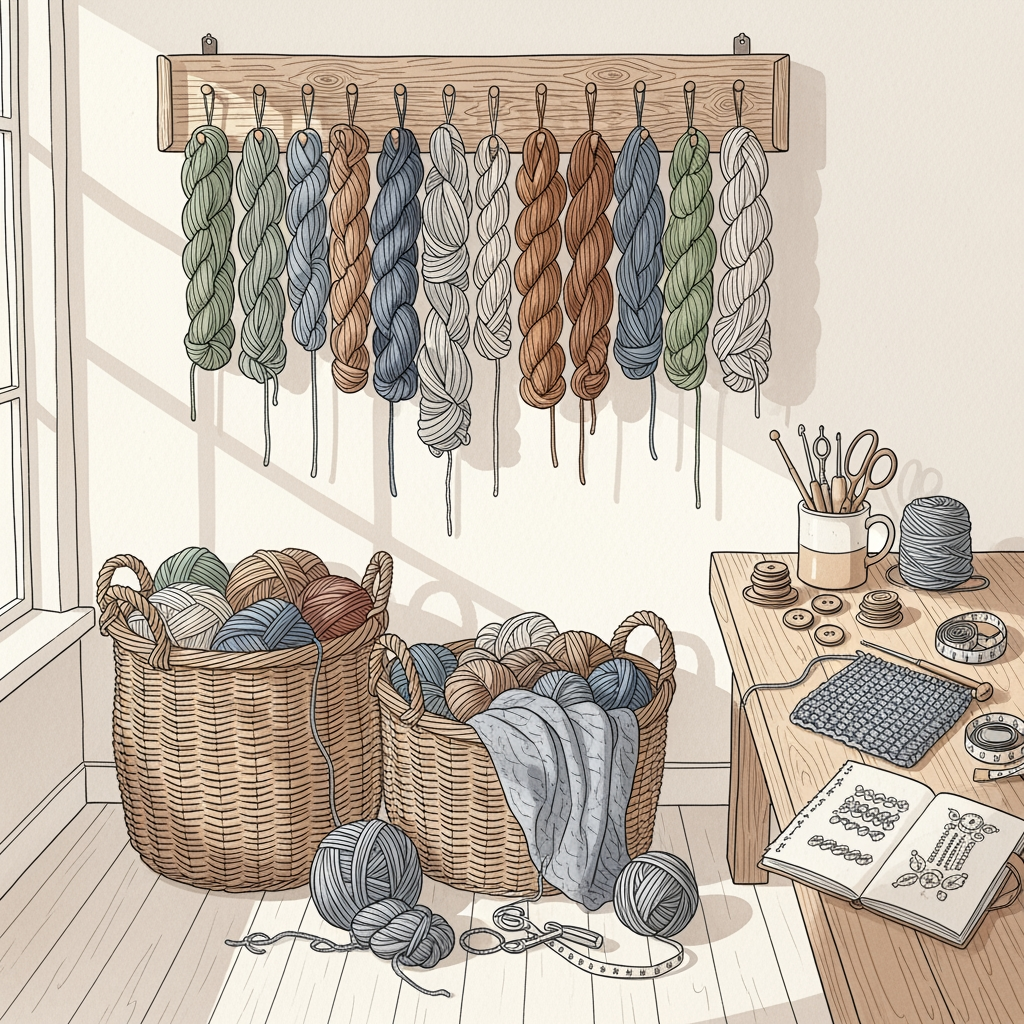
A well-organized craft room is the foundation of every successful project, transforming a chaotic pile of supplies into an inspiring creative sanctuary. Selecting the right wooden shelving goes beyond mere aesthetics; it requires balancing structural integrity with the specific storage needs of delicate fibers and heavy equipment. Whether managing a sprawling collection of indie-dyed skeins or keeping precious circular needles within reach, the right furniture can significantly streamline the creative process. This guide evaluates six wooden storage solutions through the lens of a serious fiber artist, ensuring each choice supports the craft.
IKEA KALLAX Shelf: The Crafter’s Go-To Choice


The KALLAX shelf remains the industry standard for a reason: its modularity is tailor-made for the standard 100-gram yarn skein. Its square compartments perfectly house fabric bins or drawer inserts, keeping fiber dust-free and out of direct sunlight.
For those rotating through multiple projects, these squares allow for “project-based” organization. Stash a specific sweater quantity of wool in one cube, complete with the corresponding circular needles and notions bag, to keep everything ready for the next knitting session.
Be aware that the structure relies on particle board construction. While sturdy enough for yarn and books, avoid placing extremely heavy items like industrial sewing machines on the top shelf without reinforced support.
The bottom line: Use the KALLAX if the goal is contained, categorized, and scalable storage that grows alongside a fiber collection.
Elfa Custom Shelving: Design Your Dream Wall

Elfa shelving offers a level of precision that rigid bookcases simply cannot match. By installing wall-mounted tracks, every shelf can be adjusted to the exact height of various storage baskets or tall notions jars, maximizing vertical space in even the smallest corner.

This is the superior choice for someone who moves between different mediums, such as combining knitting with spinning or weaving. Because the shelves are wire or wood-slatted, they provide excellent airflow, which is critical for storing natural fibers like wool or alpaca that need to breathe to prevent fiber degradation.
The tradeoff here is the investment of time and professional installation. This is a permanent commitment to a specific room layout rather than a portable piece of furniture.
The bottom line: Choose Elfa if the craft room requires high-capacity, custom-configured storage that maximizes every square inch of wall space.
SONGMICS Cube Organizer: Budget-Friendly & Versatile

The SONGMICS cube organizer offers a similar aesthetic to higher-end modular systems at a significantly lower entry price. It excels in small apartments where lightweight, easy-to-assemble units are necessary for managing modest stash sizes.
The units often feature back panels, which are surprisingly vital for yarn storage. A back panel prevents skeins from sliding off the back of the shelf and keeps dust from accumulating against the wall behind the stash.
However, the hardware can be less robust than premium wood alternatives. Avoid overstuffing the cubes with heavy, oil-rich wools or cotton cones, as the shelves may show signs of bowing over time under excessive weight.
The bottom line: This is the best option for beginners or those on a budget who need a quick, reliable way to get supplies off the floor.
Homfa 6-Tier Ladder Shelf: Stylish Open Display
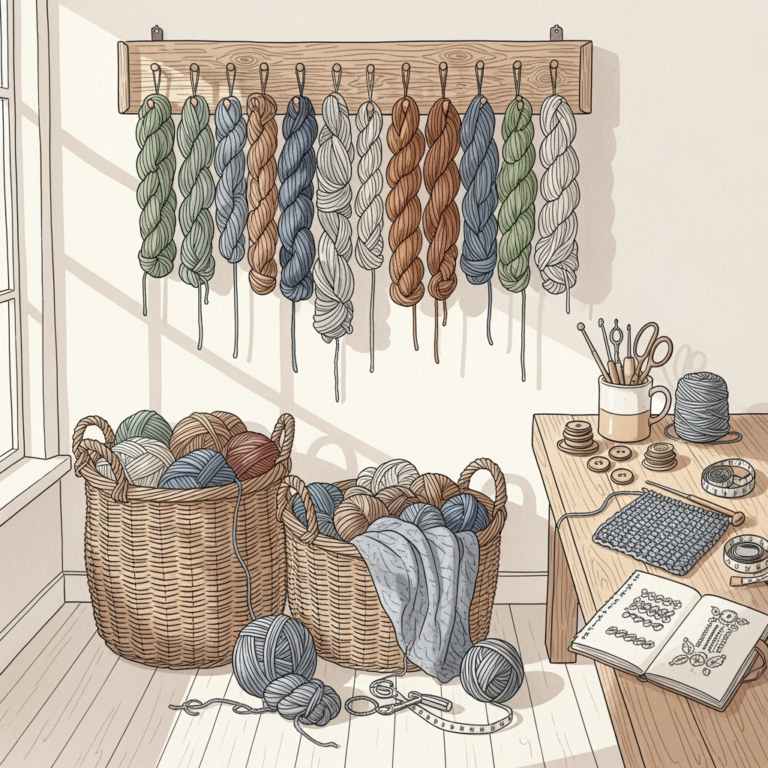
Ladder shelves provide an elegant, vertical solution for showcasing “knitting eye candy.” These are best suited for displaying hand-dyed yarns or finished garments that deserve to be seen rather than hidden behind cupboard doors.
Because these shelves feature open sides and decreasing depth, they are perfect for smaller tools and accessories at the top, with larger yarn baskets sitting securely on the wider bottom rungs. It effectively organizes the room without making the space feel cramped or closed-in.
Remember that open shelving offers no protection from sunlight. Always position these away from windows, as prolonged UV exposure can cause significant fading and fiber brittleness in natural fibers like silk and linen.
The bottom line: Invest in a ladder shelf to create an inspirational display zone for your most beautiful skeins and current project inspirations.
Wayfair Basics Ayden Bookcase: Classic & Sturdy
The traditional bookcase remains the workhorse of the dedicated craft studio. Its fixed or adjustable wooden shelves provide a solid foundation for heavy collections of knitting patterns, binders full of lace swatches, and bulky equipment like yarn ball winders.
When purchasing a classic wooden bookcase, look for a solid wood back or a thick, finished particle board backing. A flimsy backing board will eventually collapse under the weight of a full library of knitting books or heavy yarn cones, leading to a sagging, unstable unit.
The tradeoff is its fixed footprint. Unlike modular systems, these bookcases lack the ability to be reconfigured, so ensure the dimensions align with the specific space requirements before assembly.
The bottom line: Choose a sturdy bookcase for permanent, heavy-duty storage of pattern books, reference materials, and heavier yarn weights like chunky wool.
Love-KANKEI Floating Shelves: Rustic Wall Accents

Floating shelves are the secret weapon for organizing notions that need to remain accessible at eye level. By mounting these above a workstation, you keep expensive wood or carbon fiber needles, crochet hooks, and scissors off the desk surface.
These shelves are excellent for placing specialized tool jars or displays of finished swatches. Having a swatch library on display allows for easy color matching and texture comparisons when planning a new colorwork or stranded design.
Because they are wall-mounted, they are not intended for heavy loads. Limit these to lightweight items and prioritize placement in areas where they won’t interfere with the reach of a seated knitter.
The bottom line: Use floating shelves to keep frequently used tools at your fingertips without cluttering your primary workspace.
How to Pick the Best Shelf for Your Craft Space
Choosing the right shelf begins with evaluating the inventory. Ask whether the primary goal is long-term, archival storage for a large fiber collection or daily-use access for active, rotating projects.
- Weight: Does the storage need to hold heavy cones of weaving yarn or lightweight luxury lace-weight mohair?
- Environment: Is the room exposed to high levels of natural light or humidity, requiring closed doors or specific placement?
- Expansion: Is the stash likely to grow significantly in the next year, favoring modular systems over static bookcases?
Finally, always measure the floor space and the clearance needed to move freely while knitting. A beautiful shelf that prevents comfortable chair placement will quickly become a source of frustration rather than a helpful tool.
Tips for Organizing Yarn and Fiber on Your Shelves
The key to successful fiber storage is grouping by weight and fiber content. Organizing yarn by “wraps per inch” (WPI) ensures that when a pattern calls for a specific gauge, the necessary yarn is easy to find without digging through mismatched bins.
Use clear, stackable containers within your shelves to separate superwash wools from non-superwash, or animal fibers from plant fibers. Keeping these separate is crucial; animal fibers are susceptible to moth damage, and isolating them makes it easier to monitor for pests periodically.
Label everything clearly. Even if the stash feels manageable today, a well-labeled system prevents the “mystery yarn” scenario where a skein is found years later without its fiber content or yardage information.
Open vs. Closed Storage: What’s Best for Yarn?
Closed storage, such as cabinets or drawers, is the gold standard for long-term protection. It minimizes dust, blocks damaging UV light, and provides a barrier against humidity and moths.
Open storage, conversely, encourages creativity. Seeing your fibers serves as a daily reminder of potential projects and color combinations. It is significantly faster to grab a skein from an open shelf than to navigate doors or lids.
A hybrid approach is often the most practical: keep long-term stash in closed containers and store current project yarns on open display. This balances the need for protection with the desire for visual inspiration.
Why You Must Anchor Your Craft Room Shelving
Craft room furniture is often top-heavy, especially when packed with dense fiber and heavy books. A sudden bump or the attempt to reach for a skein on a high shelf can cause unsecured units to tip, posing a significant safety risk.
Always use an anti-tip kit to anchor shelving units securely to the wall studs. This is non-negotiable for those with children or pets, but it is equally important for the safety of the individual knitter.
Do not rely on the weight of the items on the bottom shelf to keep the unit stable. A sturdy anchor kit is a small, inexpensive insurance policy that protects both the person and the investment in equipment.
Properly selected and secured shelving transforms a workspace into a professional-grade studio. By prioritizing structural stability, environmental protection, and accessibility, your storage will actively enhance your knitting practice for years to come. Invest time in the foundation of your space, and you will find more freedom to focus on the joy of the stitches themselves.