7 Best High-Contrast Work Lamps For Eye Strain Reduction
Reduce eye strain with our top 7 picks for high-contrast work lamps. Explore our expert-reviewed list and find the perfect lighting for your desk setup today.
Straining to see dark navy stitches against a matching backdrop is a recipe for missed yarn-overs and dropped stitches. Quality lighting is not just a luxury for the home studio; it is an essential tool that dictates the longevity of a craft practice. High-contrast illumination transforms intricate lace and dark wool projects from a source of frustration into a seamless experience. The right lamp prevents the ocular fatigue that often cuts a knitting session short, allowing for hours of comfortable, productive work.
Brightech Litespan LED Floor Lamp: Best Overall
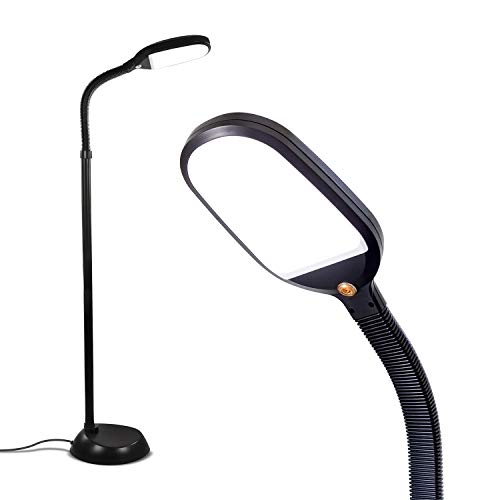

The Brightech Litespan stands out for its sheer versatility and ability to mimic natural daylight. It is a workhorse for knitters who need a wide, even spread of light across a project bag or a large afghan.
The adjustable gooseneck allows for precise positioning, which is vital when working on complicated cables or colorwork that requires a steady view of the pattern. Because the light is flicker-free, the eyes do not have to constantly adjust to microscopic shifts in brightness, significantly reducing the “dull ache” that often accompanies long evening sessions.
While this lamp occupies floor space, its slender profile fits easily beside a favorite armchair. It is the ideal choice for someone who moves between different seating areas and needs a reliable light source that doesn’t demand constant adjustment.
Neatfi XL Bifocals 2,200 Lumens: Top Magnifier
When tackling fine lace or working with laceweight yarn on small needles, visibility becomes the primary hurdle. The Neatfi XL combines powerful, high-contrast illumination with a wide-view lens to bring every stitch into sharp relief.
This is the ultimate tool for picking up dropped stitches in dark, fuzzy mohair or angora blends, where the fibers often camouflage the stitch structure. The 2,200 lumens ensure that the light penetrates the halo of the fiber, allowing for a clear view of the needle and the working yarn.
Magnification does require a period of adjustment, as it changes the depth perception of the hands. For those working with intricate patterns or repairing mistakes in high-twist wool, however, the clarity offered is unmatched.
OttLite Dual Head LED Lamp: Most Versatile

The OttLite Dual Head design is a game-changer for knitters who need to light both the hands and the pattern board simultaneously. By pivoting the two heads, it is possible to eliminate the shadows cast by the arms or the needles themselves.
This lamp excels in settings where space is tight and a single beam of light might be blocked by the body or the project. Being able to aim one light at the working yarn and the other at a complex lace chart reduces the physical movement required to toggle between reading and knitting.
The color rendering index (CRI) is consistently high, which is essential for distinguishing between subtle variations in shades of hand-dyed yarn. If the project involves color-grading or delicate transitions, this dual-head setup ensures the eyes see the true colors as they appear in natural light.
Glocusent Neck Reading Light: Best for Travel

Knitters often find themselves working in dimly lit airplanes, trains, or hotels where traditional lamps are non-existent. The Glocusent neck light rests comfortably around the neck, directing focused, high-contrast light exactly where the eyes look.
Because the light moves with the body, there is no need to worry about the angle of the work in relation to a desk lamp. It is a perfect companion for simple garter stitch travel projects, ensuring that no stitch is lost even in the poorest ambient lighting.
Keep in mind that this is a supplement, not a replacement for a main light source during complex work. It provides excellent task lighting for quick fixes, but the close-range beam can be limiting for larger, more demanding projects.
BenQ e-Reading LED Desk Lamp: Premium Pick
The BenQ e-Reading lamp features a unique curved design that provides an incredibly wide, uniform light field. It is designed to cover an entire desktop, making it perfect for someone with a workstation dedicated to winding yarn, pattern charting, and knitting.
The lamp automatically adjusts its brightness based on the ambient light in the room, maintaining a consistent level of contrast that is gentle on the eyes. For those who knit for several hours, this feature prevents the eyes from overworking as the evening transitions into night.
It is a significant investment, but the flicker-free technology and high-quality build ensure it will last through countless sweater projects. If the goal is a professional-grade setup that prioritizes long-term eye health, this is the definitive choice.
Daylight Duo Table Lamp: Best for Small Spaces
Compact and functional, the Daylight Duo Table Lamp provides high-contrast light without consuming valuable table space. It is specifically built for detail-oriented tasks where space is at a premium, such as when knitting socks in a small nook.
The daylight-balanced bulbs prevent the yellow tint that often makes it difficult to differentiate between dark colors like navy, charcoal, and black. By providing a clean, white light, it makes it easier to track the stitch count and identify errors in the knitting.
The trade-off for its small footprint is a more focused, narrower beam of light. It works best when positioned close to the needles, making it an excellent specialized tool for the knitter who frequently works on small-diameter items.
Luxe Cordless LED Desk Lamp: Top Cordless Pick
The Luxe Cordless LED lamp provides the convenience of high-contrast lighting without the clutter of power cables. This is perfect for the knitter who likes to rotate between the sofa, the kitchen table, and the patio without needing to unplug and relocate a lamp.
The touch-sensitive dimming and adjustable color temperature settings allow for customization based on the yarn fiber. For instance, cooler, brighter light helps in identifying stitches in matte, dark-colored cotton, while a warmer setting can reduce glare on shiny, synthetic yarns.
Battery life is reliable for several hours of work, though it does require a consistent charging schedule. If a project requires several days of intense focus, ensure the lamp is placed near a charging point to avoid an mid-row power failure.
How to Choose the Right Light for Your Craft Space
Choosing the right lamp requires an assessment of both the physical space and the types of projects usually on the needles. Floor lamps offer the most flexibility for those who sit in different chairs, while desk lamps are superior for dedicated workspaces.
Consider the following factors before making a purchase: * Beam width: Does the project require a wide, even spread or a narrow, intense spotlight? * Adjustability: Can the light reach over the knitting project without casting a shadow? * Color Temperature: Is the light adjustable, or fixed at a daylight setting?
Avoid the temptation to buy a lamp solely based on its style or aesthetic appeal. A lamp that matches the decor but offers poor CRI or produces flicker will eventually become a source of eye strain, leading to longer recovery times and less actual knitting.
Understanding Lumens, Kelvin, and CRI for Eyes
Understanding technical specifications helps distinguish between marketing claims and actual utility. Lumens measure total light output, while Kelvin determines the “temperature” or color of the light.
- Lumens: Look for higher numbers for tasks like dark-colored yarn work, where light absorption is a major factor.
- Kelvin: Aim for 5000K to 6500K for “daylight” quality, which provides the best contrast for the eyes.
- CRI: This is the most critical metric for fiber artists; always look for a CRI of 90 or higher to ensure the yarn colors look exactly as they should.
Do not ignore the CRI rating when shopping, as it is the primary factor in color accuracy. Low-CRI lights can cause colors to look washed out or shift the perceived hue of the yarn, which is disastrous when doing stranded colorwork or joining different dye lots.
Tips for Knitting with Dark-Colored Yarns
Knitting with black or navy yarn is notoriously difficult, even for experienced hands. The lack of contrast between the needles and the yarn, combined with the lack of light reflection on the fibers, makes it hard to see individual stitches.
- Use lighter-colored needles: Brightly colored, metallic, or white needles provide an immediate, stark contrast against dark fibers.
- Enhance ambient light: Position a white pillow or a piece of white fabric on the lap to create a high-contrast background that makes the stitches “pop.”
- Rely on touch: Develop the ability to feel the tension and the stitch structure, which reduces the reliance on visual confirmation alone.
If a pattern is especially complex, do not hesitate to use a stitch marker at the start of every repeat. When visibility is low, having these physical landmarks prevents the need to count stitches repeatedly, preserving both the eyes and the patience required for a successful project.
Investing in a high-quality light source is arguably as important as choosing the right wool or needles for a project. By prioritizing flicker-free, daylight-balanced, and high-CRI lighting, knitters can protect their vision and ensure that every stitch is placed with precision. Choose the lamp that best fits the specific constraints of the workspace and the nature of the craft, and the quality of the finished knit will surely reflect that care.