6 Best Specialized Needles For Sewing On Crystals
Struggling to attach embellishments? Discover the 6 best specialized needles for sewing on crystals to ensure a professional, secure finish. Shop your tools now!
Adding crystals to a hand-knitted garment transforms a functional piece into a couture-level treasure. This embellishment process requires precision tools that navigate both the delicate fiber of the yarn and the narrow openings of crystal beads. Choosing the wrong needle often results in snagged stitches or broken crystal coatings. Selecting the correct implement ensures the integrity of the base fabric while securing heavy, light-catching accents firmly in place.
John James English Beading Needles: The Classic
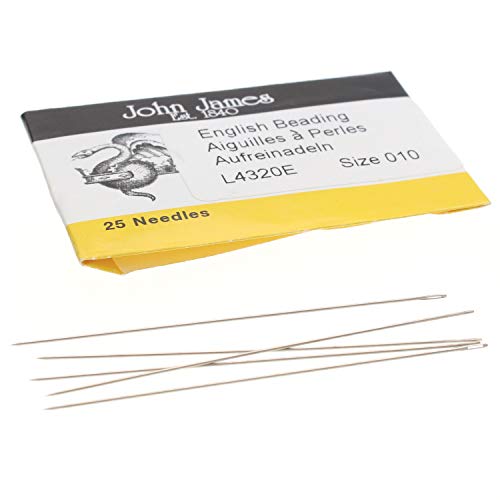

These needles are the industry standard for a reason, offering a balance of flexibility and strength that withstands hours of beadwork. They feature a remarkably thin profile, allowing them to pass through the smallest bead holes without resistance.
For projects involving fine laceweight mohair or high-twist merino, the flexibility of John James needles prevents the needle from snapping when forced through denser areas of the fabric. They are consistent, reliable, and widely available.
However, the eyes of these needles are quite small, which can be challenging for those with vision strain or thicker threads. Expect them to bend slightly over time, which is actually a benefit when working in tight corners of a knitted garment.
Tulip Hiroshima Beading Needles: For Smooth Gliding

Tulip needles are engineered with a polished finish that minimizes friction against both the fiber and the crystal glass. This smooth surface is essential when working with delicate silk or plant-based fibers that prone to splitting.
The needle tip is exceptionally sharp, allowing for easy piercing of the base fabric without causing unwanted pulls. This sharpness is perfect for securing crystals directly onto the crown of a hat or the cuff of a sweater.
Because these needles are manufactured with high-quality, tempered steel, they remain straight and rigid throughout the duration of a long project. They represent a higher investment, but the performance difference on intricate work is noticeable.
Beadsmith Big Eye Needles: Easiest to Thread
The unique construction of these needles involves two thin, parallel pieces of steel that part down the center to form a large, flexible eye. This design solves the age-old problem of struggling to thread beads onto decorative metallic threads or thicker nylon cords.
They are ideal for beginners or anyone prone to frustration during the assembly process. The needle essentially threads itself, saving significant time when switching between colors or bead sizes during a marathon embellishment session.
A significant tradeoff is durability, as these needles are prone to snapping if handled with excessive force. They are best reserved for lighter crystals and delicate placement work rather than heavy-duty structural attachment.
Pony Beading Needles: The Best Budget Option

Pony needles provide a reliable, no-frills experience that works effectively for the majority of standard crystal embellishment projects. They are sturdy enough to handle repeated passes through sturdy wool or cotton yarn.
While they may lack the high-polish finish of premium Japanese brands, their durability is excellent for the price point. They are an ideal choice for makers who are experimenting with crystal placement and do not want to invest heavily in specialized tools yet.
Keep in mind that the finish can sometimes feel slightly draggy on synthetic fibers. For high-volume work, consider wiping them down periodically with a clean, dry cloth to remove any accumulated fiber oils.
Clover Milliner’s Needles: For Deep Embellishment

Milliner’s needles are significantly longer than standard beading needles, providing better leverage when passing through several layers of fabric and heavy-weight yarn. The long shaft is a major advantage when anchoring crystals into thicker cable textures or ribbing.
Because of their length, they offer superior control when weaving in ends or securing crystals deep within a complex knitted structure. Their consistency in manufacturing ensures that every needle in the pack performs identically.
The only drawback is the potential for the longer shaft to bend if too much pressure is applied during a pass. Use a thimble if the needle needs to be pushed through particularly dense, felted, or multi-ply areas.
Bohin Beading Needles: The Professional’s Choice
Bohin is synonymous with precision, producing needles that are perfectly straight and remarkably uniform in size. They offer a refined balance of stiffness and flexibility, which is critical when sewing heavy crystals onto a delicate hand-knitted background.
These needles rarely snag, making them an excellent choice for luxury projects involving cashmere or silk-blend yarns. They are designed for professionals who demand consistent results across long, labor-intensive embellishment sessions.
The eye is small, requiring a steady hand or a threader, but the trade-off is a very smooth transition from the needle shaft to the thread. This prevents the “bump” that often catches on beads during the sewing process.
Choosing Your Needle: Size, Length, and Eye Type
Needle sizing works inversely: the higher the number, the thinner the needle. For crystals, opt for sizes 10, 11, or 12, depending on the diameter of the crystal hole and the weight of your thread.
If you are working with bulky yarn or complex textures, a longer needle (like a Milliner’s) is almost always superior. It allows you to move the needle into place while your fingers remain clear of the bead.
Always match the needle eye size to the thread you intend to use. If the thread struggles to pass through the eye, it will create friction and wear that weakens your work over time.
The Best Threads for Sewing on Heavy Crystals
Avoid using the same yarn you knitted the project with for attaching crystals, as it is often too thick and prone to pilling. Instead, choose a high-strength, low-stretch monofilament or a bonded nylon thread.
- Bonded Nylon: Strong and supple, it will not fray easily when passing through sharp-edged crystals.
- Monofilament: Nearly invisible, this is perfect for transparent crystals where the thread should not be seen.
- Silk Beading Thread: Provides a natural look and excellent strength but can be susceptible to wear if the crystal hole edges are rough.
Always test your thread on a small swatch first to ensure it blends with the fiber color and holds the weight of the crystal without sagging.
Beading vs. Milliner’s Needles: Which to Use?
Beading needles are designed specifically for the mechanics of passing through the tiny holes of glass or crystal beads. They are flexible to allow for tight turns and corners within a beadwork pattern.
Milliner’s needles, or straw needles, are characterized by their extreme length and uniform thickness. They are the expert’s choice when the needle must span a large distance or pierce through multiple layers of knitted fabric.
Choose beading needles for the bead attachment itself, but reach for Milliner’s needles when you are tacking or sewing through thick areas of the knit. Using the correct tool for the specific task will significantly reduce strain on your hands.
FAQ: What To Do If Your Needle Won’t Fit?
If your needle won’t pass through a crystal hole, do not force it, as you will likely shatter the bead or bend the needle. Instead, downsize your needle first; if that does not work, you must switch to a thinner gauge of thread.
Occasionally, the issue is not the needle size but a minor manufacturing defect in the crystal. Inspect the hole for excess coating or glass flash, and gently clear it with a spare, discarded needle if necessary.
If the needle passes through the bead but the thread remains stuck, the thread is simply too thick for that specific crystal hole. Never use pliers to pull a needle through a bead, as the pressure can snap the glass instantly.
Choosing the right needle is a fundamental step in ensuring your hand-knitted treasures remain beautiful and intact for years. While the market offers many options, your decision should always prioritize the compatibility of the needle with your specific yarn weight and crystal size. By balancing needle flexibility, thread thickness, and the physical requirements of your knit fabric, you can secure your embellishments with professional-grade confidence.