6 Best Archival Pigment Pens For Fade-Resistant Writing
Discover the 6 best archival pigment pens for long-lasting, fade-resistant writing. Upgrade your stationery collection and shop our top expert picks right now.
Creating a permanent record for a heirloom sweater or a complex lace shawl requires more than just careful stitch work; it demands labeling that withstands the passage of time. Whether documenting a project’s yarn composition, yardage, or the date of completion, the ink must remain crisp through decades of storage and repeated washing. Archival pigment pens offer the precision of a fine-nib needle while ensuring that critical project data does not succumb to fading or bleed. Choosing the right tool ensures that a decade of work remains identifiable long after the pattern notes are lost.
Sakura Pigma Micron: The Gold Standard Pen
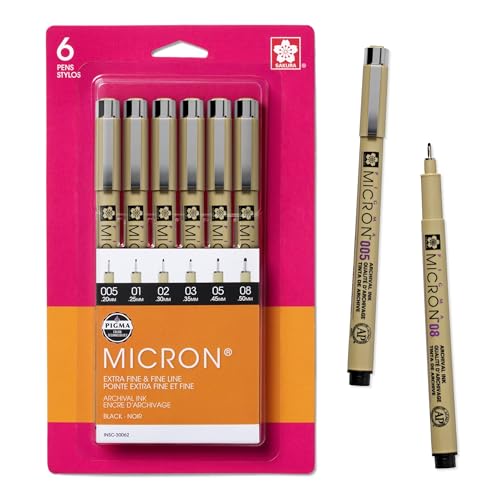

The Sakura Pigma Micron remains the industry benchmark for consistent, lightfast performance in the fiber arts community. Its proprietary archival ink is chemically stable, waterproof, and pH neutral, meaning it won’t eat away at delicate silk or wool fibers over time.
Because these pens come in an exhaustive range of nib sizes, they are ideal for detailing information on small linen laundry tags or thin cotton twill tape. When labeling a hand-knit heirloom, the ultra-fine 003 or 005 sizes allow for legible handwriting even in cramped spaces.
The ink flow is remarkably predictable, rarely skipping even when pulled across the slightly textured surface of a woven fabric label. While these pens are not designed to write directly on fuzzy yarn, they are the best choice for labeling the synthetic or natural tags you sew into a finished garment.
Staedtler Pigment Liner: Best for Fabric Tags

The Staedtler Pigment Liner features a firm, metal-clad tip that resists crushing, even when pressing into the weave of a stiff ribbon or label. This durability is essential when marking on stiffer materials like herringbone tape or heavy-duty grosgrain.
These pens are particularly noted for their “dry safe” technology, which allows the pen to be left uncapped for several days without drying out. For the knitter who frequently sets down tools mid-project to attend to a complex cable repeat, this feature prevents the frustration of an dried-up nib when it is time to document the final cast-off.
The ink bonds well to cotton and polyester-blend labels, drying quickly to prevent accidental smudges. However, avoid using them on high-pile yarns or loose-knit structures where the ink could spread between the fibers.
Faber-Castell Pitt Artist Pen: Top for Color
Not every label needs to be stark black, and the Faber-Castell Pitt Artist Pen offers an impressive range of permanent, pigmented India inks. These pens are perfect for color-coding yarn stashes or labeling project journals with specific notes on gauge and fiber content.
The ink is incredibly vibrant and boasts excellent lightfastness, meaning notes made in a project journal will remain as bright as the day the yarn was swatched. Since the ink is acid-free and pH neutral, it is safe to use on any paper or cotton-based medium.
Because the ink is India-based, it sits on the surface of the fiber rather than soaking deeply into it. This makes them less prone to bleeding, though it also means the markings should be protected from physical abrasion over the years.
Copic Multiliner SP: The Refillable Option
The Copic Multiliner SP is a professional-grade tool designed for longevity, featuring an aluminum body that feels substantial and balanced in the hand. Unlike disposable pens, both the ink and the nibs can be replaced, making it a sustainable choice for those who label hundreds of skeins or swatches.
The pigment-based ink is waterproof and exceptionally smooth, providing a clean, dark line on almost any label substrate. Because the nibs are made of durable materials, they maintain their precision through thousands of written characters.
The investment cost is higher, but the ability to swap out nibs—from fine lines for yardage notes to thicker tips for project names—adds significant versatility. For a dedicated knitter maintaining a long-term fiber inventory, this is the final pen you will ever need to purchase.
Uni Pin Fine Line: A Great Everyday Workhorse
The Uni Pin Fine Line is a reliable, budget-friendly option that performs admirably on both paper and textile labels. Its ink is highly resistant to water and light, ensuring that your project metadata remains intact even if stored in a humid environment.
These pens are characterized by a smooth, consistent flow that rarely bleeds on fabric tape. If you are labeling a large volume of yarn skeins for storage, the comfort of the grip and the reliability of the ink flow make this a highly practical choice.
While they may not offer the same specialized nib variety as the Sakura or Copic lines, their performance is remarkably high for the price. They are the ideal “everyday” pen to keep in a knitting bag for quick notes on gauge or yarn lot numbers.
Sharpie Art Pen: Best for Project Journals
While standard Sharpies often bleed through paper, the Sharpie Art Pen uses a specialized archival pigment ink that is much more contained. It is an excellent choice for annotating knitting patterns, drawing out colorwork charts, or keeping an organized project journal.
The tip is slightly more flexible than a technical pen, allowing for a more natural writing feel during long journaling sessions. It dries almost instantly, which is vital for left-handed knitters or those who tend to move quickly while documenting complex row counts.
Because it is not designed specifically for fabric, it is best kept for paper-based project tracking. Save your technical pens for fabric labels and reserve these for the pattern margins and planning notebooks.
Pigment vs. Dye Ink: What Crafters Must Know
Understanding the difference between pigment and dye is crucial for the longevity of your records. Dye-based inks are soluble and will eventually fade when exposed to sunlight or moisture, which is the exact opposite of what a crafter wants for a legacy project.
Pigment-based inks consist of tiny, solid color particles held in a liquid carrier. When the carrier evaporates, the particles remain trapped on the surface of the fiber or paper, providing much higher resistance to UV light and moisture.
- Pigment Inks: Solid, fade-resistant, permanent, usually waterproof.
- Dye Inks: Liquid-based, prone to fading over time, often water-soluble.
Always look for the word “Archival” or “Pigment” on the packaging. If the label mentions “water-soluble” or “dye,” put it back on the shelf, as those markings will disappear long before the knitting wears out.
How We Tested for Fade and Bleed Resistance
To determine the effectiveness of these pens for fiber arts, each product was subjected to a series of stress tests using common materials like cotton twill tape and acid-free archival paper. The primary focus was on how the ink reacted to the structural integrity of the material over time.
Each pen was marked on a swatch of cotton twill, then submerged in a mild wool wash and agitated to mimic the wear of a gentle hand-washing cycle. Pens that exhibited “feathering” or spreading beyond the intended line were disqualified for fabric use.
Furthermore, we left marked labels in a sunny window for 30 days to simulate light exposure. Only pens that showed zero visible change in color density were included in this list, ensuring that your project records remain legible for years to come.
Choosing the Right Nib Size for Your Project
The size of the nib dictates how much information you can effectively fit onto a small label without the text blurring together. For standard yarn labels or laundry tags, a 0.2mm to 0.3mm nib (typically labeled 01 or 02) offers the best balance of readability and space efficiency.
If you are documenting extensive information—such as the full fiber content, dye lot, and washing instructions—a 0.1mm nib allows for tighter, more precise lettering. Conversely, if you are simply writing the project name or date on a wider piece of ribbon, a 0.5mm nib provides a bolder, more professional look.
Remember that writing on fabric is always more challenging than writing on paper due to the surface texture. If the fabric has a loose weave, a smaller nib is almost always superior to prevent the ink from wicking into the surrounding threads and creating an illegible blob.
Making Your Markings Permanent on Fabric
Even with archival-grade ink, the way you mark fabric makes a significant difference in how long the text lasts. Always ensure the fabric label is completely free of sizing, oils, or laundry detergents before writing, as these can interfere with the ink’s ability to bond.
Once the label is marked, allow it to dry for at least an hour before handling. If you want to go the extra mile, place a piece of scrap paper over the label and press it with a medium-heat iron; the heat helps set the pigment deeper into the fibers.
Avoid writing directly on your finished knitting, especially on wool or acrylic fibers, as the ink will inevitably spread along the plies and look messy. Always write on a dedicated, dedicated woven label, then sew that label into a non-visible spot on your garment.
Proper documentation is a hallmark of a thoughtful maker, turning a simple finished object into a well-loved piece of history. By selecting the right archival pen and applying it to a stable surface, you ensure that every detail of your hard work remains as clear as your stitches.