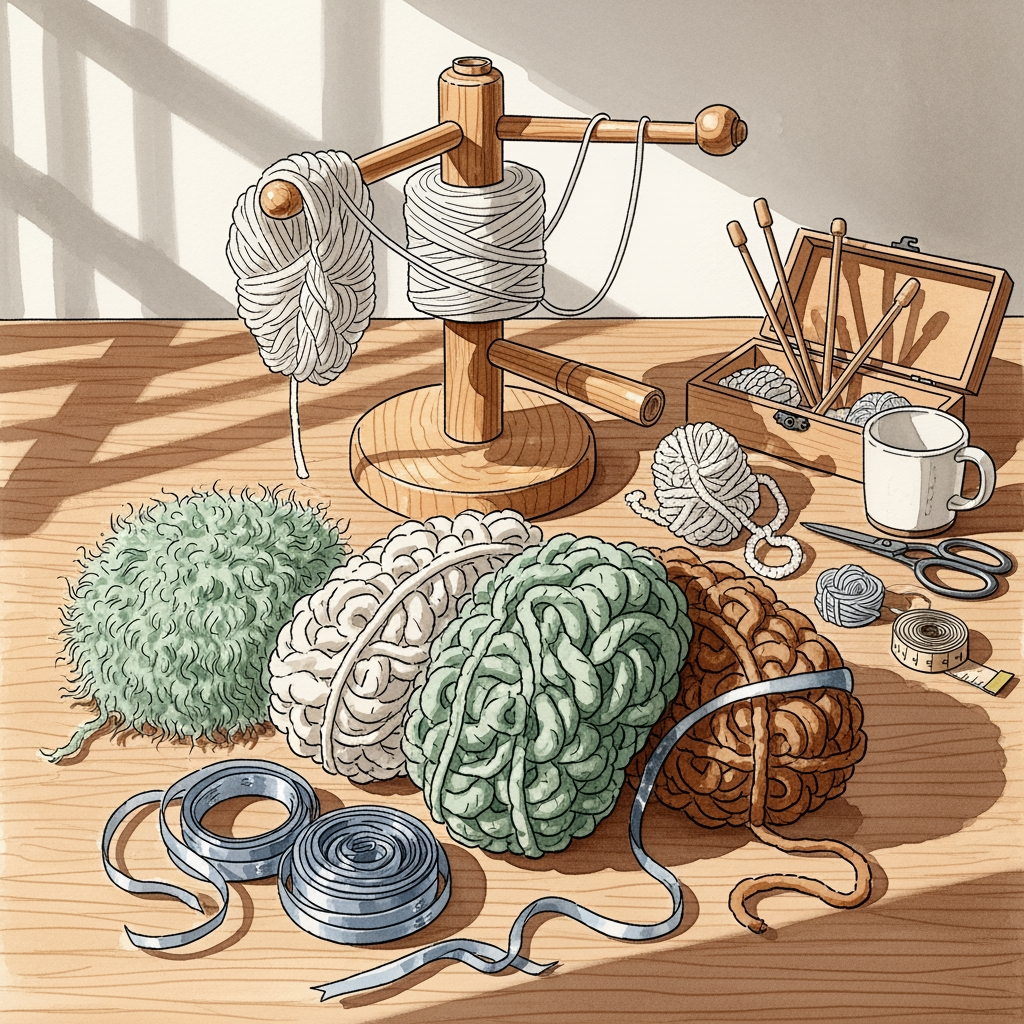
6 Best Yarn Scraps For Puppet Hair To Use
Discover the 6 best yarn scraps for puppet hair to achieve the perfect look for your creations. Read our guide and start crafting your unique character today!
Puppet making is an art form where the character’s personality often hinges on the texture and volume of the hair. Using leftover yarn scraps is an eco-friendly and cost-effective way to add life to these creations, but choosing the right fiber is crucial for achieving a specific look. Each yarn type behaves differently under the stress of puppet play, so matching the material to the character’s movement is essential. Selecting the wrong weight or texture can result in hair that looks flat, tangles instantly, or refuses to sit in the desired style.
Chunky Wool Roving: For Thick, Feltable Braids


Chunky wool roving consists of unspun or lightly twisted fibers, making it an ideal choice for characters requiring a dense, voluminous look. Because the fibers are not tightly spun, they can be manipulated to mimic the appearance of thick locks or rustic braids.
When working with roving, keep in mind that it lacks the structural integrity of a plied yarn. It is prone to shedding and pilling if handled roughly, so it is best reserved for display puppets or characters that do not undergo heavy wear.
For a more permanent, sculpted aesthetic, you can gently needle-felt the roving directly into the puppet’s head. This creates a seamless hairline that looks incredibly natural, though it requires specialized tools and a bit of patience.
Mohair or Brushed Alpaca: For Soft, Fluffy Hair

Mohair and brushed alpaca yarns are the go-to choices for puppets that require a wispy, ethereal, or realistic animal-like appearance. The “halo”—the fuzzy bloom of fibers radiating from the center strand—provides excellent coverage without adding significant weight.
These fibers are notoriously difficult to rip out once attached, so take care during the initial application. They provide a high-end look but can be messy to work with, as the tiny fibers tend to migrate onto clothing and workspace surfaces.
Avoid using mohair for puppets intended for younger children, as the loose fibers can be an irritant. If you want the fluff without the potential for shedding, seek out a blend that includes a synthetic core to anchor the delicate hair fibers more securely.
Curly Bouclé Yarn: For Instant, Textured Curls

Bouclé yarn is characterized by its uneven loops and knots, making it the perfect shortcut for achieving a head full of curls. You do not need to style this yarn; the texture is built directly into the structure of the strand, providing immediate visual interest.
Because bouclé is naturally snag-prone, it is vital to secure the ends tightly. If a loop catches on a piece of jewelry or a sharp puppet prop, the entire strand can unravel in seconds, leaving the character looking disheveled.
Consider mixing bouclé with a standard smooth yarn to give the hair more structural support. The smooth yarn acts as a “spine,” while the bouclé provides the exterior, playful curls that define the puppet’s silhouette.
Variegated Worsted Weight: For Colorful, Playful Hair
Variegated worsted weight yarn is an excellent choice for puppets that need a vibrant, whimsical, or artistic flair. The shifting colors add depth and dimension that solid colors simply cannot replicate, making even simple hairstyles look complex and well-planned.
When using variegated yarn, the length of the color changes—known as the “color repeat”—is the most important factor. Long color repeats result in distinct stripes, while short, frequent color changes create a heathered or speckled effect.
If you are aiming for a cohesive look, be aware that the colors in the yarn might clash with the puppet’s skin tone or costume. Always hold a sample of the yarn against the puppet’s head before committing to the full installation to ensure the colors enhance rather than distract.
Cotton or Linen Blends: For Durable, Sturdy Hair
Cotton and linen fibers offer superior durability and weight, making them perfect for puppets that will be used frequently in performances. Unlike wool, these plant fibers are smooth, cool to the touch, and hold their shape exceptionally well under duress.
Because these fibers lack the “grip” of animal hair, they are often slippery. Use a strong, non-slip knot or a generous amount of fabric-safe adhesive when securing them to the puppet’s base to prevent the hair from sliding out during movement.
These yarns are excellent for braided, tied, or slicked-back styles. They do not fuzz up or matt over time, ensuring that the puppet maintains its intended look even after months of active use.
Eyelash or “Fun Fur” Yarn: For Wild, Novelty Styles
Eyelash yarn is a novelty fiber with thin, stiff strands protruding from a central core, ideal for eccentric or “monster” style puppets. It provides immediate, high-impact texture that is impossible to achieve with standard knitting yarns.
Working with eyelash yarn can be frustrating because the “lashes” obscure the core of the yarn, making it difficult to see where to stitch or glue. Rely on touch rather than sight when positioning these strands to ensure they are properly anchored.
Use this yarn sparingly as an accent or a top layer. A head entirely covered in eyelash yarn can quickly become overwhelming, but a few strategically placed strands can add the perfect touch of neon, sparkle, or “wild” texture to a standard puppet design.
How to Attach Yarn Hair Securely to Your Puppet
The most common method for attaching yarn hair is the “latch hook” technique, where strands are folded in half and looped through the puppet’s base. This provides a secure, double-thick anchor point that holds up well to gentle handling.
For a more permanent attachment, use a high-quality fabric glue or a low-temp glue gun, especially if the puppet base is made of foam or felt. Ensure the adhesive is completely dry before attempting to brush or style the yarn, as moisture can weaken the bond.
If the puppet base is knit or crocheted, you can sew the hair strands directly into the fabric using a tapestry needle. This method is the most durable, effectively weaving the hair into the puppet’s “scalp” so it becomes part of the garment itself.
Choosing Hair Color: Solids vs. Variegated Yarns
Solid-colored yarns provide a clean, intentional look that is perfect for professional-grade puppets or characters with a specific, singular design. They are predictable and allow the silhouette of the puppet to stand out, which is ideal for stage work where clarity is paramount.
Variegated yarns, by contrast, create an organic, unpredictable appearance that works wonders for fantasy characters or rustic creatures. They mimic the natural variation found in real hair or fur, helping to soften the edges of the puppet’s construction.
When in doubt, choose a solid color for the base of the hair and add thin “highlights” of variegated yarn throughout. This technique offers the best of both worlds, providing both structural stability and visual intrigue without making the design look chaotic.
Styling Your Puppet’s Hair: Cutting and Braiding
Once the hair is attached, the final shape is determined by the cut. Use sharp, dedicated fabric scissors to trim the yarn, as dull blades will fray the ends of synthetic yarns and create an uneven, ragged appearance.
Braiding and tying are excellent ways to manage long yarn hair, but ensure the braids are not pulled so tightly that they distort the puppet’s head shape. Tension is the enemy of a well-crafted puppet; if the hair is too tight, it will pull the fabric base into unnatural puckers.
If you desire a fringe or bangs, cut the yarn slightly longer than intended first. You can always trim more off, but once the yarn is cut too short, there is no way to add length back, necessitating a full hair replacement.
Yarn Weight and Hair Fullness: A Quick Guide
The weight of the yarn is the primary determinant of how “full” the hair will appear. Fine yarns, such as lace or fingering weight, require a much higher density of strands to achieve a full head of hair compared to chunky or bulky yarns.
For a voluminous, shaggy look, use lighter, loftier yarns but increase the number of strands per attachment point. Conversely, for a sleek, realistic hairstyle, use a heavier weight yarn with fewer strands, which allows the hair to lay flat against the puppet’s head.
Always match the yarn weight to the scale of the puppet. Using bulky yarn on a tiny puppet can look cartoonish and oversized, while using lace weight yarn on a large puppet may result in a sparse, stringy appearance that looks unfinished.
By carefully selecting your yarn based on its texture, durability, and weight, you can transform a simple puppet into a character with distinct, memorable personality. Remember that each fiber brings its own unique challenges and rewards to your workstation. With these guidelines in mind, you have the knowledge necessary to choose the perfect yarn for your next puppet project.