6 Best Grid Mats For Accurate Layout Planning
Achieve precise measurements with our top-rated selection of 6 best grid mats for accurate layout planning. Read our expert guide and upgrade your workspace now.
Precision in knitting doesn’t end at the bind-off. Whether checking the dimensions of a completed lace shawl or laying out fabric for a complex seaming project, a high-quality grid mat serves as the foundation for professional-grade finishing. Achieving perfect symmetry in blocking relies on clear, accurate markings that remain readable even under the weight of wet wool. Choosing the right surface transforms a tedious, imprecise task into a structured and rewarding step of the craft.
Olfa Double-Sided Rotary Mat: Best Overall


The Olfa mat is widely considered the industry standard for those who demand consistency. Its double-sided surface features a non-slip base that prevents shifting during precise layout work, while the grid lines remain remarkably durable even after years of repeated contact with sharp blades or blocking pins.
For knitters, the primary benefit is the high-contrast grid visibility. When pinning out a blocked garment, having sharp, crisp lines allows for accurate measurement of stitch expansion and overall dimensions. This mat strikes an ideal balance between firmness, which supports heavy cables or damp wool, and the necessary “give” to accept blocking pins.
The trade-off is the surface density, which is optimized for rotary cutting rather than prolonged pining. While it holds pins well, frequent use of aggressive blocking wires may eventually create visible surface scarring. Bottom line: It is a workhorse that serves both the cutting table and the blocking station with equal reliability.
Fiskars Self-Healing Cutting Mat: Top Durability

Fiskars mats are engineered with a specialized core that effectively seals itself after being pierced. This resilience is essential if the workspace frequently doubles as a cutting station for fabric linings or reinforcing ribbons used in heirloom knitting projects.
The surface texture is slightly more forgiving than harder plastic mats, making it easier to insert pins at sharp angles. This is particularly useful when blocking intricate lace where tension must be held at specific, tight intervals. The grid lines are printed with fade-resistant ink, ensuring that measurements remain precise over time.
Because the material is slightly softer, it may show indentations more readily than professional-grade architectural mats. However, this softness is exactly what allows pins to glide in and out without snagging delicate fibers like silk or fine mohair. For the knitter who prioritizes a long-lasting surface that survives heavy-duty pinning, this is the superior choice.
June Tailor Shape ‘n Press Mat: For Blockers

Designed with the quilter and fiber artist in mind, the Shape ‘n Press mat is built specifically for heat and moisture management. If projects often involve steam-blocking, which is a common requirement for smoothing out wool that has become uneven during construction, this mat is an essential asset.
The surface is designed to withstand the heat of an iron while simultaneously providing a grid for layout planning. It effectively resists the warping that standard plastic mats suffer when exposed to high temperatures or steam. The grid is clearly marked for both 45-degree angles and square layouts, assisting in complex garment construction.
Note that this mat is not as durable for repeated, heavy-duty rotary cutting compared to professional cutting mats. Its true strength lies in its heat resistance and stability during the final shaping phase. It is the ideal choice for someone who prioritizes steam-blocking and precise garment assembly over heavy-duty fabric crafting.
Cricut Self-Healing Mat: Best for Crafters

The Cricut mat brings an aesthetic, modern sensibility to the workspace without sacrificing core performance. Its vibrant colors often assist in better contrast when working with dark, high-contrast yarns, making it easier to see how a garment piece lines up against a background.
The mat provides a reliable, self-healing surface that handles standard pinning well. It is thinner than industrial-grade mats, making it incredibly easy to store in a closet or tuck away in a craft room corner when not in use. This portability is a major advantage for knitters who lack a permanent, large-scale workspace.
Be aware that the grid markings on designer mats can sometimes fade faster if exposed to prolonged direct sunlight or harsh chemical cleaners. Treat this mat with care and it will provide years of faithful service. It remains the top pick for the occasional maker or those working in limited square footage.
US Art Supply Cutting Mat: Best Budget Pick

The US Art Supply mat provides a no-nonsense, functional surface at a fraction of the cost of premium brands. For the knitter who is just beginning to build a permanent blocking station, it offers all the essential features needed to ensure accurate garment sizing without a significant investment.
The grid layout is standard and easy to read, suitable for most general blocking needs. While the self-healing capability is present, it is not as sophisticated as high-end industrial models, meaning it may show deeper scars over time if used aggressively for heavy cutting. However, for pinning, it performs exceptionally well.
The lightweight nature of the mat is a double-edged sword; it is easy to move, but it may slide on slick tabletops if not secured. A simple piece of non-slip shelf liner underneath solves this entirely. For the budget-conscious knitter, it is an accessible entry point to precision finishing.
Dritz Superboard Cutting Mat: Best Large Format

The Dritz Superboard is designed for those who tackle large-scale projects, such as full-length sweaters or multiple garment pieces that require simultaneous blocking. Its massive, trifold design allows for a large work area that can be folded down for compact storage.
The surface is specifically optimized for pinning and sewing, featuring a grid that is easy to navigate even when the surface is covered in fabric. It eliminates the need to constantly reposition or move a smaller mat mid-blocking. This provides a consistent environment that prevents the slight tension shifts that can occur when moving a project across multiple smaller surfaces.
Because of its size, it is a significant piece of equipment that requires dedicated space to open fully. It is less suitable for small, delicate items but unmatched for large, structured garments. If the goal is consistent blocking of adult-sized sweaters, this board provides the necessary room to breathe.
How to Choose the Right Grid Mat for Your Space
Selecting the right mat starts with an assessment of the available workspace. If the only available surface is a dining table that must be cleared after every session, a folding or thin, rollable mat is necessary. If a dedicated craft room exists, a thick, heavy-duty mat that can remain in place will provide the most stability.
Consider the projects that appear most frequently on the needles. Those who primarily knit lace shawls need a mat that excels at pin-retention and handles moisture well. Those who focus on fitted, seamed garments need clear, grid-based squares to ensure that left and right fronts are perfectly identical.
Finally, factor in the frequency of use. A hobbyist might prefer a budget-friendly option, while a professional or high-volume knitter should invest in a self-healing surface that will not degrade under the pressure of hundreds of pins each year. Prioritize size and durability based on the actual physical scale of the completed items.
Self-Healing vs. Standard Mats: What’s Better?
A self-healing mat is constructed from multiple layers of a specialized polymer that allows the blade or pin to sink into the material without creating a permanent gap. Over time, the material “relaxes” back into its original shape. For a knitter who uses blocking wires, this is an advantage as it keeps the surface smooth.
Standard hard-plastic or pressed-board mats do not possess this property. Once a pin or blade makes a mark, the surface remains compromised. While these are often cheaper, the surface imperfections can eventually snag delicate yarns, such as thin silk or loose-ply cashmere.
For fiber arts, the self-healing option is almost always the superior choice. The slight extra cost is justified by the longevity of the tool and the protection afforded to the yarn. A smooth mat prevents the fibers from catching, ensuring that blocking does not accidentally pull or distort the stitches.
Care and Feeding of Your New Cutting Mat
The lifespan of a grid mat is directly tied to how it is stored and cleaned. Never store a mat in direct sunlight or near a heat source, as UV rays and heat can cause the material to warp, bow, or become brittle. Always keep the mat stored flat whenever possible; if space is an issue, leaning it against a wall is acceptable, provided it is supported along its entire length.
Cleaning is straightforward but requires caution. Use only mild soap and room-temperature water with a soft cloth. Harsh chemicals, including alcohol or heavy-duty household cleaners, can dissolve the grid markings or degrade the self-healing properties of the surface.
Avoid using a steam iron directly on the mat surface, even if it is marketed as heat-resistant. Always place a pressing cloth or a towel between the iron and the mat to disperse the heat. Proper maintenance ensures the grid remains sharp, the surface stays smooth, and the investment lasts for decades.
Using Your Grid Mat for Perfect Blocking
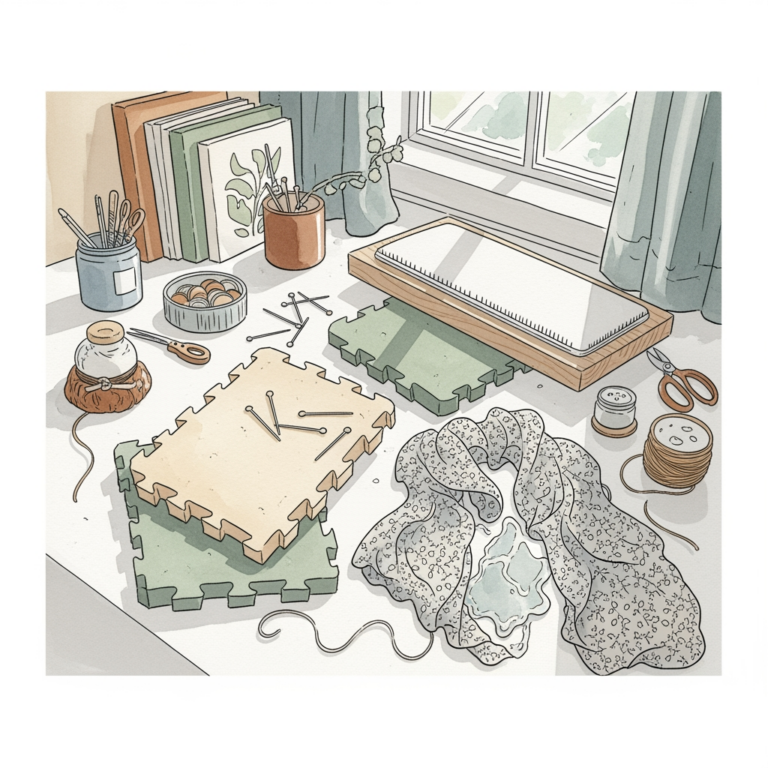
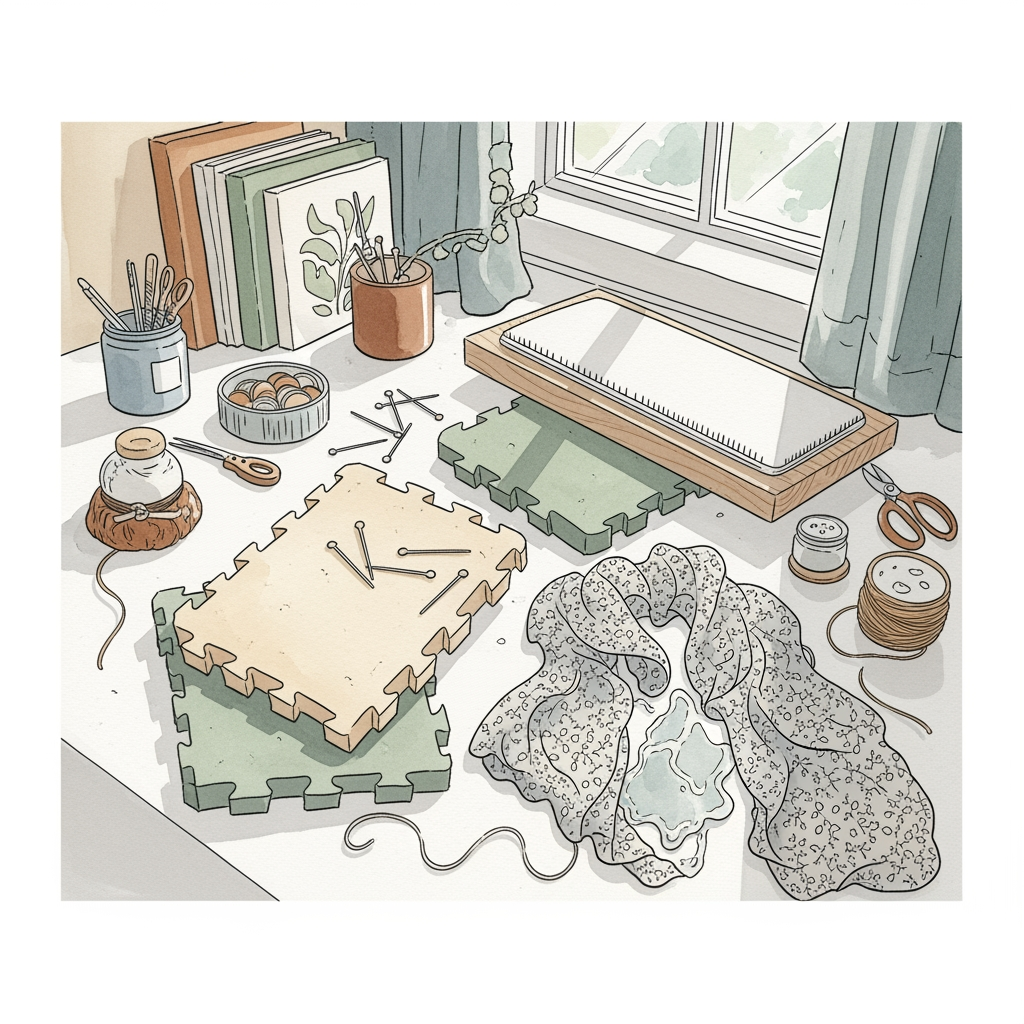
Blocking is the final act of the design process, and the grid mat is the master guide. Start by laying the project flat on the mat and aligning the main seams with the grid lines. Use the horizontal and vertical lines to ensure the garment isn’t skewed, which is the most common cause of poor fit in handmade knitwear.
When pinning, work from the center outward to ensure even tension distribution. If the pattern is a symmetrical lace, pin the center spine first and use the grid to confirm that each corresponding point is pinned at an identical measurement from the spine. This eliminates the “crooked shawl” syndrome.
Do not over-stretch the fabric; the grid is there to ensure the garment matches its intended schematic, not to force it into a shape it cannot hold. After pinning, check the measurements against the project instructions one final time. Consistent use of the grid ensures that the finished item looks professional and feels intentional.
Choosing the correct grid mat bridges the gap between an amateur-looking project and a finished piece worthy of an heirloom status. By investing in a surface that supports accurate layout and reliable blocking, the knitter ensures that every stitch is presented to its best advantage. Whether prioritizing durability, heat resistance, or sheer size, there is an ideal mat designed to support the specific needs of the next project.