
6 Best Nylon Jaw Pliers For Wire Straightening Worth Owning
Find the 6 best nylon jaw pliers for wire straightening that prevent marring and protect your projects. Read our expert guide to choose your perfect pair today.
Working with wire in fiber arts often requires the same precision as managing a tangled skein of hand-dyed lace weight yarn. Just as a snagged stitch can ruin the drape of a garment, a kinked piece of wire can compromise the structural integrity of a custom shawl pin or wire-knit accessory. Nylon jaw pliers serve as the essential interface between rigid metal and delicate artistic intent. Selecting the right pair ensures that wire remains smooth and mark-free, much like using the right needles protects a fiber’s loft and twist.
Beadsmith Nylon Jaw Pliers: Best Overall Value


These pliers provide an accessible entry point for makers who frequently incorporate wire elements into their fiber projects. The construction balances durability with affordability, making them a staple for those who need utility without an industrial-grade price tag.
The jaw width is generous, offering enough surface area to straighten multiple gauges of craft wire in a single pass. For knitters working with silver-plated or copper wires for beaded embellishments, this tool prevents the unsightly marring that standard metal pliers cause.
Bottom line: Choose these if the priority is consistent performance on routine projects without a significant equipment investment.
Wubbers Medium Nylon Jaw Pliers: Pro Jeweler’s Pick
Professional jewelry artists gravitate toward Wubbers for their superior weight distribution and ergonomic handles. When hours are spent manipulating wire for intricate wire-knitted jewelry, the build quality becomes apparent in the reduced hand fatigue.
The nylon inserts on these pliers are remarkably dense, providing a firm grip that doesn’t sacrifice the “soft” feel required to prevent surface scratching. They excel at managing temperamental, work-hardened wires that require extra leverage to straighten.
Bottom line: Invest in these if high-volume, professional-grade output is the primary goal for wire-incorporated fiber arts.
Xuron 485FN Flat Nose Pliers: Most Precise Tip

Precision is paramount when working with fine-gauge wires that might snap under excessive tension. The Xuron 485FN features a slim profile that allows for manipulation in tight spaces, similar to the precision needed when picking up a dropped stitch in a complex lace pattern.
The flat nose design is specifically engineered for straightening and bending with absolute control. Because the jaws are thin, they offer the perfect balance for wire that needs to be threaded through small bead holes or delicate fiber loops.
Bottom line: This is the ideal tool for fine-detail work where bulky pliers would cause unnecessary clutter or damage.
EUROTOOL Original Pliers: The Reliable Workhorse
Consistency is the hallmark of the Eurotool Original line, which has remained a standard in workshops for years. These pliers are built for longevity, utilizing high-quality materials that resist the degradation often seen in cheaper imitation tools.
When the objective is simple wire straightening, these pliers offer a predictable, no-nonsense grip. They function much like a set of carbon fiber knitting needles—reliable, sturdy, and capable of handling years of regular use without losing their characteristic “bite.”
Bottom line: Opt for these if the preference is for a proven, time-tested tool that will remain a staple in the workspace for years.
Beadalon Ergonomic Nylon Jaws: Best for Comfort
The ergonomic handle design on these pliers addresses the reality of repetitive strain, a common concern for knitters and wire artists alike. The contoured grips fit naturally in the palm, minimizing the tension that can accumulate during long crafting sessions.
Beyond comfort, the nylon jaws are replaceable, adding a layer of sustainability to the purchase. Instead of discarding the tool when the pads inevitably wear down from friction, you simply swap in a fresh pair to restore the original performance.
Bottom line: This tool is the top choice for makers prone to hand fatigue or those who prefer a more sustainable, long-term tool life.
Beadsmith 3-Piece Plier Set: Best Starter Kit
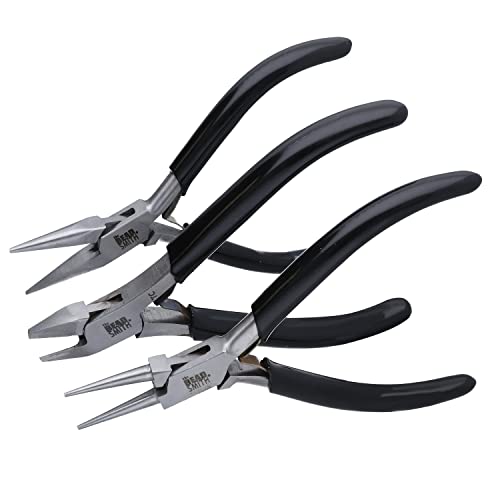
A comprehensive set is often the smartest move when venturing into wire-based fiber arts. This kit provides a variety of jaw shapes, ensuring that whether you are straightening, bending, or cutting, the correct tool is immediately at hand.
While specialized tools are excellent, a set allows for experimentation without having to purchase individual pliers for every task. It offers the same convenience as owning a full range of needle sizes; having the right tool for the specific diameter and tension of the material is critical to success.
Bottom line: Purchase this set if the goal is to build a complete, versatile toolkit in one cost-effective step.
What to Look For in a Pair of Nylon Jaw Pliers
The quality of the nylon is the most important factor, as soft or brittle material will disintegrate rapidly under pressure. Look for high-density, industrial-grade nylon that holds its shape against the heat and friction generated during wire manipulation.
Ergonomics are equally critical; ensure the handles are spring-loaded to reduce the amount of physical force required for each squeeze. A tool that feels clunky or awkward will lead to uneven pressure, which is the primary cause of wire kinking and wrist strain.
- Jaw Alignment: Ensure the tips meet perfectly flush when closed.
- Replacement Pads: Check if the manufacturer offers replacement nylon inserts.
- Handle Grip: Look for non-slip coatings to prevent accidents when working with smoother wire coatings.
Bottom line: Prioritize tool durability and handle comfort over aesthetic features to ensure a tool that supports, rather than hinders, creative output.
How to Straighten Craft Wire Without Leaving Marks
Successful straightening relies on applying constant, even pressure along the entire length of the wire. Start at one end and pull the wire slowly through the nylon jaws, maintaining a consistent angle to avoid creating new bends.
Avoid squeezing the handles too tightly, as excessive force can cause the wire to “bite” into the nylon. Use the pliers as a guide rather than a clamp, allowing the nylon to smooth the wire while you apply the necessary tension.
Bottom line: Practice steady, fluid motions rather than jerky tugs to achieve a perfectly smooth wire ready for complex weaving.
When and How to Replace Worn Out Nylon Jaws
Nylon jaws are consumables, much like the tips of wooden needles that can become pitted or rough over time. If the surface becomes grooved, cracked, or severely discolored, it is time for a replacement to ensure the wire doesn’t get snagged or scratched.
Most professional pliers allow for a simple screw-in or snap-fit replacement. Keep a spare set of pads on hand so that your work cycle is never interrupted by a degraded tool, just as one would keep an extra cable or spare needle tip ready during a large-scale project.
Bottom line: Inspect your pliers after every intensive session; replacing worn pads is a small investment that protects the quality of all your wire work.
Flat vs. Round Nose: Which Pliers Do You Need?
Flat nose pliers are the go-to for straightening, as the surface area provides the contact needed to flatten out kinks. They act like a firm, structured needle, ideal for creating clean lines and crisp angles.
Round nose pliers, by contrast, are essential for creating loops and curves. They are the equivalent of a knitting tool for shaping—best used when the project requires a soft, curved transition rather than a sharp, straightened edge.
Bottom line: If your primary goal is straightening, stick to flat nose pliers; save the round nose for those moments when your project requires sculptural curves and organic loops.
Selecting the right nylon jaw pliers is a foundational step in elevating wire work from simple manipulation to professional-grade artistry. By prioritizing durability, ergonomics, and proper maintenance, you ensure that your tools work as seamlessly as the fiber arts themselves.

