6 Interfacing Fabrics For Structured Collars To Try
Master the perfect neckline with these 6 top interfacing fabrics for structured collars. Read our expert guide to choose the right stabilizer for your project.
A structured collar is often the difference between a garment that looks homemade and one that exudes professional polish. When knitting cardigans or shirts with fabric-backed collars, the right interfacing provides the necessary backbone to prevent rolling and sagging. Selecting the appropriate weight and type is essential for ensuring the collar moves naturally with the body. These six options offer distinct levels of support to elevate the finish of any textile project.
Pellon SF101 Shape-Flex: Your All-Purpose Choice


Pellon SF101 is a woven, fusible interfacing that functions as the gold standard for most medium-weight projects. Because it is woven, it moves with the fabric while providing just enough body to prevent the limp, “soggy” look common in untreated cotton or knit-adjacent collars.
It remains incredibly versatile, making it the ideal starting point for those unsure of their project’s final needs. If a pattern calls for a collar that should stand up but still feel soft against the neck, SF101 is the reliable answer.
The primary trade-off is that it provides moderate rather than extreme structure. For heavy wool coatings or bulky sweater-knits, it may require a secondary layer to achieve a crisp, architectural shape.
Pellon Peltex 71F: For Maximum Collar Stiffness

Peltex 71F is an ultra-firm, fusible stabilizer that behaves more like a thin piece of plastic than a traditional fabric. It is designed for applications where the collar must remain perfectly vertical or hold a precise, sharp edge regardless of the surrounding fabric weight.
Use this for garments where the collar serves as a focal point or a frame for the face. It is particularly effective in high-collared styles or stand-up bands that would otherwise collapse under the weight of a heavy yarn.
Be aware that Peltex creates a very rigid finish. If the project requires any degree of drape or flexibility, this choice may feel too aggressive, potentially making the garment feel uncomfortable during movement.
Wawak Sew-In Hair Canvas: The Traditional Pick

Hair canvas is a timeless choice, traditionally woven from a blend of wool and goat hair. Unlike fusible options, this is a sew-in product, meaning it is anchored into the collar structure through precise tailoring stitches rather than heat-activated adhesive.
This is the preferred method for high-end tailoring where longevity is paramount. Over years of wear and cleaning, fused interfaces can sometimes bubble or delaminate; sewn-in canvas avoids this risk entirely and allows the collar to mold to the wearer’s shape over time.
While it offers superior long-term performance, it requires more patience and technical skill to install. It is best reserved for classic, structured collars that demand professional-grade construction.
Sulky Fuse ‘n Stitch: Firm, Fusible, and Fast
Sulky Fuse ‘n Stitch acts as a bridge between fabric stabilizers and craft-weight interfacings. It provides a crisp, paper-like stiffness that is exceptionally easy to handle, making it a favorite for beginners who struggle with the floppiness of woven interfacings.
The texture is firm enough to stabilize even the most loosely knit or lightweight fabrics. It works exceptionally well in smaller collar details where precision cutting is necessary to avoid bulky seams.
Because it has a distinct hand, it will alter the feel of the outer fabric more than a woven interfacing would. Use this when the goal is a sharp, crisp appearance rather than a soft, fluid hand-feel.
Bosal In-R-Form Fusible: For Padded Structure
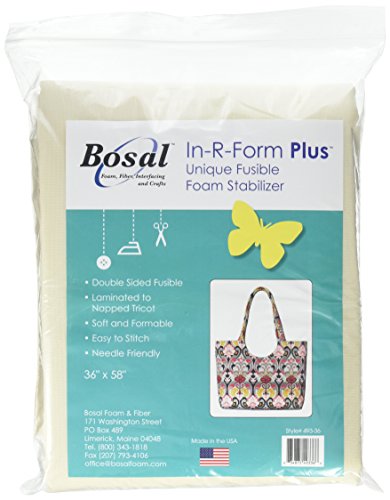
Bosal In-R-Form is a unique foam-based stabilizer that provides both structure and a slight, cushioned loft. While typically used for bag making, it serves a distinct purpose for collars that require a soft, dimensional appearance rather than a flat, hard edge.
This is ideal for projects using thick, plush yarns where a standard thin interfacing would disappear into the texture of the knit. The foam adds just enough thickness to bridge the gap between the fabric layers without appearing over-stiffened.
The trade-off is volume; this will add physical depth to the collar, which may not be suitable for delicate or fine-gauge garments. Ensure the seams are sufficiently robust to accommodate the extra padding.
Vlieseline G700: The Premium Woven Fusible

Vlieseline G700 is a high-quality cotton woven interfacing that offers a soft, natural hand while providing excellent support. It is widely considered the premium choice for those who prioritize the feel of the garment against the skin.
It integrates seamlessly with natural fibers, as the cotton base responds to heat and steam in a way that mimics the behavior of the garment fabric. It is particularly effective for silk, linen, or high-end wool collars that need to maintain a refined look.
While it lacks the heavy structural capacity of Peltex, it is the most sophisticated option for garments meant to be worn daily. The result is a collar that stays neat and crisp without feeling artificial or overly engineered.
Fusible vs. Sew-In: Which Is Right for You?
The choice between fusible and sew-in comes down to project permanence versus ease of application. Fusibles provide a quick bond that supports the entire surface area of the fabric, effectively making the interfacing and the outer layer a single unit.
Sew-in interfacings offer more freedom for the fabric to breathe and shift, which is often preferable for heirloom-quality tailoring. A fused collar that has been improperly applied is prone to bubbling, whereas a sewn-in canvas is essentially indestructible.
If the goal is speed and structural consistency, choose a fusible. If the project involves expensive, natural fibers and demands a long lifespan, invest the time to learn the sew-in technique.
How to Prep Your Fabric for Perfect Application
Proper preparation is the secret to preventing common interfacing failures. Always pre-wash the garment fabric if the fiber content is prone to shrinkage; if the fabric shrinks after the interfacing is applied, the collar will become distorted and puckered.
When applying fusible interfacing, use a press cloth to protect the surface of the iron and the fabric. Use a “press and lift” motion rather than sliding the iron back and forth, as sliding can stretch the fabric and cause the glue to shift unevenly.
Allow the collar to cool completely before handling it further. The adhesive needs time to set; moving the piece while it is still warm can weaken the bond and lead to premature peeling.
Matching Interfacing Weight to Your Yarn/Fabric
The golden rule of interfacing is to match the weight of the stabilizer to the weight of the primary fabric. A heavy-duty interfacing on a fine fingering-weight wool will create a stiff, unnatural barrier, while a lightweight interfacing on a heavy wool tweed will do absolutely nothing.
- Fine/Lightweight: Use a light, non-woven fusible.
- Medium/DK-Weight: Use a woven interfacing like SF101.
- Heavy/Bulky: Use a sew-in canvas or a heavy-duty fusible for stability.
When in doubt, perform a test swatch using a scrap of the fabric and the chosen interfacing. Press them together, let them cool, and pull at the fabric to see if it provides the desired resistance.
Laundering Collars With Interfacing: A Guide
Laundering is where many structured collars fail, as high heat or aggressive agitation can compromise the adhesive bond. Always prioritize hand-washing or delicate machine cycles for any garment with a fused collar to maintain the structural integrity.
Avoid high-heat drying, as the intense temperature of a dryer can reactivate the adhesive and cause it to seep through the seams or bubble under the surface. Lay the garment flat to dry, and if the collar loses its shape, gently steam it back into place with a pressing cloth.
With sewn-in interfacing, maintenance is much simpler, as there is no adhesive to worry about. These pieces can generally withstand more robust cleaning, provided the outer fabric is also durable enough for the process.
Selecting the right interfacing turns a challenging knit project into a polished, professional garment that stands the test of time. By considering the interplay between weight, stiffness, and application style, the structure of your collar can be perfectly tuned to match the character of your chosen yarn. Take the time to test your combinations, trust the structural needs of the fabric, and your finished pieces will maintain their shape for years to come.