7 Best Craft Shelving Units For Yarn Collections
Organize your fiber stash with ease. Explore our top 7 craft shelving units for yarn collections and find the perfect storage solution for your hobby today.
A well-organized yarn stash is more than just an aesthetic display; it is a vital tool for successful project planning. When your fibers are visible and accessible, matching the right weight and fiber content to a pattern becomes an intuitive process rather than a stressful scavenger hunt. Proper storage prevents tangles, keeps delicate fibers away from household hazards, and ensures that every ball is ready for the needles at a moment’s notice. Selecting the right shelving unit transforms a chaotic pile of impulse purchases into a curated library of creative potential.
IKEA KALLAX Shelf Unit: Best Overall Stash Hub


The KALLAX is the gold standard in the knitting community for a reason. Its square cubby design perfectly fits standard yarn cakes, keeping them upright and accessible.
When a stash reaches the size where inventory management becomes necessary, the uniform grid of the KALLAX allows for clear categorization by fiber type or weight. Whether separating lace-weight mohair from heavy worsted wool, the structure remains rock-solid under the weight of hundreds of skeins.
Be aware that these units are heavy and require assembly. While the cube shape is ideal, the lack of a back panel means yarn can easily get pushed through to the wall.
ClosetMaid Cubeicals: Top Budget-Friendly Pick
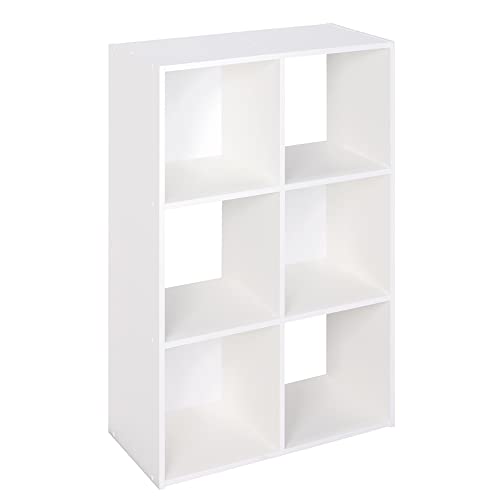
For those starting a serious collection without wanting to break the bank, ClosetMaid offers a functional, lighter-weight alternative to pricier modular systems. These units are easy to assemble and provide the same basic structural benefits of a grid-style system.
These shelves work exceptionally well for storing yarn in soft bins or organized groupings of skeins. Because they are lighter, they are easy to rearrange when the inevitable seasonal “stash reshuffle” occurs.
The tradeoff here is durability. They are not designed to hold extreme weight, so avoid stacking heavy, oversized sweater quantities in every single cubby.
The Container Store Elfa: Best for Customization

If the yarn collection includes everything from tiny sock-yarn mini-skeins to massive bags of bulky roving, a rigid square cubby might not be the best fit. The Elfa system allows for adjustable shelf heights, meaning you can dedicate a tall shelf to cones of weaving yarn and a shorter shelf to standard hanks.
This is a professional-grade solution that grows with a stash. If the collection expands or shifts, the brackets can be moved without requiring a new piece of furniture.
It is an investment piece, but for a dedicated studio space, the ability to customize shelf spacing is invaluable. It ensures that no vertical space is wasted, which is critical for smaller apartment setups.
IRIS USA 6-Cube Shelf: Best with a Solid Back

The primary issue with many cube shelves is the “yarn escape” problem, where balls roll out the back of the unit. The IRIS USA unit includes a solid back panel, which is a significant advantage for keeping the stash contained.
A solid back also protects yarn from dust accumulation that can happen against a bare wall. This is particularly important for delicate, high-protein fibers like silk or alpaca that attract dust easily.
These units are relatively compact and fit well into closets or hallways. They represent a balanced choice between security and footprint.
Wayfair Basics Etagere: Best Open-Sided Design
Sometimes, visibility is the most important factor in choosing yarn for a project. An etagere design provides an open, airy aesthetic that makes the stash feel like part of the home decor rather than a hidden storage project.
This style is perfect for showing off hand-dyed skeins. It prevents that “packed-in” feeling and encourages the knitter to actually use the yarn they have collected, rather than burying it in a dark box.
The main drawback is that open sides offer zero protection from dust. Keep this unit in a low-traffic room and consider using it for yarn that rotates through your “current project” queue.
Better Homes & Gardens 8-Cube: Most Versatile
This unit hits the “sweet spot” for many crafters who need a mix of display and hidden storage. Because the openings are standard size, they accept a wide array of third-party baskets and fabric drawers.
The versatility lies in the ability to mix open cubbies with closed bins. Open cubbies serve for immediate project yarn, while bins can house notions, needles, or less-frequently used yarn bases.
It is sturdy and reliable for medium-sized collections. If the room has limited floor space, this unit can be oriented horizontally to double as a console table.
Amazon Basics Wire Grid: Best for Air Circulation

If the collection lives in a basement or a room with high humidity, wire grids are the superior choice. Proper airflow is essential for preventing mold and mustiness in animal fibers.
Wire grids allow you to see the yarn from every angle, which is useful when hunting for a specific colorway in a large stash. They are also incredibly modular, allowing for custom shapes that fit awkward nooks.
The primary disadvantage is that small, slippery balls of yarn can fall through the gaps. Use these for larger hanks or skeins, or line the base with a thin piece of cardboard.
How to Choose Shelving for Your Yarn Stash Size
When selecting a shelf, measure the depth of your skeins first. Most yarn hanks are roughly 8 to 10 inches long, so a shelf with a 12-inch depth is usually sufficient.
Consider the “density” of your stash. If you store yarn in baskets, prioritize width; if you display loose skeins, prioritize the height and quantity of the cubbies.
Always factor in the floor space available and the weight capacity of the unit. A fully loaded 8-cube shelf can hold significant weight, so look for units with reinforced frames.
Protecting Your Yarn from Pests, Dust, and Sun
Regardless of the shelving unit, environmental control is mandatory. Pests, particularly moth larvae, are the greatest enemy of any wool collection; ensure the room is kept cool and well-ventilated.
Sunlight is another silent destroyer, as UV rays can cause dramatic color fading in natural fibers. If the shelves are in a sunny room, position the unit away from direct windows or install light-filtering curtains.
Dust is a minor but pervasive issue. For long-term storage, choose units that can accommodate lidded boxes or use clear plastic bins to keep delicate fibers pristine.
To Bin or Not to Bin: Storing Yarn in Cubbies
Bins are excellent for keeping color-coded projects together or hiding a chaotic overflow of odds and ends. However, they limit visibility, which often leads to “yarn amnesia” where skeins are forgotten for years.
If the goal is to use the yarn regularly, keep the most used weights (like fingering or worsted) in open cubbies. Save the bins for long-term storage of expensive luxury fibers or seasonal yarns like heavy alpaca.
Avoid using airtight plastic bags unless the yarn has been professionally cleaned and is completely pest-free. Natural fibers need to breathe, and trapping moisture in a bag can lead to disastrous mildew growth.
Selecting the right shelving is the final step in moving from a casual hobbyist to a serious fiber artist with a curated, functional collection. By focusing on accessibility, protection, and your specific storage habits, you can create a space that inspires rather than overwhelms. Happy knitting.