6 Fabric Steamers For Travel Costume Maintenance
Keep your costumes wrinkle-free on the go with our top 6 picks for the best fabric steamers for travel. Read our expert reviews and shop your perfect tool today.
Traveling with handmade costumes or delicate knitwear requires a careful balance between weight and functionality. Ensuring a shawl or an intricate garment remains pristine after being packed in a suitcase is a universal challenge for fiber artists. The right steamer can prevent fibers from crushing and save hours of re-blocking upon arrival. Selecting a reliable tool ensures that your hard-earned stitch definition stays sharp, regardless of your destination.
Conair Turbo ExtremeSteam: Most Powerful Travel Pick


High-wattage performance is the hallmark of this model, making it ideal for heavier garments like wool coats or structured capes. Its concentrated steam output penetrates thick, dense fibers that smaller, lower-powered steamers often struggle to saturate.
For projects knitted with high-twist, worsted-weight wool, this unit excels at relaxing the fibers without risking the scorching associated with traditional irons. The metal steam plate acts as a secondary heating element, helping to smooth out stubborn, travel-induced wrinkles in dense fabrics.
Because it offers substantial power, one must be careful with delicate lace or open-work patterns. If you use it on lace, keep the head moving consistently to prevent over-steaming, which can cause natural fibers like wool or alpaca to lose their structural tension.
Hilife Handheld Garment Steamer: Budget-Friendly Fave
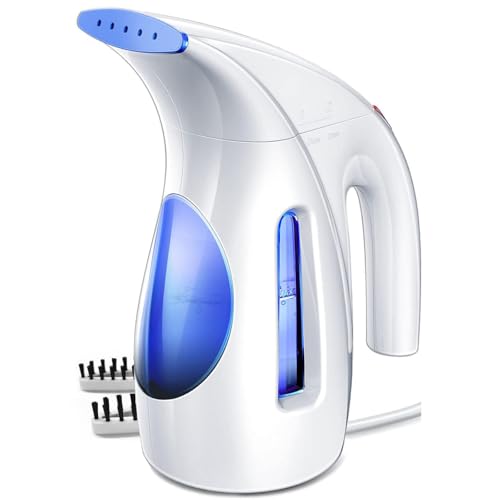
Simplicity is often the best approach when traveling light, and this compact unit provides a straightforward solution for quick touch-ups. It is lightweight and fits easily into the side pocket of a carry-on, making it an excellent choice for those who pack minimal gear.
While it lacks the heavy-duty features of larger models, it is perfectly suited for lighter fibers like cotton, bamboo, or silk blends. These fibers often hold onto “suitcase creases” stubbornly, and a quick pass with this steamer is usually enough to restore the drape of a light summer top.
Budget-conscious makers should note that the water reservoir is small, meaning it requires frequent refilling for larger garments. Use this tool for refreshing finished pieces rather than heavy-duty shaping, as it does not produce the sustained heat needed for intensive blocking.
Beautural Foldable Steamer: Best for Small Luggage

Space efficiency is the primary concern for the traveling fiber artist who must prioritize yarn and needles in their limited luggage allowance. The foldable handle design allows this steamer to collapse into a remarkably small footprint, preserving space for essential notions.
The design does not compromise on functionality, featuring a sufficiently powerful output for most knitwear maintenance. It works well on garments made of synthetic fibers or superwash wool, which generally require less intensive heat to release wrinkles.
Avoid using this on very long items like floor-length costumes, as the smaller water tank may run dry before the task is complete. It remains the top choice for maintaining smaller accessories like cowls, hats, or delicate shawls while on the move.
Rowenta X-Cel Steam First: Fastest Heating Choice

Time is often in short supply when preparing for a convention or a gallery showing. This steamer prioritizes speed, heating up in a matter of seconds to ensure garments are ready to wear almost immediately.
Rapid heating is particularly beneficial for those working with blended fabrics that require a precise, quick touch to avoid water spots. When dealing with luxury fibers like cashmere, the efficiency of this tool reduces the time the fabric is exposed to heat, preserving the integrity of the delicate yarn.
Keep in mind that high-speed heating often comes with a more focused, narrow steam output. When using this on your knitting, move the nozzle in a controlled, sweeping motion to ensure even distribution and prevent localized fiber saturation.
Nori Press Steamer & Iron: The Multi-Tasking Tool

This innovative tool combines the functions of a press and a steamer, offering a unique approach for garments that require crisp lines. For costumes involving pleated skirts or structured hems, the clamp-like action provides a professional finish that a standard vertical steamer cannot achieve.
The dual-plate system heats from both sides, allowing for precise control when blocking cuffs or set-in sleeves. This is a game-changer for knitters who need to replicate the sharp, tailored look of a traditional ironed garment without the bulk of a full-sized ironing board.
Because it mimics an iron, caution is necessary to avoid “flattening” the texture of cables or bobbles. Use the steam function liberally while keeping the plates slightly hovered over textured stitch patterns to preserve the loft and volume of your yarn.
Magictec Portable Steamer: Best for Delicate Fabrics
When handling mohair, angora, or hand-dyed yarns that might be sensitive to high temperatures, a gentle steam flow is essential. This model provides a steady, soft release that relaxes fibers without the risk of aggressive heat damage.
It is particularly effective for hand-knitted pieces that may have shifted during travel. The consistent pressure helps the fabric regain its intended shape, making it a reliable companion for maintaining finished items at trade shows or public exhibits.
Do not expect this unit to handle thick, heavy-weight knits, as its output is designed for finesse rather than power. If you are traveling with a heavy fisherman’s sweater, look elsewhere; if you are carrying a fragile lace shawl, this is the safest bet.
How to Choose the Right Steamer for Your Costumes
Selecting the right tool depends heavily on the fiber composition of the garments you intend to travel with. Natural protein fibers like wool and alpaca respond well to moderate steam, while cellulose fibers like linen or cotton often require more consistent, higher heat to smooth out heavy creasing.
Consider the construction of your projects as well. Garments with complex colorwork, lace panels, or high-relief cables demand a tool that can provide steam without direct contact, as crushing the stitch work can ruin the aesthetic you spent hours achieving.
- Weight vs. Power: Determine if you need industrial-grade steam or simple convenience.
- Water Capacity: Larger garments require larger tanks; don’t get stuck refilling in the middle of a project.
- Safety Features: Look for auto-shutoff to protect your fabric and your hotel room.
- Portability: Ensure the weight of the steamer doesn’t exceed your travel-light goals.
Steaming Delicate Fabrics: A Step-by-Step Guide
Proper steaming begins by hanging the garment in an open space, allowing gravity to assist in the process. Ensure the fabric is clean, as heat can lock in existing stains or odors.
Start by testing the steamer on an inconspicuous area, such as a side seam or the inside of a hem. Hold the steamer roughly two to three inches away from the fiber surface, using long, sweeping motions to avoid concentrating heat in one spot.
For pieces that require blocking, gently stretch the fabric into shape with your hands while applying the steam. Once the fabric is slightly damp and warm, let it cool completely; this cooling period is when the fibers “set” into their new, wrinkle-free configuration.
Steamer vs. Iron for Costumes: Which Is Better?
An iron is a heavy-duty tool meant for shaping fabric against a flat surface, while a steamer is designed to relax fibers in a vertical, hanging position. For the vast majority of knitting projects, a steamer is the superior choice because it avoids the risk of crushing delicate stitch patterns.
Irons are useful only when you need a crisp, structural edge, such as on a collar or a stiff, woven trim. However, the risk of scorching or “iron shine” on wool and silk fibers is significantly higher with an iron.
If you are a knitter who prioritizes yarn loft and texture, a steamer provides the necessary moisture without the physical compression of an iron plate. Stick to steaming for knits and reserve the iron for the woven structural components of a costume.
How to Safely Use Your Steamer on Synthetic Wigs
Synthetic wigs are a common accessory in costume design, but they react to heat differently than animal or plant fibers. High temperatures will melt synthetic hair instantly, permanently fusing the fibers and destroying the style.
Always use the lowest setting on your steamer when working with synthetic wigs and keep the nozzle at a safe distance. Start by steaming from the bottom up to release tangles, then move toward the crown to smooth the base.
If you are using a steamer to restyle a wig, steam it until the fibers are warm and pliable, then use a brush to guide them into the desired shape. Allow the synthetic fibers to cool completely in that position, as this is when the new shape becomes permanent.
Proper care and maintenance of your costumes, whether they are knitwear or complex theatrical pieces, ensure that your creative efforts remain on display exactly as you intended. By choosing the right tool and respecting the individual needs of your fibers, you can travel with confidence and keep your work in gallery-ready condition. Consistent care, regardless of the destination, is the hallmark of a serious fiber artist.