7 Best Collapsible Bins For Small Space Storage
Maximize your home organization with our 7 best collapsible bins for small space storage. Find the perfect folding solutions for your needs and shop the list now.
Organizing a growing stash of yarn requires more than just shelf space; it demands a system that protects delicate fibers while keeping them accessible. Small-space living often forces knitters to choose between a chaotic heap of wool or a curated, visible collection. Collapsible bins provide the perfect middle ground, offering structure when in use and disappearing when the stash needs to be reorganized. Selecting the right container prevents yarn from becoming tangled, crushed, or exposed to the elements.
IKEA DRÖNA Box: Best for KALLAX Cube Storage


The IKEA DRÖNA box is the undisputed gold standard for those utilizing the KALLAX shelving unit. Its dimensions are engineered to slide perfectly into standard cube openings, creating a clean, uniform look that hides unsightly skeins from view.
These boxes are lightweight, making them easy to pull down from high shelves even when filled with heavier wool blends. Because they are soft-sided, they offer a bit of “give,” allowing for the storage of slightly overstuffed yarn cakes or bulky sweater quantities.
Be aware that these are not meant for structural weight. If filled with dense, heavy cones of weaving yarn or excessive amounts of superwash wool, the handles can eventually succumb to the stress. Use these for lighter projects or to house yarn bowls and needle cases rather than heavy bulk stock.
SONGMICS Fabric Cubes: The Most Versatile Set

SONGMICS cubes offer a slightly more reinforced structure than standard foldable fabric bins, often featuring a cardboard base insert that adds stability. This extra rigidity prevents the bin from bowing outward, which is essential if the bin is placed on an open shelf where appearance matters.
These sets are ideal for color-coding a stash. By dedicating specific bins to tonal palettes or fiber types—such as separating mohair lace from worsted weight wool—you can quickly grab exactly what is needed for a project without digging through the entire collection.
The tradeoff here is that the fabric is typically a non-woven polypropylene. While breathable, it is not as durable as canvas or cotton, so avoid using these for storing sharp tools or knitting needles that might snag the interior lining.
HOSROOME Large Bins: For Big, Bulky Yarn Stashes
When dealing with large, squishy bundles like bulky alpaca roving or multiple sweater quantities of worsted wool, size is the primary constraint. HOSROOME bins provide a generous footprint that accommodates these voluminous fibers without forcing them into a compressed, felted-like state.
Proper storage of high-loft fibers is critical; compressing wool for long periods can damage its natural crimp and elasticity. These larger bins allow for a more airy, loose organization that preserves the integrity of the yarn’s structure before it even touches the needles.
Keep in mind that larger bins require deeper shelving. Ensure the footprint matches your storage area, as these bins do not shrink to fit cramped corners.
AmazonBasics Fabric Cubes: The Top Budget Choice
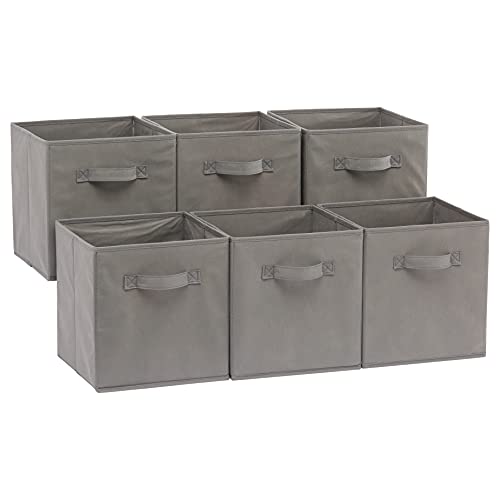
AmazonBasics fabric cubes represent the entry-level solution for those who prefer to spend their budget on high-quality hand-dyed yarn rather than storage hardware. They are functional, simple, and provide a basic barrier against dust and direct sunlight.
For knitters just starting to build a stash, these are the perfect starting point. They allow for an organized transition from plastic bags to a more permanent, visually cohesive system without a significant financial commitment.
Do not expect long-term durability if these are moved frequently. The material is thinner and prone to fraying at the seams if overfilled or dragged across rough surfaces, so these are best reserved for stationary, long-term storage.
Neatfreak! Lidded Bin: Best for Dust Protection
Lids are a non-negotiable feature for knitters living in older homes or areas prone to heavy dust. The Neatfreak! lidded bins prevent dust particles from settling into the twist of the yarn, which is especially important for lighter colors that show debris easily.
A lid also adds a layer of safety against household pests and inquisitive pets. If there is a risk of stray yarn ends being pulled out by a cat or dog, a secure lid acts as an essential shield for your fiber investment.
Remember that a lid also cuts off airflow. If the yarn is not perfectly clean or if the environment is humid, ensure the fibers are completely moisture-free before sealing them inside to prevent the development of musty odors.
The Container Store Bins: Most Stylish Option
For those who view their yarn stash as part of the home’s interior design, The Container Store offerings provide a polished aesthetic. These bins often utilize higher-quality fabric and sturdier construction than standard discount-store alternatives.
Functionally, these bins excel in high-traffic areas where they remain visible. They hold their shape well, even when empty, providing a sophisticated look that keeps the stash feeling like a collection rather than a storage problem.
The primary disadvantage is the price point. These are an investment, so determine if the goal is strictly utility or if the storage solution also needs to serve as an aesthetic highlight for the room.
Sea Team Trapezoid Bins: For Easy Project Access
Trapezoid-shaped bins are a hidden gem for project-specific storage. Their unique profile provides a lower front edge, allowing you to easily view the contents without having to move the entire bin off the shelf.
This is particularly useful for works-in-progress (WIPs) or specific collections, such as sock yarn minis or lace weight yarns meant for upcoming shawls. The slanted opening invites you to interact with your stash, increasing the likelihood that you will actually finish those lingering projects.
Because of their shape, they work best on lower shelves or open tables. Placing them high up makes it difficult to see into the lower portion of the bin, which defeats the purpose of the accessible design.
How to Choose the Right Bin for Your Yarn Stash
Selecting a bin is a balance between protection, visibility, and spatial constraints. Before purchasing, categorize your stash by weight—luxury fibers like silk or cashmere deserve enclosed, breathable storage, while hearty workhorse wools can handle a bit more exposure.
Consider the following factors before you buy: * Dimensions: Always measure the shelf depth, not just the width. * Weight Capacity: Cardboard-reinforced bins support more weight than simple fabric boxes. * Portability: Handles are necessary if you frequently move your stash to a knitting nook or living room. * Material: Opt for natural fabrics if possible, as they offer better breathability for protein fibers.
If the storage area is prone to fluctuations in temperature or humidity, avoid plastic-coated bins that might trap moisture. Always aim for a solution that balances accessibility with the need to keep fibers clean and organized.
Smart Ways to Organize Yarn Within Your Bins
A bin is only as good as the organization inside it. Simply tossing skeins into a box leads to tangles and the “forgotten stash” syndrome, where yarn at the bottom is never used.
Try using smaller, clear zip-top bags or small drawstring pouches within the larger bins to group similar weights or colorways. This keeps specific projects contained and ensures that when a new pattern is chosen, the required yardage is ready to go.
Labeling the bins is also a wise practice, especially for knitters with large stashes. Use small tags to indicate the fiber content, yardage, or recommended needle size for the yarn held within, making the selection process significantly faster.
Protecting Your Fiber Stash from Moths and Pests
Moths are the sworn enemy of every knitter, and an open fabric bin is essentially an invitation. Even if you use collapsible bins, store natural fibers like wool, alpaca, and silk in sealed, airtight containers inside the bins whenever possible.
Lavender sachets and cedar blocks are effective natural deterrents that also provide a pleasant scent. However, these are not foolproof and should be checked or refreshed every few months to ensure they remain potent.
If you suspect any pests, immediately isolate the affected yarn in a sealed plastic bag and place it in the freezer for at least 72 hours. This process kills larvae and eggs without damaging the fiber’s structure, allowing you to safely reintroduce it to your stash once the bin has been thoroughly cleaned.
Organizing a stash is an ongoing process that evolves alongside your knitting journey. By investing in the right collapsible bins and employing thoughtful storage strategies, you ensure that your materials remain in pristine condition and ready for the next cast-on. A well-organized fiber collection is not just a storage achievement; it is the foundation of a more productive and enjoyable crafting experience.