6 Best Steam Irons For Crisp Garment Pressing
Achieve professional results with our guide to the 6 best steam irons for crisp garment pressing. Read our top picks and upgrade your laundry routine today.
A finished garment is only as good as its final finishing, and the difference between a homemade look and a professional heirloom lies in the steam. Proper pressing transforms uneven stitches into a cohesive, draped fabric, effectively hiding the tension inconsistencies common in complex colorwork. Choosing the right tool is not merely about removing wrinkles; it is about managing heat and moisture to bloom the yarn’s natural characteristics. This guide evaluates the top steam irons to ensure every project receives the precise treatment it deserves.
Rowenta DW5080 Focus: The Professional’s Choice


The Rowenta DW5080 Focus commands respect for its precision tip and consistent steam distribution. This iron is designed for those who treat garment finishing with the same technical rigor as a lace pattern, offering a concentrated burst of steam that penetrates dense, hand-knit cables without flattening the texture.
The stainless steel soleplate is highly durable and features numerous steam holes, ensuring that moisture is applied evenly across wide panels of knitting. This is particularly advantageous when blocking large sweaters, as it prevents the “spot-steaming” that often leads to distorted gauge or uneven stitch definition.
While its performance is near-industrial, it is slightly heavier than standard household models. This weight is actually an asset for knitters, as it provides the necessary pressure to smooth out seams and edges without requiring excessive force. Expect a professional finish, provided the heat settings are carefully matched to the fiber content.
Oliso TG1600 ProPlus: For Safety and Convenience

The Oliso TG1600 ProPlus features an innovative “iTouch” technology that lifts the iron off the board when not in use. For a knitter working in a crowded studio or balancing multiple projects, this eliminates the risk of scorching a delicate alpaca swatch when reaching for a darning needle or a spare set of stitch markers.
Beyond the safety lift, the iron offers a generous heat range and rapid recovery time. When steaming multiple pieces of a garment for seaming, the constant temperature ensures the steam remains dry rather than spitting water, which is a common hazard when dealing with moisture-sensitive fibers like silk or mohr blends.
While the price point is higher, the convenience of avoiding constant repositioning is significant. For the dedicated knitter, this tool streamlines the blocking process, making it safer to manage large, delicate projects that require frequent adjustment.
Reliable Velocity 200IR: Best for Heavy Steam

The Reliable Velocity 200IR excels for those who frequently work with bulky wools or fibers that require heavy steaming to set the final shape. It utilizes a dual-heating system that turns water into steam before it reaches the soleplate, effectively eliminating the common issue of leaky, messy irons.
For heavy, dense knitting—such as an Aran-weight fisherman’s sweater—this iron provides the volume of steam necessary to relax the fibers completely. It handles thick, multi-ply yarns with ease, ensuring that the yarn blossoms and the stitch definition pops exactly as intended.
The tradeoff here is the physical footprint, as it is a more substantial unit. However, for the serious garment maker who produces multiple sweaters a year, the consistency and power provided by this model justify the extra shelf space.
Panasonic NI-L70SRW: The Best Cordless Option
The Panasonic NI-L70SRW provides the ultimate freedom of movement, a feature that is invaluable when blocking large shawls on a wide surface. Without a cord tethering the iron to an outlet, the risk of snagging a delicate yarn tail or catching the iron on a pin is virtually eliminated.
The iron charges on a base and holds heat for short durations, requiring a quick “reset” on the dock between passes. This rhythm actually encourages a more mindful, methodical approach to pressing, preventing the accidental over-steaming of fragile fibers like lace-weight cashmere or delicate merino.
While the heat retention is sufficient for most knitting applications, it may require more frequent docking during large-scale blocking sessions. It is the ideal choice for a knitter who prioritizes precision and maneuverability over long, continuous steaming sessions.
Black+Decker D3030 Allure: Top Budget-Friendly Pick
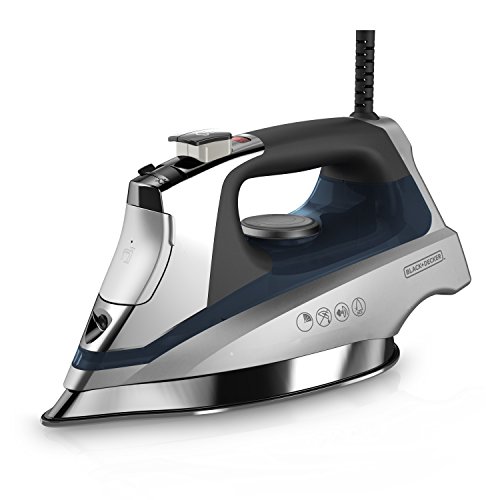
The Black+Decker D3030 Allure is a reliable, high-performance option that proves advanced features are not always necessary for a professional result. It offers a strong steam output and a durable ceramic soleplate, which glides smoothly over both plant-based fibers like cotton and animal fibers like wool.
This model is particularly effective for the beginner or intermediate knitter who is building their tool kit. It handles the basics of blocking and seam pressing with reliable consistency, proving that the user’s technique—specifically the decision to hover the iron rather than press down—is more important than the iron’s price tag.
The main tradeoff is longevity, as it may lack the robust internal components of higher-end, professional-grade irons. However, for standard sweater-making and routine maintenance, it provides an excellent balance of cost and utility.
Sunbeam Hot-2-Trot: Your Best Bet for Travel
The Sunbeam Hot-2-Trot is an essential tool for those who knit on the go or attend fiber festivals. It is compact and lightweight, making it easy to slip into a project bag or suitcase when traveling to a workshop or knitting retreat.
Despite its diminutive size, it heats up rapidly and offers enough steam to handle a quick block or to crisp up an edge before a final assembly. It is perfectly suited for small items like socks, mittens, or hat brims where a full-sized iron would be cumbersome.
Because of its smaller water reservoir, this iron requires frequent refilling and is not suited for blocking an entire adult-sized garment at once. Think of it as a specialized finishing tool for smaller projects rather than an everyday workhorse.
Pressing vs. Ironing: A Crucial Distinction
In the world of knitting, “ironing” is a dangerous word that implies sliding the iron back and forth across the fabric. This movement can stretch, distort, and permanently alter the stitch gauge of a hand-knit garment, especially when working with elastic fibers like superwash wool.
“Pressing,” by contrast, involves lowering the iron onto the surface, applying a burst of steam, and lifting it away. This method allows the steam to relax the fibers and set the stitches into their final, intended shape without the friction that causes distortion.
- Always hover: Keep the iron slightly above the fabric when working with high-loft or mohair-rich yarns to avoid crushing the texture.
- Use a press cloth: A thin cotton handkerchief or a piece of muslin prevents direct contact, protecting sensitive synthetic fibers or variegated yarns from sheen and scorching.
- Test first: Always perform a test on a swatch before approaching the main garment to ensure the heat and moisture levels are appropriate for the specific yarn weight and ply.
How to Choose an Iron for Your Crafting Needs
Selecting the right iron starts with an assessment of the typical fiber content in one’s stash. If a knitter frequently works with hardy, durable wools, a heavy-duty iron with high steam capacity is preferred. If the collection is dominated by delicate lace-weight silks and angora, focus on models with superior temperature control and a gentle, consistent steam release.
Consider the size of the projects as well. Large-format garments like cardigans and blankets require a wider soleplate and a larger water reservoir to maintain continuous steam. Smaller, intricate projects demand precision tips that can navigate around buttons, collars, and complex motifs without damaging the surrounding work.
Finally, evaluate the storage space and the need for portability. A high-end steam station is excellent if there is a dedicated craft room, but a compact, cord-free, or travel-sized iron is far more practical for those with limited space or a mobile knitting practice.
Safely Pressing Wool, Cotton, and Delicate Fibers
Fiber properties dictate the temperature and moisture settings, as each material responds differently to heat. Wool, being a protein fiber, loves moisture and steam, which helps it bloom and fill in gaps between stitches, effectively masking minor tension irregularities.
Cotton and other cellulose fibers are less elastic and often require more heat to “set” effectively, though they can lose their luster if pressed too firmly. Synthetics are the most temperamental; high heat can melt fibers, leading to a shiny or flattened appearance that cannot be corrected.
- Wool: Use steam, but avoid heavy pressure. Let the garment dry completely before moving it to lock in the shape.
- Cotton: Can handle higher heat. Use a pressing cloth to prevent a “press shine” on the surface of the fabric.
- Delicates (Silk, Mohair): Never allow the iron to touch the yarn. Use vertical steam, allowing the moisture to gently penetrate the fibers while the garment hangs.
Tap Water vs. Distilled: An Iron’s Worst Enemy
Hard water is the primary cause of iron failure in the fiber arts community. Minerals such as calcium and magnesium accumulate inside the internal steam chambers and ports, eventually clogging the vents and leaving unsightly, crusty deposits on hand-knit fabric.
While many irons claim to be “tap-water safe” due to built-in anti-calcium systems, the safest practice is always to use distilled water. This simple habit preserves the life of the heating element and prevents the risk of mineral-rich water spots appearing on a finished sweater after weeks of work.
If the local water supply is particularly hard, distilled water is non-negotiable. It is an inexpensive investment that protects the tool and ensures that no unwanted residue finds its way into the clean, finished surface of the knitting.
The true mark of a master knitter is not just the ability to execute complex stitches, but the patience to finish them with care. By selecting an iron that matches both the project requirements and the specific fiber needs, the transition from a pile of knitted pieces to a professional, wearable garment becomes a seamless part of the craft. Proper pressing is the final step in the knitting process, and with the right tool, it ensures that every stitch holds its intended form for years to come.