6 Best Warning Labels For Safety Compliance To Use
Ensure workplace safety and legal compliance with our guide to the 6 best warning labels to use. Improve your facility’s hazard communication standards today.
Navigating the world of handmade business requires as much attention to legal compliance as it does to stitch tension. While picking the perfect merino-silk blend for a baby blanket is satisfying, ensuring that blanket meets safety standards is what keeps a maker’s business sustainable. Labeling is the bridge between a beautiful finished object and a compliant, market-ready product. These choices determine how effectively information like fiber content, care instructions, and safety warnings reach the end user.
Avery Printable Fabric Labels: Best for DIY


Avery printable fabric sheets turn a standard home inkjet printer into a professional labeling system. This is the go-to solution for makers who need to iterate quickly or run small batches of custom items.
The primary advantage here is total design control. A maker can draft a label that includes the specific gauge, yardage, and fiber breakdown of a unique hand-dyed project without waiting for a third-party manufacturer.
Be aware that these are best suited for items that face low friction. While they adhere reasonably well, they may lose clarity or adhesion if placed on high-wear areas like the soles of slippers or the palms of gloves.
Wunderlabel Satin Labels: For CPSIA Compliance
Satin labels offer a high-end, tactile experience that elevates the look of any handmade garment. Their smooth surface is ideal for items intended for children, as they rarely cause skin irritation or chafing.
These labels are often the gold standard for CPSIA (Consumer Product Safety Improvement Act) compliance in the fiber arts world. They provide enough space to print necessary tracking information, such as batch numbers and manufacturer identification, clearly and legibly.
When choosing satin, prioritize quality of the weave to ensure the text remains crisp after multiple washings. Cheap, glossy satin can sometimes result in “bleeding” ink, which renders essential safety data unreadable over time.
EverEmblem Iron-On Labels: Best Budget Option
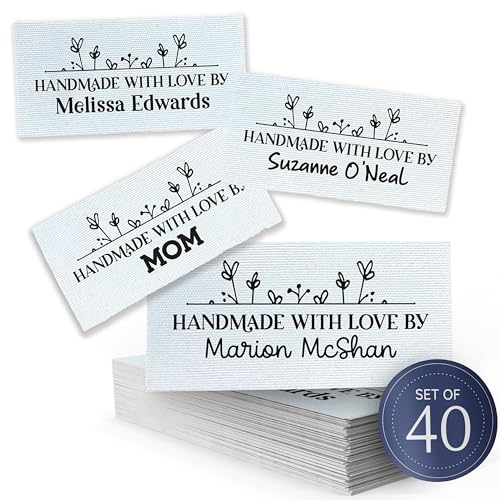
Iron-on labels provide an efficient, low-profile way to attach safety information without the bulk of traditional woven tags. They are excellent for knitters who find that sewing through a finished, blocked project compromises the integrity of their stitches.
These labels essentially bond with the fibers, making them highly resistant to being pulled off by curious toddlers or pets. This makes them a smart choice for functional items like kitchen linens or simple stockinette baby hats.
However, consider the heat sensitivity of the yarn being used. Never apply an iron-on label directly to acrylic or synthetic blends that might melt under high heat; always test a swatch first to ensure the base fabric can handle the bonding temperature.
Dutch Label Shop Woven Taffeta: Most Durable
Woven labels are the top choice for heirlooms or items intended to last for decades. Unlike printed labels, where the information sits on the surface, the text on a woven taffeta label is part of the physical structure of the fabric.
This durability is essential for garments that undergo frequent blocking or heavy washing. If a project requires specific care instructions, such as “Hand Wash Cold, Lay Flat to Dry,” a woven label ensures that those instructions remain legible throughout the life of the garment.
While the upfront cost is higher, the professional finish is unmatched. For a garment-making business, this is an investment in the long-term perceived value of the product.
Zazzle Fire Warning Tags: For High-Risk Items
Certain items, particularly those meant for sleepwear, carry strict fire safety regulations. Zazzle offers customizable tags that can be easily attached to meet these specific, high-risk compliance requirements.
Using a pre-made template for fire warnings reduces the risk of omitting legally required language. These tags serve as a clear, unmistakable alert that informs the buyer about the flammability of the fibers involved.
Always ensure these tags are attached securely to an area where they will not obstruct the fit or comfort of the item. A dangling, stiff tag on a neckband will likely be cut off by the user, defeating the purpose of the safety warning.
Custom Etsy Ink Stamps: Most Versatile Option
For the maker on a budget, custom ink stamps offer incredible flexibility. By using fabric-safe ink, a knitter can stamp care instructions or branding directly onto ribbon or cotton scraps before sewing them into the project.
This method allows for the ultimate “just-in-time” production. If a custom commission suddenly requires extra yarn content details, a quick stamp on a scrap of fabric is a much faster solution than reordering pre-printed labels.
Always use permanent, non-toxic, heat-set ink. If the ink is not properly heat-set, the first wash will turn clear safety labels into an illegible gray smudge.
How to Choose Your Safety Compliance Label
Selecting the right label depends entirely on the intended use and the fiber content of the piece. A label intended for a hard-wearing wool sock requires different durability than one for a delicate lace shawl.
- Consider Wash Cycles: Determine if the item will be machine-washed and dried, which requires high-durability woven tags.
- Check Skin Sensitivity: Use soft satin or cotton for items worn directly against the skin to avoid irritation.
- Evaluate Fiber Heat Tolerance: Ensure the application method—sewing, ironing, or gluing—won’t damage the yarn.
Always prioritize legibility over aesthetic. A beautiful label is useless if the safety information is too small or faint to be read by the consumer.
Decoding CPSIA Rules for Your Handmade Goods
The CPSIA mandates that certain products for children under twelve must include a tracking label. This includes the manufacturer’s name, the location and date of production, and detailed batch information.
For the independent knitter, this often feels daunting. However, keeping a simple spreadsheet of every finished item, the date it was cast off, and the materials used creates a perfectly compliant paper trail.
Do not be intimidated by the legal language; the goal is simple transparency. By providing clear information, you build trust with your customers while staying firmly within the bounds of safety regulations.
Sew-In vs. Iron-On vs. Stamped Labels
The choice between these methods usually comes down to how much the label interferes with the drape of the fabric. A large, stiff sew-in label can ruin the swing of a hand-knit cardigan if placed in the wrong spot.
Sew-in labels remain the most permanent and least likely to cause damage to delicate fibers. Iron-on labels are faster, but they do add a layer of stiffness that can feel intrusive on soft accessories like scarves or baby bonnets.
Stamped fabric scraps are the middle ground, offering a handmade charm that feels cohesive with the overall project. Use these for small batches where a custom order of woven tags feels like overkill.
Common Handmade Labeling Mistakes to Avoid
The most frequent mistake is omitting the fiber content, which is a legal requirement in many regions. Never assume the buyer knows that a “wool-look” yarn is actually 100% acrylic.
Another pitfall is placing the label in an area that causes friction, such as the back of a heel or the sensitive nape of a neck. A label that the user feels compelled to remove is a failed safety measure.
Finally, avoid using permanent markers directly on yarn. The ink will inevitably spread along the fibers, creating a blurry mess that provides no actual utility and ruins the visual appeal of the finished piece.
Finding the balance between legal compliance and the tactile beauty of hand-knitted work is a skill all its own. By choosing labels that respect both the fiber and the wearer, makers ensure their work remains safe, professional, and built to last.