7 Best Knotting Tools For Silk Pearl Strands To Use
Master the art of jewelry making with our expert guide to the 7 best knotting tools for silk pearl strands. Find your perfect set and start stringing today.
Creating a professional-grade strand of pearls requires a delicate touch and the right mechanical assistance to ensure each knot is uniform and secure. While traditionalists might prefer the manual rhythm of hand-tying, specialized tools provide the consistency necessary to protect expensive silk thread and delicate gemstone surfaces. Choosing the correct equipment transforms a tedious, multi-hour process into a repeatable, meditative craft. Mastering these tools ensures that heirloom pieces remain durable and aesthetically balanced for generations.
The Beadalon Knotter: Best for Beginners


The Beadalon Knotter functions similarly to a specialized sewing aid, designed to guide the knot precisely into place against the bead. It removes the guesswork involved in positioning the knot near the drill hole, which is the most common point of failure in pearl stringing.
This tool is ideal for those who find the dexterity required for manual knotting frustrating or inconsistent. By using a mechanical trigger, it pulls the thread tight while keeping the loop open, allowing the user to slide the knot perfectly flush against the bead.
Consistency is the primary advantage here, as the tool does not rely on hand-eye coordination for placement. However, beginners must practice the tensioning mechanism; pulling too hard can snap fine silk thread, whereas too little force leaves a loose, unsightly knot.
Tri-Cord Knotter: Top Choice for Speed and Ease
The Tri-Cord Knotter is engineered for those who prioritize output without sacrificing the integrity of the knots. It excels in environments where volume is required, such as prepping multiple strands for a larger multi-row statement necklace.
The mechanism is designed to handle multiple thread thicknesses, making it versatile for both fine pearls and larger, heavier beads. Its ergonomic handle reduces hand fatigue, a critical factor during long sessions of repetitive knotting.
While it is exceptionally fast, it lacks the surgical precision of hand-tying for extremely delicate, micro-drilled beads. Consider this tool when working on projects where efficiency is the priority over the slow, intentional pace of traditional techniques.
BeadSmith Knot-a-Bead: For Professional Results
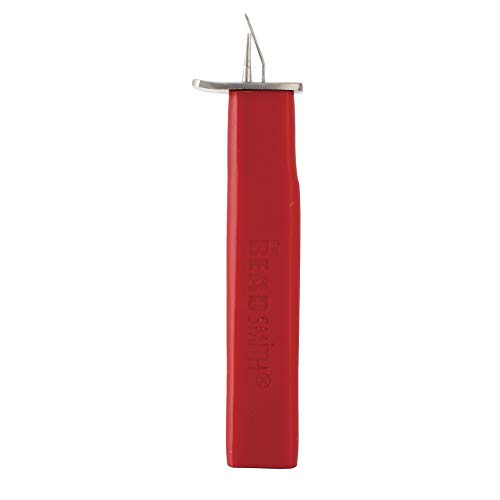
The BeadSmith Knot-a-Bead system is essentially a board-mounted workstation that stabilizes the entire stringing process. By securing the strand at both ends, it allows for a two-handed approach that mimics the ergonomics of a professional jeweler’s bench.
This setup is particularly effective for preventing the tangling and twisting that often plague long, limp silk threads. It provides a visual guide for knot spacing, ensuring that every gap between pearls remains identical across the entire length of the strand.
Professional results depend on the tensioning bar, which allows for subtle adjustments during the knotting process. It is a significant investment, but it is the superior choice for artisans who regularly produce high-end jewelry and require absolute uniformity.
Griffin Silk Cord: The All-in-One Solution
Griffin Silk Cord is not a tool in the mechanical sense, but it is the industry-standard substrate for a reason. Each spool comes pre-attached to a stainless steel needle, which eliminates the need to thread a needle through the silk, a process that often frays the fibers.
The integrity of a knot is only as strong as the thread itself, and Griffin’s twisted silk provides the perfect balance of flexibility and strength. It holds a knot firmly once tightened, preventing the “drift” that often occurs with cheaper, synthetic nylon alternatives.
Always match the size of the silk to the drill hole of the pearl to ensure the knot sits properly outside the hole. This cord is the foundation upon which all other knotting tools perform their best work.
Xuron TweezerNose Pliers: For Precise Knotting
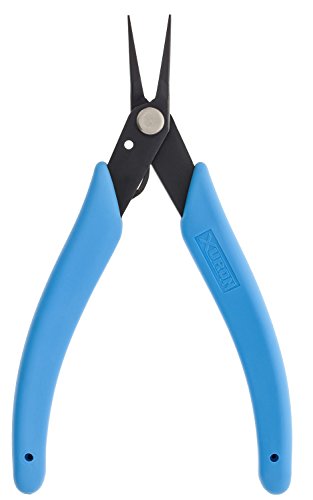
Even with the best knotter, there are instances where a pair of tweezers is necessary to nudge a knot into its final position. Xuron TweezerNose pliers are preferred because their tips are fine enough to grasp silk without crushing or severing the fibers.
Unlike standard hardware pliers, these feature a soft-touch grip that provides tactile feedback, allowing the artisan to feel the knot seating into place. Using them to guide the knot ensures that the silk does not twist or bind as it tightens.
They are an essential companion to any knotting tool. Use them sparingly, as excessive pulling with metal tools can weaken the silk fibers over time.
Tulip Beading Awl: For Perfectly Tight Knots

A high-quality awl is the most essential tool for any knotter, acting as a third hand during the manual knotting process. The Tulip Beading Awl features a perfectly tapered, polished tip that prevents snagging on the delicate silk fibers.
When working, the awl is used to hold the loop of the knot open until the very last moment. By inserting the awl into the knot and pulling it toward the bead, the artisan can dictate exactly where the knot lands with surgical precision.
A smooth tip is non-negotiable, as even a microscopic burr on a cheap awl will shred silk instantly. Investing in a professional-grade needle tip is one of the most cost-effective ways to improve the quality of your finished jewelry.
Fiskars Micro-Tip Snips: Best for Clean Cuts

Silk cord is prone to fraying at the cut end, which makes threading through small pearl holes nearly impossible. Fiskars Micro-Tip Snips provide a clean, scissor-style shear rather than a crushing cut, leaving the end of the silk sharp and intact.
These snips are small enough to be kept in the palm of the hand during the stringing process. Keeping the thread end clean is vital for efficiency; time spent re-trimming or fighting with frayed ends is time taken away from actual knotting.
Avoid using standard household scissors, as they will cause the silk to bloom. Keep these snips dedicated solely to your fiber work to ensure the blades remain sharp and effective.
How to Choose Your First Pearl Knotting Tool
Choosing your first tool depends largely on the frequency of your projects and your personal dexterity. If you plan on stringing only one or two strands per year, a simple beading awl and a steady hand are sufficient.
However, if the goal is to develop a consistent, professional-looking product, a dedicated knotter is a wise early investment. Look for tools that allow for manual override, as this will help you develop an intuitive understanding of tension.
Avoid the temptation to purchase “all-in-one” kits that include low-quality, plastic tools. Quality metal tools will last a lifetime, whereas cheap plastic alternatives often fail under the tension required for secure knotting.
Awl vs. Knotter Tool: Which One Do You Need?
The debate between using an awl versus a mechanical knotter usually boils down to speed versus control. An awl is the traditionalist’s choice, offering the ability to adjust the knot position at a micro-level, which is ideal for irregular or baroque pearls.
Mechanical knotters provide a faster, more uniform result that is excellent for standard, spherical pearls. Many experienced crafters utilize both: they use the knotter to get the knot into position, then finish it with a light touch from an awl.
If you are working with very high-value pearls, the manual control of an awl is generally safer. If you are stringing hundreds of pearls for a mass-produced project, the speed of a mechanical knotter is unmatched.
Tips for Creating Consistent Knots Every Time
Consistency in pearl knotting is primarily about controlling the distance between the knot and the bead. The best technique involves creating a loop, placing the awl inside the loop, and keeping it stationary as you pull the thread tight against the pearl.
Always work with silk that is slightly larger than necessary for the drill hole, as this creates a substantial knot that will not slip inside the pearl. Ensure that the tension is identical for every single knot, as a single loose knot can ruin the drape of the entire necklace.
Finally, practice on inexpensive glass or plastic beads before moving to your valuable silk strands. Once you achieve a rhythm where each knot feels identical in tension, you are ready to work with your fine silk and authentic pearls.
The transition from a simple string of pearls to a professionally knotted heirloom is marked by the care taken in every single knot. By selecting the right tools and maintaining consistent tension, even a novice can produce work that stands up to the standards of the finest jewelry houses.