6 Best Beading Needles For Long Woven Projects
Find the 6 best beading needles for long woven projects to ensure smooth stitching and durability. Read our expert guide and choose your perfect needle today.
Long, woven beading projects require more than just patience; they demand tools that can withstand hours of repetitive motion without fatigue or failure. Whether constructing a complex loom-woven tapestry or a delicate netted necklace, the needle acts as an extension of the hand. Choosing the wrong implement often leads to frayed thread, snapped eyes, or constant snagging on delicate seed beads. Selecting a needle tailored to the scale of the project transforms a tedious task into a fluid, rhythmic experience.
John James Long Beading Needles: Best Overall
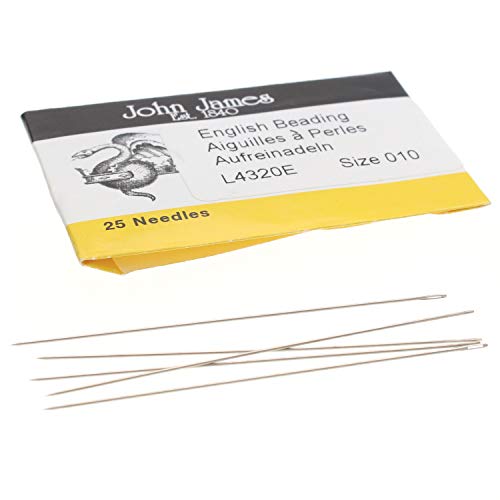

John James needles set the industry standard for durability and consistent finish. These needles offer a perfect balance of flexibility and strength, which is vital when navigating through the multiple passes required in long, structural woven designs.
Because the eye is narrow and perfectly aligned with the shaft, drag is virtually non-existent. This ensures the needle passes through dense beadwork without catching, preventing the dreaded snag that can ruin a perfectly tensioned row.
The steel composition resists bending even after significant use. For the majority of weavers, this remains the go-to choice for reliable performance across a variety of bead sizes.
Beadalon Big Eye Needles: Easiest to Thread

Big Eye needles are designed specifically for those who find the tiny, traditional eyes of standard needles frustrating. The needle splits down the middle, essentially turning the entire length into an eye that accommodates almost any thread diameter.
This design is a lifesaver when working with thick cords or textured fibers that refuse to pass through traditional wire eyes. It eliminates the need for magnification or extra light, making it ideal for late-night weaving sessions when eye strain becomes a factor.
However, the flexible nature of the split metal means these needles can be less sturdy than solid shafts. They are best suited for projects where the needle does not need to force its way through extremely tight bead configurations.
Tulip Beading Needles: The Premium Japanese Pick
Tulip needles are often considered the gold standard for those who prioritize a superior finish and effortless movement. These Japanese-made needles are polished to an incredible level of smoothness, allowing them to glide through beads like silk through a needle gauge.
The tip is crafted to be remarkably sharp yet sturdy, providing precision for intricate work. Because the eye is carefully reinforced, these needles rarely break or warp under the tension typically found in loom-woven pieces.
While they carry a higher price tag, the longevity of each needle justifies the investment for dedicated makers. When precision and comfort are the top priorities, these needles provide a tactile quality that few others can match.
Pony Long Beading Needles: Top Budget-Friendly Set

Pony needles offer a reliable, accessible option for makers who go through needles quickly or need a variety of sizes on hand. They provide a basic, functional experience that performs well for standard bead weaving projects.
These needles are sufficiently flexible to handle curved or angled work without becoming brittle. While they may not feature the high-polish finish of premium brands, their smooth surface is more than adequate for most seed bead projects.
For beginners learning the ropes or those working on large-scale production projects where cost-effectiveness is key, this is an excellent starting point. They deliver dependable results without the need for a significant financial commitment.
Miyuki Beading Needles: For Ultra-Fine Beadwork
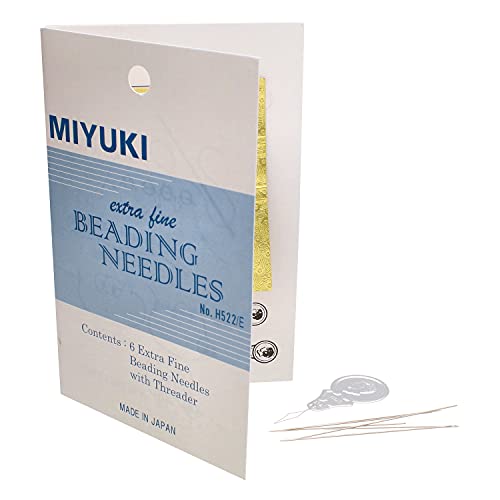
Miyuki needles are engineered specifically for the precision demands of high-end, tiny seed beads like 15/0 or 16/0 sizes. They feature an exceptionally slim profile that allows for multiple passes through a single bead, which is essential for complex weaving patterns.
The metal is remarkably strong despite its thinness, resisting the tendency to snap when faced with tight tension. Using these needles minimizes the risk of breaking fragile glass beads by ensuring the tool does not crowd the space within the bead hole.
If a project involves intricate stitching or dense, multi-layered embroidery, these needles are indispensable. They are the precise instrument needed for projects where clearance is measured in fractions of a millimeter.
The Beadsmith Flexible Needles: For Weaving Angles
Flexible needles are the secret weapon for projects requiring difficult turns or navigation through tight, irregular spaces. These needles are essentially made from a fine, coiled wire that bends easily without retaining a kink.
This unique construction allows the needle to navigate sharp corners or follow the contour of a project without snapping. For weavers who create structural pieces with significant depth or unusual geometry, the ability to bend the needle is a massive advantage.
Do not expect the rigidity of a standard steel needle here, as these are designed for specific navigational challenges. Keep a pair of these on the table specifically for those moments when a rigid needle simply cannot reach the desired exit point.
How to Pick the Right Needle Size for Your Beads
Selecting the correct needle size relies on the diameter of the bead hole and the thickness of the thread being used. As a general rule, the needle should pass through the bead hole with room to spare for the thread.
- Size 10: Ideal for 8/0 or 11/0 seed beads and standard-weight nylon thread.
- Size 12: The workhorse for 11/0 and 13/0 beads.
- Size 15: Specifically for 15/0 beads and ultra-fine thread.
If you struggle to pull the needle through the last bead of a row, the needle is likely too thick for the setup. Always choose a needle that is slightly smaller than the bead’s inner diameter to accommodate the doubling back of thread.
Big Eye vs. English: Which Style Is Right for You?
The English-style needle features a traditional, small, closed eye at the end of a rigid shaft. It provides stability and is ideal for projects that involve significant pull and force, such as tight loom weaving or firm tension stitching.
Big Eye needles, by contrast, offer ease of use and versatility for varying thread weights. They are superior for long projects where thread changes are frequent, as they significantly speed up the re-threading process.
Choose the English style when structural integrity is the primary concern and the needle needs to maintain a straight path. Opt for the Big Eye when convenience and speed in thread management outweigh the need for a rigid tool.
Threading Your Needle Without Losing Your Patience
Threading a needle requires steady hands and, often, a bit of preparation. Cut the thread at a sharp 45-degree angle to create a point, or use a small amount of thread conditioner to stiffen the tip before attempting to slide it through the eye.
If the thread remains stubborn, try flattening the very end with a pair of pliers to help it fit through the narrow eye. For extremely thin threads, folding the thread over the eye of the needle rather than threading it through can sometimes yield better results.
Proper lighting and a high-contrast background will make the process infinitely less frustrating. Taking five seconds to properly trim and prepare your thread will save minutes of fruitless attempts at threading.
Storing Your Beading Needles So They Don’t Break
Needles are prone to bending or rusting if left loose on a work surface or exposed to humidity. The best storage method is a magnetic needle case, which holds them securely in place and prevents them from rolling off the table and bending upon impact.
If a magnetic case is unavailable, keep needles in a small, airtight vial with a silica packet to prevent oxidation. Avoid sticking needles into fabric pincushions for long-term storage, as the fabric can trap moisture and cause the metal to degrade over time.
Regularly inspect your needles for microscopic bends or burrs in the eye. A discarded needle is far less expensive than a project ruined by a rough tool that slices through your expensive thread.
Choosing the right needle is an essential part of mastering the art of bead weaving. By matching the needle’s physical characteristics to the specific requirements of the beads and the project, you ensure a smoother process and a superior finish. Invest in quality, maintain your tools, and the results will speak for themselves in every stitch.