6 Best Mechanical Pencils For Technical Drafting To Use
Elevate your precision with the 6 best mechanical pencils for technical drafting. Explore our top expert-tested recommendations and upgrade your toolkit today.
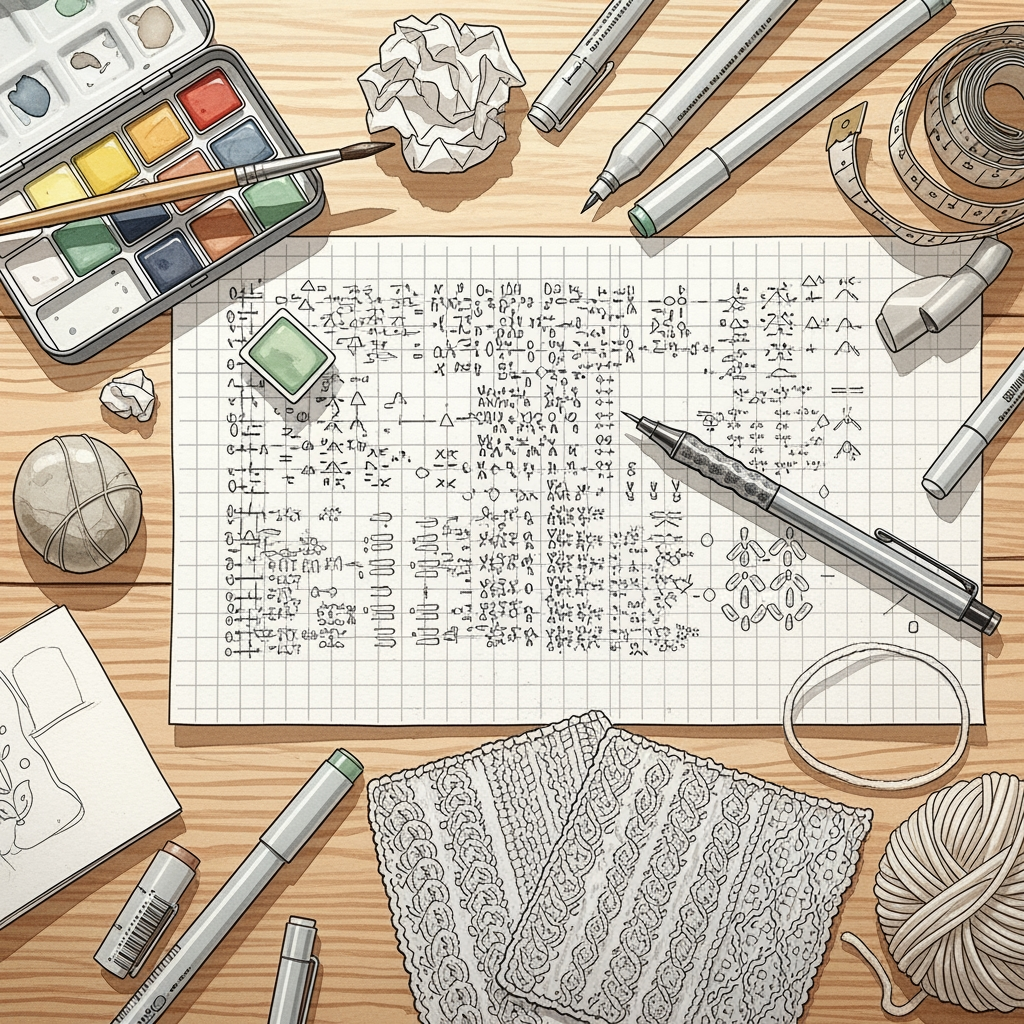
Precision in charting is just as vital as maintaining consistent tension across a swatch of fingering-weight wool. Whether mapping out complex stranded colorwork or drafting a bespoke lace chart, the tool used to translate ideas onto paper dictates the clarity of the design. A reliable mechanical pencil ensures that every symbol is legible, minimizing errors when the time comes to pick up the needles. These six selections provide the accuracy required to turn abstract pattern concepts into wearable reality.
Rotring 600: The Gold Standard for Charting


The Rotring 600 is the industry benchmark for those who demand absolute stability while drafting intricate lace motifs. Its full-metal body provides a satisfying, substantial weight that grounds the hand during long hours of meticulous pattern design.
For designers mapping out complicated cables or twisted stitches, this weight prevents the jittery lines often caused by lightweight plastic tools. The fixed lead sleeve offers an unobstructed view of the paper, ensuring every tiny box on a grid is filled with surgical precision.
Be aware that this model is top-heavy and unforgiving if dropped on a hard surface. Because the tip is not retractable, a single fall can bend the sleeve, effectively ending the pencil’s lifespan. If a rugged, portable design is the priority, look elsewhere; this is a stationary tool meant for the drafting table.
Pentel Graph Gear 1000: Best Overall Value
The Pentel Graph Gear 1000 offers a perfect middle ground for designers who frequently move between a home studio and local knitting circles. Its dual-action retractor protects the lead sleeve when tossed into a notions bag, making it a reliable companion for on-the-go sketching.
The grip features a unique blend of metallic and soft rubber pads, providing enough tactile feedback to prevent hand fatigue during marathon pattern writing sessions. Unlike many technical pencils, it manages to balance professional-grade durability with an approachable price point.
While the grip is comfortable, some find the rubber pads collect lint over time—a minor inconvenience when working with fuzzy mohair or angora fibers. It remains the most versatile choice for those who need one solid tool for both home drafting and field notes.
Kuru Toga Roulette: For Perfectly Even Lines
The Kuru Toga Roulette features a rotating lead mechanism that keeps the point sharp by turning the lead slightly every time pressure is applied to the paper. This is invaluable when drafting charts for small-gauge projects where symbol size must remain uniform to avoid confusion.
Standard pencils tend to wear down on one side, creating a “chisel” tip that thickens lines and muddies the grid. By maintaining a consistent, needle-sharp point, the Kuru Toga ensures that every stitch symbol is crisp, regardless of how long the sketching session lasts.
Note that the slight “give” in the rotation mechanism may feel unconventional to those used to a completely rigid tip. For knitters who prioritize clean, sharp lines over a rigid drafting feel, this pencil solves the perpetual problem of dulling lead.
Staedtler 925 25: A Lightweight Pro-Level Pick
The Staedtler 925 25 is designed for those who find heavy metal barrels fatiguing during extended periods of colorwork visualization. Its lightweight aluminum body minimizes wrist strain, making it an excellent candidate for long design sessions.
The knurled grip is aggressive enough to provide a secure hold even when hands are clammy from humidity or nerves during a complex project. It offers a professional, industrial aesthetic that signals a serious commitment to the drafting craft.
While light, the build quality remains high, though the finish can show wear with heavy use. It is a workhorse that favors ergonomics over luxury, proving that a tool doesn’t need to be heavy to be effective.
Zebra M-701: The Most Durable On-the-Go Tool
The Zebra M-701 is built like a tank, featuring a stainless steel construction that can withstand the chaos of a busy project bag. If the sketching routine involves working in cramped cafes or traveling to fiber festivals, this pencil is nearly indestructible.
Its slim profile is unobtrusive and slides easily into a pen loop on any journal. Despite its tough exterior, the click mechanism is smooth and satisfying, providing a sense of quality that belies its slim, utilitarian form.
The main drawback is the lack of a lead grade indicator, which might frustrate designers who work with multiple lead hardnesses simultaneously. It is the ultimate “toss it in the bag and forget it” tool for the practical fiber artist.
Faber-Castell Grip 2011: Best for Long Sessions
The Faber-Castell Grip 2011 utilizes a unique triangular shape and raised dots on the barrel to maximize comfort during intense design work. Its ergonomic focus makes it the best choice for designers who experience cramping while drafting long-form written instructions alongside their charts.
The soft-touch surface provides a non-slip experience that requires very little pressure to grip firmly. This helps keep the hand relaxed, which is essential for maintaining a steady rhythm when documenting intricate stitch patterns.
Because it is made of plastic, it lacks the professional “heft” of the metal options on this list. However, for sheer comfort during hours of drafting, the ergonomic design frequently outperforms more expensive, rigid alternatives.
How to Choose a Pencil for Your Crafting Style
Selecting the right pencil requires considering how much time is spent at the drafting board versus sketching ideas in the field. Those who create complex, multi-page patterns need a tool with an ergonomic grip, whereas field designers should prioritize durability and retractable tips.
- Studio Drafters: Prioritize weight, stability, and lead rotation (Rotring 600, Kuru Toga).
- Field Sketchers: Prioritize retraction, pocket-friendliness, and rugged construction (Pentel Graph Gear 1000, Zebra M-701).
- Long-form Writers: Prioritize ergonomic shapes and low-friction grips (Faber-Castell Grip 2011).
Gauge the necessity of the tool against the scope of the project. If the work is limited to simple lace repeats, a basic mechanical pencil may suffice; if designing full-garment schematics, the investment in a high-end tool is justified.
Lead Size and Hardness Explained for Grid Paper
For technical drafting, 0.5mm is the standard for most grid patterns, offering a balance between strength and fine line work. If the grids are exceptionally small, 0.3mm provides superior detail, though the lead is prone to snapping if too much pressure is applied.
Lead hardness is measured on the HB scale: B is softer and darker, while H is harder and lighter. For drafting on standard bond paper, an HB lead is the most versatile choice, as it doesn’t smear easily and cleans up well.
If the lines are too faint, move toward a 2B lead, but be aware that softer lead smears significantly under the side of the hand. Always test the lead hardness on a sample of the actual grid paper to ensure the marks remain visible but do not leave excessive residue.
Tips for Using and Maintaining Fine-Tip Pencils
Fine-tip pencils operate on tight mechanical tolerances that require occasional care to function properly. Avoid “over-filling” the lead reservoir, as too many sticks can cause a jam that is difficult to clear without specialized tools.
Use only high-quality lead refills to prevent the brittle graphite from shattering inside the mechanism. If the pencil begins to jam, ensure no small shards are stuck in the nose cone by clearing it with a thin needle or a specialized cleaning rod.
Always store the pencil with the tip retracted if possible to prevent bending the sleeve. A well-maintained mechanical pencil can last for years, functioning as reliably as a well-cared-for set of stainless steel knitting needles.
The Best Erasers for Clean Pattern Corrections
Pattern corrections require erasers that lift graphite cleanly without damaging the surface of the paper or leaving colored smears. A block-style white vinyl eraser is preferred, as it is non-abrasive and effectively removes marks without crumbling excessively.
For extremely precise work, an eraser pen or an electric eraser allows for the removal of a single incorrect stitch symbol within a dense grid. These tools are indispensable when correcting mistakes in complex stranded colorwork charts without needing to redraw the entire sequence.
Avoid the small, abrasive erasers found on the ends of some mechanical pencils, as they are often too hard and can tear the fibers of the drafting paper. Keep a dedicated, clean eraser nearby, and replace it as soon as it becomes dark or dirty to ensure the work remains pristine.
Ultimately, the choice of a mechanical pencil is a personal one, dictated by the rhythm of the design process and the physical comfort of the hand. Whether opting for the weighted stability of the Rotring 600 or the ergonomic relief of the Faber-Castell, the right tool acts as an extension of the designer’s intent. By investing in a high-quality instrument, the focus remains where it belongs: on the beauty and accuracy of the patterns. Choose the pencil that complements the project, and the path from inspiration to finished garment will be significantly smoother.