6 Best Precision Knives For Stencil Crafting To Own
Find the perfect tool for your projects with our expert guide to the 6 best precision knives for stencil crafting. Click here to upgrade your kit today.
Precision is the heartbeat of any great craft, whether one is meticulously charting a complex lace motif or creating a custom stencil for decorative fiber branding. Achieving clean lines on stencil film requires the same steady hand and attention to detail as picking up a dropped stitch in a delicate mohair project. Selecting the right cutting tool ensures that intricate designs do not tear or fray during the creative process. These six precision knives offer the control necessary to translate vision into tangible art.
X-Acto #1 Knife: The Gold Standard for Crafters


The X-Acto #1 remains the quintessential tool for fine detail work, much like the classic nickel-plated needle that every knitter keeps in their kit. Its lightweight aluminum handle provides the balance required for long, tedious sessions of cutting fine stencil curves.
This knife is prized for its compatibility with a vast array of blade shapes. Whether carving out tight geometric patterns or long, sweeping lines, the ability to swap blades quickly makes it incredibly versatile.
While the handle lacks the ergonomic bulk of more modern designs, its slim profile allows for a natural grip that mimics holding a pen. It is the perfect choice for crafters who prioritize tactile feedback and control over specialized comfort features.
Fiskars Softgrip Craft Knife: Best for Comfort

Extended crafting sessions demand tools that reduce hand fatigue, similar to choosing ergonomic bamboo needles to soothe stiff knuckles during marathon sock knitting. The Fiskars Softgrip incorporates a rubberized handle that absorbs pressure, preventing the cramping often associated with repetitive cutting motions.
The added grip is particularly useful when working with thicker stencil materials or when precision is required over several hours of work. It eliminates the slipping that can cause a hand to cramp, allowing for a more consistent, relaxed hold.
However, the wider handle profile may feel less intuitive for those accustomed to the thin, surgical-style handles of traditional craft knives. It serves as an excellent upgrade for crafters who find standard metallic handles too slippery or taxing on the joints.
Cricut TrueControl Knife: For Intricate Vinyl
The Cricut TrueControl Knife is engineered for those who treat their stencils with the same precision applied to high-gauge colorwork. It features a unique locking mechanism that ensures the blade stays perfectly secure, even when applying the pressure needed for dense vinyl or heavy-duty acetate.
Its standout feature is the blade-release system, which allows for touch-free changes. This design choice effectively removes the risk of accidental cuts, mirroring the safety precautions taken when handling sharp cable needles or point protectors.
The handle is designed for a premium feel and weighted balance, providing a stable platform for navigating tight, complex angles. While it comes at a higher price point, the consistency of the cut makes it a worthwhile investment for high-stakes projects.
OLFA AK-4 Art Knife: The Pro’s Choice for Detail

Professional stencil work requires a tool that handles as reliably as a well-calibrated set of interchangeable circular needles. The OLFA AK-4 features an anti-roll design, ensuring the blade does not wander off the workbench during a break in the project.
Beyond stability, this knife includes a cushioned grip and a balanced weight distribution that feels substantial in the hand. It is particularly effective for those who switch between cutting delicate curves and long, straight edges frequently.
The blade mounting system is notoriously rigid, providing zero play or wobble during use. For those who require surgical-level precision, this tool offers a level of stability that few other hobby knives can replicate.
Excel Blades K1 Knife: A Top Value Hobby Knife
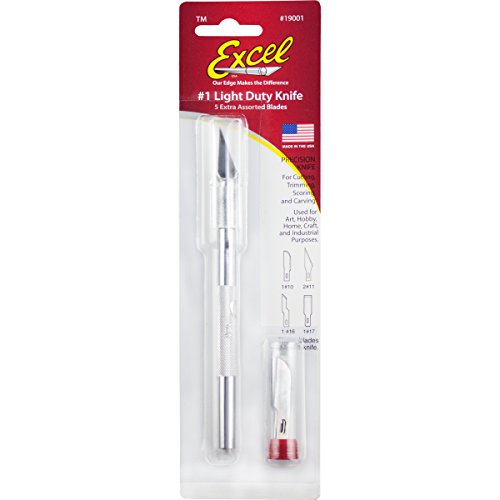
Reliability does not always have to come with a premium price tag, much like a reliable set of stainless steel needles that outperform more expensive specialty brands. The Excel Blades K1 is a straightforward, no-nonsense tool that delivers consistent results for a fraction of the cost of high-end alternatives.
Its aluminum handle is durable enough to withstand years of heavy use, standing up to the rigors of a busy craft room. While it lacks fancy ergonomic bells and whistles, its simple design is easy to maintain and clean.
This knife is the ideal starter tool for beginners or those who prefer to keep several blades loaded with different shapes for quick project transitions. It is a workhorse that respects the budget without sacrificing the quality of the cut.
Slice Precision Knife: The Safest Blade Option
The Slice Precision Knife utilizes a unique ceramic blade that is chemically engineered to remain sharp significantly longer than traditional steel. Because ceramic is naturally harder than steel, it cuts cleanly through stencil material with less drag, much like high-quality wool yarn gliding smoothly over polished needles.
Safety is the primary selling point here, as the blade edges are finger-friendly and designed to resist accidental cuts. This makes it an excellent choice for a busy household where safety is a paramount concern.
While the blade itself is thicker than a standard steel X-Acto blade, the cutting action is remarkably smooth. It is an ideal alternative for crafters who are prone to slips or who are teaching younger makers the basics of stencil cutting.
How To Choose The Right Blade For Your Stencil
Choosing the correct blade shape is as critical as selecting the right needle size for your specific yarn weight. A #11 standard blade is generally the best all-rounder, perfect for general stencil work and tight corners.
For deep, sweeping curves, a curved blade provides better clearance and a smoother motion. If the project involves long, straight lines, a chisel blade or a heavy-duty straight blade provides the tracking stability required to prevent drifting.
Always consider the thickness of the stencil material; thicker plastic requires a sturdier blade to prevent snapping. Start with a sharp blade for every new project, as a dull edge will pull and tear at the stencil, resulting in jagged, unprofessional lines.
Safety First: Handling Your Craft Knife Properly
Handle a craft knife with the same level of respect reserved for sharp scissors or pointed tapestry needles. Always cut away from the body, and maintain a clear, well-lit workspace to ensure visibility of both the stencil and the blade.
Never use force to drive a blade through a material; if a cut requires excessive pressure, the blade is likely dull or the wrong tool for the task. Letting the blade do the work prevents the sharp instrument from slipping and causing injury.
When the knife is not in use, always engage the cap or retract the blade fully. A simple, consistent routine for storing blades prevents accidents and keeps the workspace tidy and safe for everyone.
Blade Care: Extending The Life Of Your Knives
A dull blade is a dangerous blade, as it encourages improper handling and increased pressure. Change blades as soon as you notice any resistance or tearing during the cutting process, much like replacing worn-out needle tips to prevent yarn snags.
Clean the handle periodically with a damp cloth to remove adhesive buildup or dust from the stencil material. Keeping the blade housing free of debris ensures the locking mechanism remains functional and tight over time.
Store blades in a dedicated container to protect the delicate edges from dulling against other metal items. Proper maintenance ensures that every cut is as sharp and crisp as the first one.
Why You Absolutely Need a Self-Healing Cutting Mat
A cutting mat is the foundation of any stencil project, acting as the essential base for all precision work. Much like a blocking board provides the structure needed to shape a knitted garment, a self-healing mat protects the work surface and, more importantly, the blade’s edge.
Self-healing mats are designed to allow the blade to sink slightly into the surface, which provides better control and prevents the blade from skipping. A hard surface will dull a blade within minutes, rendering it useless for intricate detail work.
Choose a mat with a grid system to ensure perfect alignment when cutting geometric patterns or repeated motifs. A high-quality mat will last for years, providing a stable, forgiving surface that ensures every cut is accurate and every blade lasts as long as possible.
Choosing the right precision knife is the first step toward mastering the art of the stencil, turning a simple plastic sheet into a tool for endless creativity. With the right grip, the correct blade, and a proper cutting surface, every crafter can achieve the professional-grade results they desire. Take the time to select a tool that fits the hand, and notice how quickly the quality of the project improves. Happy crafting.