6 Sewing Thimbles For Thick Fabric Piercing To Consider
Struggling to push needles through tough materials? Discover 6 durable sewing thimbles for thick fabric piercing and upgrade your craft kit for easier stitching.
Working with heavy fabrics like upholstery-weight wool, dense boiled felt, or multi-layered canvas requires more than just raw hand strength. When a needle resists penetration, the constant pressure against a fingertip leads to fatigue, callouses, or worse—accidental punctures. A quality thimble acts as a protective barrier and a mechanical lever, allowing for safer, more precise needle placement. Selecting the right tool transforms a grueling afternoon of sewing into a manageable, fluid process.
Dritz Heavy Duty Thimble: For Tough Projects


The Dritz Heavy Duty thimble is engineered for industrial-level resistance, featuring a deep, textured dimple pattern that provides maximum grip for the needle head. Its primary strength lies in its rigidity; when the needle eye catches on a thick weave, this metal shell refuses to deform.
This thimble is ideal for sewists working with heavy-duty fibers like denim or dense wool coating. Because it creates a completely solid barrier, it eliminates the risk of needle slippage entirely.
Be aware that these metal thimbles can feel heavy and cause sweating during long sessions. For the best result, ensure the sizing is snug enough to prevent rotation, but not so tight that it restricts circulation during repetitive tasks.
Clover Protect & Grip: A Flexible Favorite
The Clover Protect & Grip stands out for those who find traditional metal thimbles too cumbersome or unyielding. It utilizes a soft, rubberized exterior with a rigid metal cap at the tip, offering a hybrid approach to protection.
This model allows for a surprising amount of tactile feedback, which is essential when sewing through thick materials where you need to feel the needle exit the fabric. The flexible sides accommodate the natural expansion of the fingertip, making it much more comfortable for extended use.
While the design is excellent for comfort, the rubber components may degrade over years of heavy use. It serves best as a versatile, all-purpose option for those who switch between lighter precision work and occasional heavy-duty projects.
ThimblePad Leather Dots: Best for Custom Fit

ThimblePad Leather Dots represent a minimalist approach to hand protection. These adhesive, high-grade leather circles can be placed exactly where the needle hits the finger, offering a custom protection point rather than a bulky enclosure.

These are particularly effective if your pushing technique varies depending on the angle of the needle. Since you dictate the placement, you can move the pad to the side of the finger or the very tip, depending on your unique sewing posture.
The main trade-off is the adhesive lifespan; the dots eventually lose their stickiness or wear thin after repeated punctures. They are, however, the most discreet option available for those who dislike the feeling of a traditional thimble entirely.
Tailor’s Open Sided Thimble: For Long Nails

The open-sided thimble is a game-changer for those who maintain longer natural nails or who find traditional closed-end thimbles claustrophobic. By leaving the tip exposed, the design allows for greater airflow and freedom of movement.
This style provides a secure ridge for the needle while keeping the fingertip sensitive to the fabric. It is an excellent choice for intricate embroidery or beadwork on thick fabric where you need the dexterity of a bare finger but the safety of a reinforced edge.
The metal used in these is typically adjustable, allowing for a custom cinch around the finger joint. Always take the time to mold it carefully to ensure the side seam does not dig into your skin during a long session.
COSYAWN Finger Shield: The Adjustable Option
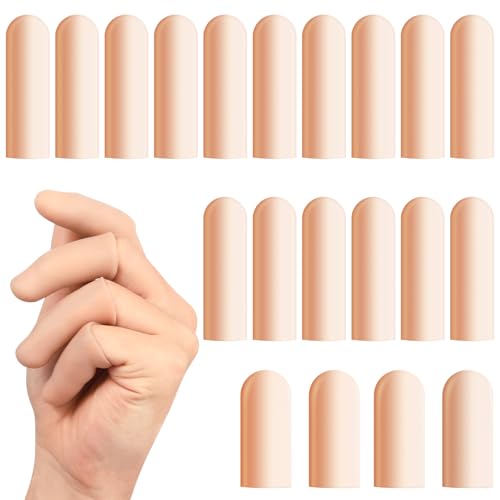
The COSYAWN finger shield is designed to provide comprehensive protection with a high degree of adjustability. Its wrap-around design allows the user to tighten or loosen the fit as needed, which is useful if your fingers swell while working.
This is a robust solution for those who struggle with standard sizing, as the diameter is not fixed. The metallic construction is durable, standing up well to constant friction against the needle eye.
Because it offers full coverage, it can feel more restrictive than an open-sided model. It is best suited for scenarios where you need constant, reliable protection across the entire finger surface without worrying about shifting.
Sashiko Leather Thimble: The Palm-Pushing Pro
The Sashiko leather thimble departs from the standard finger-mounted design by acting as a palm-based anchor. Instead of pushing with the tip of the finger, the sewist places the palm of the hand against the needle head, using the entire arm’s strength to drive it through the fabric.
This technique is revolutionary for thick, multi-layered projects that would normally cause finger strain. The leather provides a soft but firm grip that prevents the needle from sliding out of place.
This style requires a shift in muscle memory and a change in how you hold your work. It is an essential tool for those dealing with arthritis or repetitive strain, as it utilizes larger muscle groups rather than focusing all force on a single joint.
How to Find Your Perfect Thimble Size and Fit
Finding the right fit is the difference between a tool you reach for and one that stays in your sewing box. A thimble that is too large will rotate and shift, making it impossible to strike the needle reliably.
- Measure the circumference: Use a flexible tape measure around the widest part of your middle finger.
- Account for swelling: Always aim for a fit that is comfortable after fifteen minutes of work, not just when you first start.
- Test the ridge: Ensure the indentations are deep enough to catch the needle, or the needle will skip and potentially cause injury.
If you are between sizes, prioritize a slightly tighter fit for metal thimbles, as these can often be adjusted slightly. Leather options should be snug, as they will naturally stretch and contour to your finger over time.
Metal vs. Leather vs. Silicone: Which is Best?
Each material offers a different balance of durability, sensitivity, and comfort. Metal provides the most protection against accidental stabs but offers zero breathability and minimal grip.
Leather is the gold standard for long-term comfort because it softens with the heat of your skin. However, leather will eventually wear through, meaning it is a consumable tool that will eventually require replacement.
Silicone and rubberized options offer a “middle ground” in terms of grip, but they can be too soft for extremely heavy-duty piercing. Match your material to your project weight: metal for heavy canvas or leather, and leather for decorative or detailed work on thick fabrics.
Using a Thimble: The Correct Pushing Technique
Many sewists fail to use a thimble correctly because they try to push the needle with the very tip of the finger. Proper technique involves using the side of the thimble’s indentation, which is strategically designed to hold the needle at a controlled angle.
When pushing, keep your finger slightly curled. The motion should come from the knuckle rather than the fingertip, which allows for more power and prevents joint fatigue.
Consistency is key; practice striking the thimble in the same spot until the movement becomes reflexive. Once the muscle memory is established, you will find that you can sew through thick layers with significantly less effort and greater accuracy.
FAQs About Thimbles for Heavy-Duty Sewing
Can I sew through thick fabric without a thimble? While technically possible, it is not recommended for thick materials. The increased force required poses a risk of repetitive strain injury and accidental skin piercing.
How do I clean my thimble? Metal thimbles can be wiped with a damp cloth, while leather options should be kept dry to maintain their shape. If your thimble develops a metallic smell, a light buffing usually resolves the issue.
Why does my needle keep slipping off the thimble? This usually means your thimble is either too smooth (lacking deep enough dimples) or you are pushing at an angle that is too shallow. Adjust your finger position to ensure the needle rests deep within an indentation before applying pressure.
The right thimble is an investment in your physical longevity and the quality of your finished project. Experiment with these styles to discover which approach best complements your hand strength and sewing habits, and remember that even the most seasoned makers rotate their tools depending on the fabric at hand.