
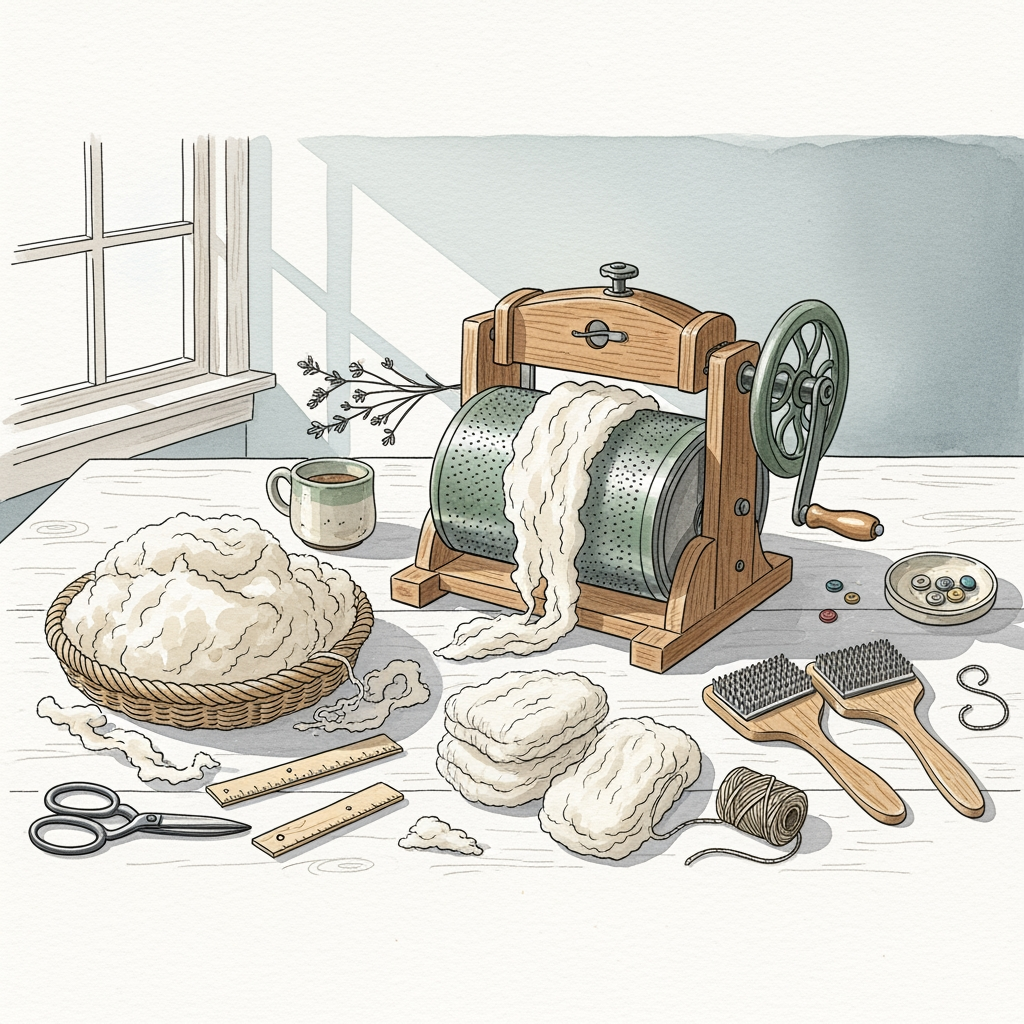
6 Best Fiber Carders For Wool Blending Worth Owning
Discover the 6 best fiber carders for wool blending to elevate your spinning projects. Explore our top-rated expert picks and upgrade your craft tools today.
Mastering the art of spinning starts long before the wheel turns or the spindle drops. Selecting the right fiber preparation tools dictates whether the resulting yarn is airy and consistent or tangled and frustrating. With the right carders, even a raw, unwashed fleece can be transformed into a dream-like roving ready for the spinning wheel. Understanding the mechanical differences between these tools is the difference between a meditative spinning session and an afternoon spent fighting stubborn wool.
Ashford Hand Carders: Best for Beginners


Ashford hand carders are the gold standard for those just entering the world of fiber prep. They feature a balanced design that feels intuitive in the hands, preventing the premature wrist fatigue often associated with learning to card.
These tools are ideal for learning the fundamental “flick” motion necessary to align fiber staples. By starting with these, one gains a tactile understanding of how different wool breeds—like a lofty Corriedale versus a slippery Bluefaced Leicester—react to the teeth of the carding cloth.

Because they are affordable and widely available, they represent a low-risk investment for the novice. The key is to start with small amounts of fiber; overloading the carders is a common mistake that leads to messy, uneven rolags.
Strauch Finest Drum Carder: The Pro’s Pick
When production speed and uniform blending become the priority, the Strauch Finest drum carder moves to the front of the pack. Its engineering allows for a smooth, consistent tension that pulls fibers into perfectly aligned batts with minimal effort.
This tool excels when blending complex fiber combinations, such as mixing fine Merino with silk or sparkling angelina fibers. For a knitter looking to create custom colorways or consistent gradient batts, the Strauch offers a level of precision that hand carders simply cannot replicate.
Be aware that this is a professional-grade machine requiring a significant investment. It is best suited for the dedicated spinner who spends hours at the wheel and needs a reliable, high-output tool that holds up under frequent use.
Louët Classic Carder: A True Workhorse
The Louët Classic is renowned for its reliability and its signature belt-driven mechanism. It is built to handle a variety of fleece types, from coarse, long-wool breeds to soft, delicate down fibers, making it an incredibly versatile addition to any studio.
This carder is particularly effective for those who process large quantities of raw fleece. Its design prioritizes durability, ensuring that the teeth remain aligned and effective through years of heavy, consistent carding.
While it lacks some of the finer adjustments found in boutique machines, its straightforward operation is its greatest strength. It is a no-nonsense tool for the maker who values longevity and efficiency over high-tech bells and whistles.
Howard Brush Hand Carders: Traditional Choice

Howard Brush tools are built with a devotion to tradition and quality that is evident from the first use. These hand carders are often preferred by those who enjoy the slow, rhythmic, and meditative aspect of manual fiber preparation.
The construction quality ensures that the carding cloth remains firmly attached, preventing the common issue of teeth shifting or bending over time. This reliability is critical when working with expensive, rare fibers where wasting wool due to tool failure is not an option.
These carders provide an excellent tactile experience, allowing the user to feel exactly how the fibers are opening. For those who want to maintain a close connection to the materials, Howard Brush remains an unmatched choice.
Clemes & Clemes Elite: For Serious Spinners
Clemes & Clemes is a name synonymous with heritage fiber arts equipment. The Elite line represents a commitment to high-end materials, often utilizing beautiful hardwoods and precision-engineered drums that result in a remarkably smooth carding action.
This tool is designed for the serious fiber artist who considers their gear an extension of their craft. Beyond performance, these machines are aesthetically pleasing, often serving as a centerpiece in a dedicated fiber studio.
Expect a premium experience in both the feel of the machine and the quality of the resulting batts. It is the ideal selection for someone who has mastered the basics and is looking to elevate their fiber prep to a professional standard.
Schacht Hand Carders: A Versatile Option

Schacht offers hand carders that strike a perfect balance between comfort and effective fiber aeration. Their ergonomic handles are designed to minimize tension in the hand, which is vital when processing wool for a large project like a hand-knitted sweater.
One of the standout features is the choice of cloth density, which allows users to select a tool specific to the fineness of their wool. Using the wrong density is a frequent cause of fiber breakage, and Schacht helps mitigate this by offering clear, categorized options for different fiber types.
These are exceptionally well-balanced tools. Whether one is prepping a soft, delicate wool for lace-weight yarn or a sturdy fiber for a heavy rug, Schacht carders provide a consistent, reliable outcome.
Drum Carder vs. Hand Carders: Which Is for You?
Choosing between a drum carder and hand carders is fundamentally a choice about the type of yarn you want to spin. Hand carders offer total control over the alignment of fibers, allowing for the creation of airy, woolen-spun yarns that are perfect for warm, lofty knitwear.
Drum carders, conversely, are designed for speed and consistency, making them ideal for worsted-spun, dense yarns that offer great stitch definition. If you are preparing fiber for a large, multi-skein project, the time-saving benefits of a drum carder are hard to ignore.
However, consider the space constraints of your workstation. A drum carder is a heavy, stationary piece of equipment, while hand carders can be easily tucked into a project bag for on-the-go fiber prep.
What to Look For When Buying a Fiber Carder
When shopping for a carder, the most critical factor is the TPI, or teeth per inch, which determines how well the tool handles different fiber lengths. Finer fibers like Angora or fine Merino require higher TPI to prevent clumping, while coarser wools like Lincoln or Cotswold require lower TPI to avoid shredding the fiber.
- Handle Ergonomics: Look for hand carders with grips that won’t strain your wrists during long sessions.
- Frame Material: Solid wood frames tend to be more stable and durable than plastic alternatives.
- Belt System: On drum carders, look for high-quality, non-slip belts that won’t stretch or break under tension.
- Teeth Material: Ensure the teeth are flexible enough to resist bending but rigid enough to penetrate tough fibers.
Always prioritize the type of wool you plan to spin most frequently. Investing in a tool that matches your favorite fiber profile ensures that you spend more time knitting and less time fighting with stubborn, poorly-prepped rolags.
Understanding Carding Cloth TPI for Your Fiber
The TPI (teeth per inch) is the secret language of successful fiber prep. Think of it like needle size; just as you wouldn’t use US 15 needles for fingering weight yarn, you shouldn’t use low-TPI carders for delicate, short-staple fibers.
- 72 TPI: The “generalist” choice, excellent for medium-staple wools like Corriedale or Romeldale.
- 96 TPI: The “fine” choice, best for Merino, Alpaca, or Cashmere where precision is key.
- 48-54 TPI: The “heavy-duty” choice, reserved for long-staple, coarse wools that would overwhelm finer teeth.
Matching the TPI to the fiber staple length prevents the “pilling” effect that happens when teeth tear fibers rather than aligning them. A well-matched TPI results in a smooth, easy-to-draft roving that will make your knitting process infinitely more enjoyable.
How to Clean & Maintain Your Carding Tools
A well-maintained carder is a long-term companion, but it requires regular attention to perform at its peak. After every session, use a specialized flicker or a stiff brush to remove residual “noils” and debris trapped between the teeth.
Never use water or cleaning agents directly on the carding cloth, as this can lead to rust or deterioration of the backing material. If you notice fiber beginning to build up at the base of the teeth, gently use a cleaning tool to lift it out, being careful not to bend the delicate wires.
Periodically check the tension of the drum carder’s belt to ensure it hasn’t slipped. Keeping your tools clean not only extends their life but also ensures that the colors of your future fiber blends remain pure and untainted by old, leftover fibers.
The right fiber carder is not just a tool, but an investment in the quality of your finished hand-knits. By selecting equipment that suits your specific spinning needs and fiber preferences, you eliminate the friction between raw fleece and the finished, beautiful yarn on your needles. Embrace the process of preparation as much as the knitting itself, and your results will undoubtedly reflect that care and attention.
