
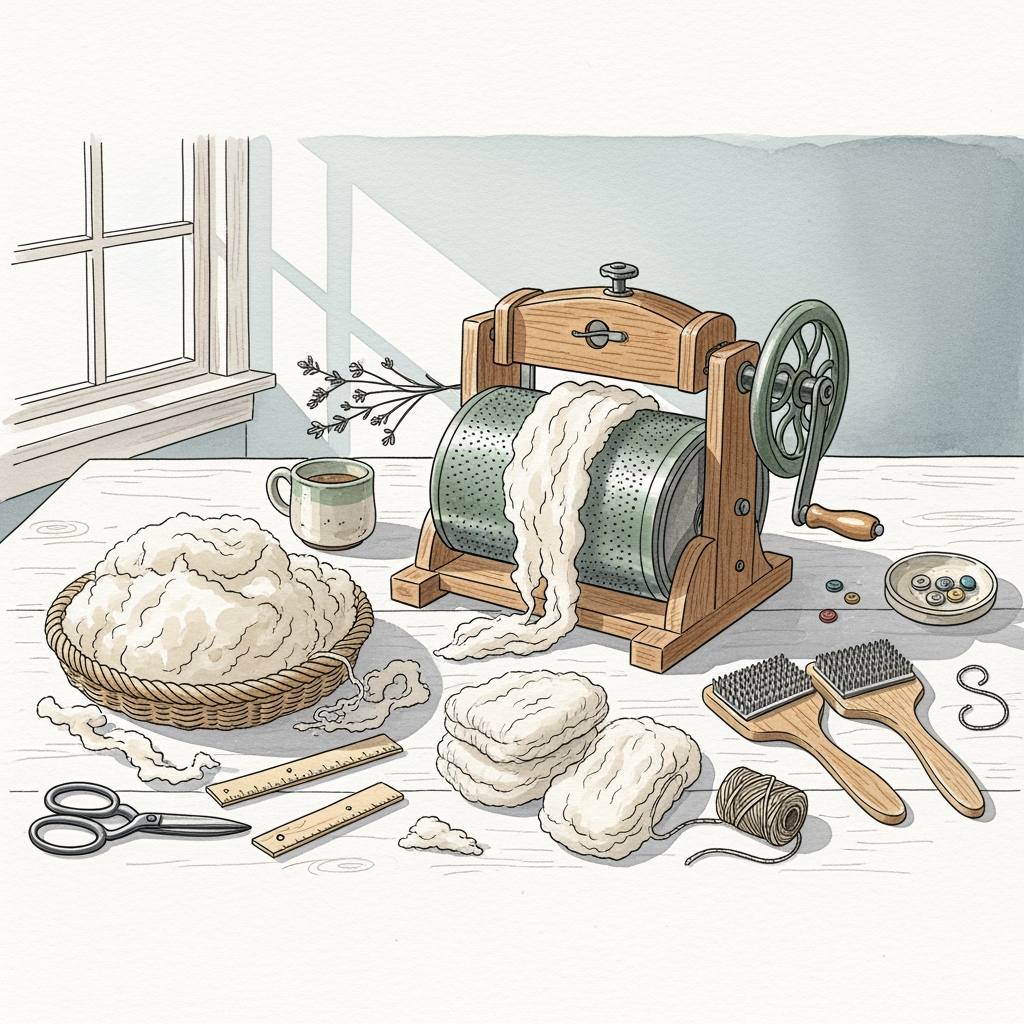
6 Best Specialty Combs For Brushing Out Yarn Fibers
Discover the 6 best specialty combs for brushing out yarn fibers. Learn how these essential tools restore texture and create perfect, fluffy fringe finishes.
Preparing raw fleece is a transformative experience that turns tangled locks into a dreamlike cloud of spinning potential. Whether you are prepping for a delicate lace project or a sturdy sweater, the right carders act as an extension of your own hands. This guide breaks down the essential tools to help you achieve the perfect loft and fiber alignment for your next project.
The Cowgirl Blues Wool Carding Hand Combs
These hand combs are a favorite among spinners who value a balance between functionality and aesthetic charm. They are designed with a sturdy frame that stands up to the rigors of frequent use, making them a reliable choice for long-term fiber projects.
The teeth are spaced to handle a variety of wool types, from medium-staple breeds to slightly coarser fleeces. Because the handle is ergonomically shaped, you won’t feel that familiar hand fatigue after an hour of intensive carding.
If you find yourself prepping large batches of fiber for a bulky weight yarn, these combs provide the consistency you need. Just remember that they require a bit of practice to master the "flick" motion that prevents fiber breakage.
Ashford Student Hand Carders for Beginners
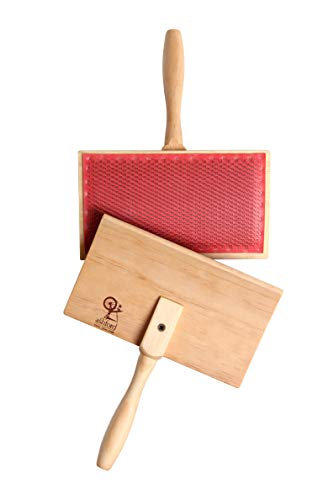

If you are just starting your journey into fiber prep, don’t overcomplicate your first purchase. The Ashford Student carders are the gold standard for beginners because they are lightweight and forgiving of imperfect technique.
These carders feature a standard cloth density that works well with the most common sheep breeds like Corriedale or Romney. They won’t overwhelm a novice with heavy weight, yet they offer enough surface area to get the job done efficiently.
The main trade-off here is that they aren’t built for extremely fine, exotic fibers like high-end cashmere. However, for learning the mechanics of creating a smooth, airy rolag, they are practically unbeatable.
Strauch Petite Hand Carders for Fine Fibers

When you are working with luxury fibers like angora, silk blends, or fine Merino, standard carders can often be too aggressive. The Strauch Petite carders feature a finer tooth density that treats these delicate fibers with the respect they deserve.
Because the carding cloth is so fine, you can achieve a much higher degree of fiber alignment without stripping the fiber of its natural character. This is crucial for spinners aiming for a smooth, worsted-spun yarn that will show off intricate stitch patterns.
Keep in mind that these are specialty tools; using them on coarse, greasy wool will clog the teeth almost immediately. Save these for your "special occasion" fibers where you want the ultimate softness and drape.
Clemes & Clemes Curved Back Wool Carders
The curved back design on these carders is not just for show; it is a clever bit of engineering meant to improve your leverage. By creating a rocking motion, these carders do more of the work for you, reducing the strain on your wrists.
These are particularly effective for knitters who suffer from repetitive strain issues but still want to process their own fiber. The sturdy construction ensures that the teeth remain aligned even after years of heavy use.
While they are slightly more expensive, the longevity of these tools makes them a wise investment for a serious fiber artist. They excel at blending different fiber types together, such as adding a touch of mohair to your wool for added halo.
Louet Fine Wool Hand Carders for Softness

Louet is known for precision, and their fine wool carders are no exception to this rule. They are designed to create a very smooth, consistent batt that is easy to draft, even for those who are still perfecting their spinning technique.
The teeth are angled specifically to grip the fiber just enough to open it up without causing excessive breakage or "noils" (tiny knots of tangled fiber). This results in a cleaner, more professional-looking yarn that is less prone to pilling in your finished garment.
If you are a knitter who prioritizes a soft, buttery hand-feel in your final project, these are the carders for you. They help you maintain the loft of the fiber, ensuring your sweaters remain breathable and warm.
Majacraft Fine Flick Carder for Fiber Prep
Sometimes you don’t need a full pair of hand carders; you just need to open up the ends of a lock before spinning. The Majacraft flick carder is a single, handheld tool perfect for this precise, targeted work.
This is an essential tool for "flicking" the cut end of a lock, which makes it significantly easier to pull fiber from the mass during the spinning process. It’s a game-changer for working with raw fleeces that haven’t been processed through a drum carder.
It is small, portable, and incredibly efficient for quick prep sessions. Just be careful not to over-flick, as you can easily pull the fiber apart if you are too aggressive with the motion.
Understanding Fiber Staple Length and Combing
Staple length refers to the average length of the individual fibers within a lock of wool. Understanding this is critical because a fiber that is too short will simply fall through the teeth of a coarse comb, while a fiber that is too long might tangle if the carder density is wrong.
- Short staple (under 2 inches): Requires finer teeth and a gentle touch to avoid creating waste.
- Medium staple (3-5 inches): The "sweet spot" for most hand carders and general-purpose spinning.
- Long staple (over 6 inches): Often better suited for wool combs rather than hand carders to maintain alignment.
Always check your fiber’s staple length before choosing your tool. Using the wrong tool can lead to excessive waste, which is the last thing you want when working with high-quality, hand-dyed wool.
How to Properly Clean and Maintain Your Combs
Fiber prep tools are an investment, and they require regular maintenance to stay effective. After every session, use a cleaning brush or a stiff knitting needle to remove any lingering fibers trapped between the teeth.
Periodically, you should check that the carding cloth remains securely attached to the wooden base. If the cloth begins to lift, a small amount of wood glue can fix it, but ensure it is completely dry before you resume carding.
Avoid using water or harsh chemicals on the wooden handles, as this can cause the grain to swell and the teeth to misalign. A light wipe with a dry, soft cloth is usually all that is needed to keep them in top condition.
Choosing Between Hand Carders and Wool Combs
The debate between carding and combing is as old as the craft itself. Carders are designed to create a "woolen" yarn, which is airy, lofty, and traps heat well. This is perfect for cozy sweaters and winter accessories.
Wool combs, by contrast, are used to create "worsted" yarn. This process removes the shorter fibers and aligns the longer ones in parallel, resulting in a smooth, durable, and strong yarn that is ideal for socks or lace.
- Choose Carders if: You want a soft, fuzzy yarn and are working with shorter or medium-staple wool.
- Choose Combs if: You want a smooth, strong yarn and are working with long-staple, lustrous fibers.
Think about the final garment you want to knit before you commit to a prep method. A sweater intended for hard wear needs the strength of combed fiber, while a cowl meant for warmth benefits from the loft of carded fiber.
Essential Tips for Brushing Out Yarn Fibers
The most common mistake beginners make is overloading the carders. Only place a small amount of fiber on the carder at a time; if you can’t see the teeth through the fiber, you have too much on there.
Use a light, sweeping motion rather than a heavy, digging motion. Let the teeth do the work of separating the fibers, and if you feel resistance, stop and re-evaluate your technique rather than forcing it through.
Finally, remember that practice is the only way to build muscle memory for fiber prep. Start with a cheaper, practice fleece so you can learn the feel of the fiber without the stress of ruining your favorite luxury wool.
Mastering the art of fiber preparation opens up an entirely new dimension of creativity in your knitting practice. By selecting the right carders for your specific fiber type and project goals, you ensure that your finished yarn is of the highest possible quality. Take your time, enjoy the rhythmic nature of the process, and watch as your raw materials transform into something beautiful.

