6 Best Hat Stands For Display And Photography Worth Owning
Elevate your collection with these 6 best hat stands for display and photography. Discover top-rated options and showcase your headwear professionally today.
A hand-knitted hat is a labor of love that represents hours of careful tension control, cable work, or color transitions. When the final ends are woven in, simply tossing the piece into a drawer obscures the intricate stitch definition and structural integrity. Selecting the right display stand elevates a finished project from a pile of wool into a showcase piece of textile art. This guide examines the best stands for presenting and photographing your work, ensuring that every purl and decrease receives the attention it deserves.
The Display Guys Mannequin Head: Best Overall


The classic mannequin head remains the gold standard for accurately representing how a finished hat sits on a human form. Because these heads mimic natural proportions, they provide the necessary volume to stretch a brim just enough to highlight the fabric’s elasticity.
For projects involving complex stranded colorwork or subtle lace patterns, this stand offers the most realistic context. It prevents the hat from collapsing inward, which often hides the very design elements that took so long to execute.
While highly effective, these stands are typically made of foam or molded plastic, which can be slippery for lightweight yarns like lace-weight mohair. Always ensure the hat is fully blocked and dry before placing it on the stand to avoid unintended stretching from the weight of the foam surface.
MyGift Vintage Wire Dome: Best for Cloche Hats
Wire dome stands provide excellent airflow, making them ideal for the final stages of the drying process after a fresh wet block. The open architecture prevents moisture from trapping against the fiber, which is vital for delicate wools that might otherwise develop a musty scent.
These stands are particularly well-suited for brimmed hats or cloches where the structure needs to maintain a specific curve. The wire frame supports the crown while allowing the brim to drape naturally without the rigidity of a solid head form.
Be cautious with loose, delicate knits, as individual stitches can occasionally catch on the metal wire. If working with fine, snag-prone fibers like hand-dyed silk or soft alpaca, consider placing a light piece of tissue paper between the hat and the wire frame.
Umbra U-Display Pegs: Best for Minimalist Walls
Wall-mounted pegs turn a collection of hats into a curated gallery display rather than just a storage solution. This approach is perfect for small spaces where tabletop surface area is at a premium but the urge to display one’s craft remains strong.
These pegs work best for classic beanies or toques that hold their shape well on their own. They minimize contact points, reducing the risk of crushing the crown or distorting the specific stitch pattern used in the body of the hat.
Because these pegs are static, they do not offer the support needed for heavy or slouchy hats that rely on gravity for their silhouette. Use them for structured, firmer knits, and reserve delicate, oversized garments for flat storage or upright stands.
Pandahall Glass Head Stand: Best for Photography
A clear glass or acrylic stand provides a “floating” effect, which is unparalleled for professional-looking photography. It minimizes visual clutter, allowing the focus to remain entirely on the color transitions and texture of the yarn.
In a photographic context, glass stands reflect studio lights in a way that adds a premium, high-end feel to the project. This makes them the top choice for knitters looking to create patterns for sale or showcase a shop inventory online.
The tradeoff is the lack of grip; glass is extremely smooth, meaning hats with a wider circumference or looser gauge may slide off easily. Always photograph on a level surface and consider using a tiny amount of museum putty to secure the piece in place.
Topyee Wood Base Stand: Best Adjustable Height
Adjustability is the secret weapon for knitters who oscillate between standard beanies and long, dramatic slouchy hats. A stand with an adjustable stem ensures that the hat sits at the correct height, preventing the crown from hitting the table or the fabric from buckling at the base.
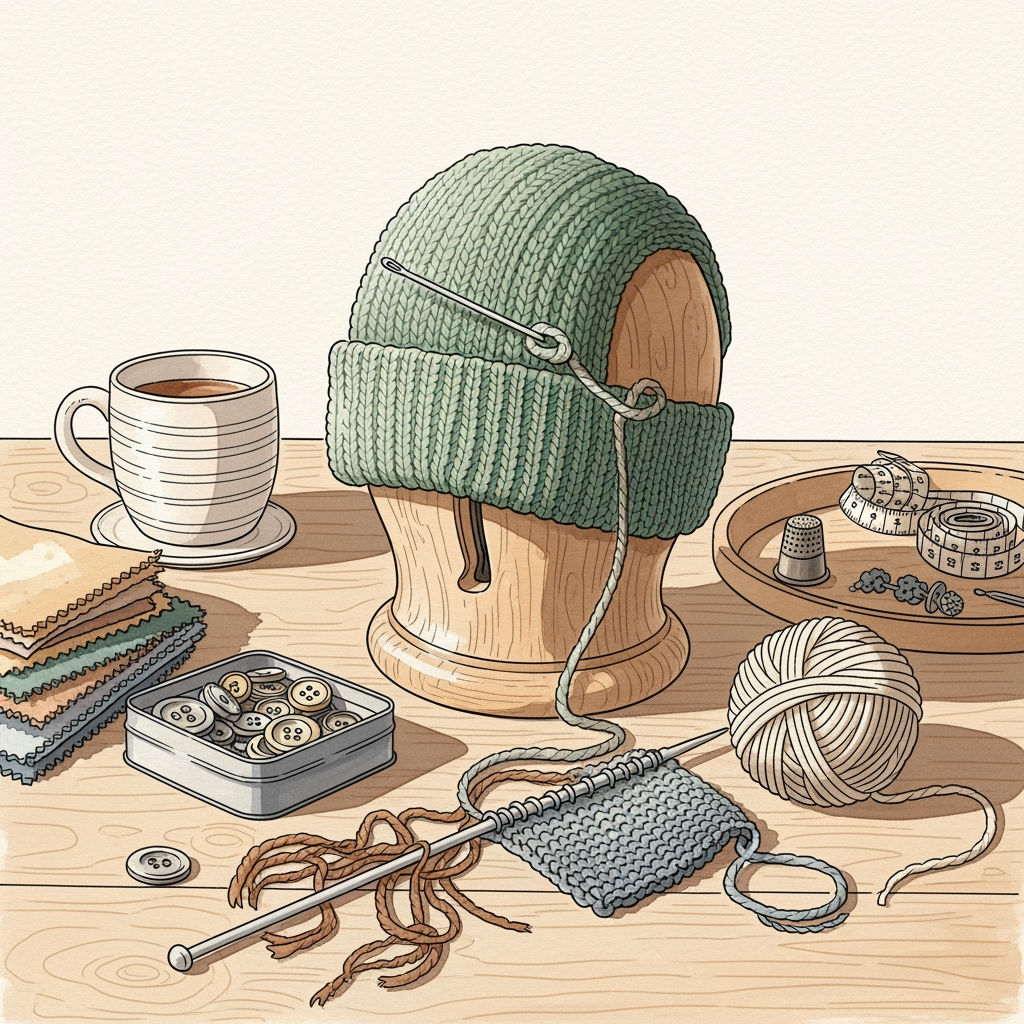
Wood provides a neutral, warm aesthetic that complements natural fibers like sheep’s wool, linen, or cotton. Unlike synthetic materials, wood offers a gentle friction that helps keep the hat in place without the risk of plastic-based static buildup.
Keep in mind that wood can be porous, so it should be sealed or painted. If you are displaying a damp hat that has not been completely blocked, the moisture could potentially transfer to raw wood or cause the stand to warp over time.
Whitmor Collapsible Stand: Best for Travel
A collapsible stand is an essential tool for the knitter who frequently attends fiber festivals or craft fairs. These stands break down into a flat footprint, making it easy to transport an entire collection of samples without the bulk of rigid mannequin heads.
Despite their portability, these stands are surprisingly sturdy and offer a classic look that fits well on vendor tables. They provide enough elevation to keep the hat brim from touching the table surface, which is critical for maintaining hygiene in high-traffic market environments.
The lightweight nature of these stands can be a drawback if the environment is windy or if the hat being displayed is exceptionally heavy with embellishments. Carry a few small weights or binder clips to secure the base to the table if the display area is subject to heavy foot traffic or drafts.
How to Choose the Right Hat Stand For Your Knits
Choosing a stand starts with understanding the “memory” and weight of your chosen yarn. A heavy, superwash wool hat will behave very differently on a stand compared to a light, airy cashmere blend.
- For heavy, cabled hats: Use a sturdy, solid-base stand that won’t tip over.
- For delicate lace: Use a stand that allows for maximum airflow to keep the fabric crisp.
- For colorwork: Use a stand that mimics a head shape to ensure the motifs aren’t distorted.
Ultimately, the stand should serve the hat, not the other way around. If a stand stretches out your ribbing or catches on your intricate yarn overs, it is the wrong tool for that specific project, regardless of how beautiful the stand itself may be.
Display vs. Photography: What’s the Difference?
Displaying a hat for home decor requires stability and aesthetic cohesion with the surrounding room. A stand used for display should be low-maintenance and capable of holding the hat securely for extended periods without distorting the shape.
Photography, by contrast, prioritizes the angle, lighting, and lack of visual interference. In a photo, you may only need the hat to stay in place for a few minutes, allowing you to use stands that might be less practical for long-term storage.
When setting up a shot, remember that your eyes are more forgiving than a camera lens. A stand that looks perfect in the living room might show distracting reflections or awkward proportions on camera, so always perform a test shot before committing to a full photo session.
Ensuring Proper Fit: Sizing Your Hat to a Stand
A common mistake is using a stand that is significantly larger than the intended wearer’s head circumference. If the stand forces the fabric to stretch constantly, the elastic fibers—especially in the brim—will eventually lose their snap and fail to recover.
Most adult hats are designed for a head circumference of 20 to 23 inches. If your stand is fixed at a smaller size, add a layer of felt or a soft fabric buffer to the surface of the stand to build up the diameter.
Conversely, if a hat feels tight when put on a stand, it is a warning sign that the hat was likely knit too small. Using a stand to “force-stretch” a hat is rarely a long-term solution, as the knit will return to its original tension once removed.
Hat Stand FAQ: Protecting Your Hand-Knitted Hats
Does a hat stand permanently deform wool? Generally, no, provided the hat is knit at the correct gauge and has been properly blocked. Avoid leaving hats on stands made of reactive plastic or treated wood for years at a time, as chemicals can sometimes leach into natural fibers.
Is it better to store hats flat or on a stand? Storage on a stand is superior for maintaining shape, provided the stand isn’t stretching the fabric. For long-term seasonal storage, use a stand in a dust-proof area, or place the hat in a breathable cotton bag if you must store it flat.
What about moths? A hat stand is an open invitation to moths if the hat is tucked away in a dark closet. Always brush your hats periodically and consider using cedar inserts near the base of the stand to provide a natural deterrent.
Whether you are preparing for a gallery showing or simply organizing your personal collection, the right stand acts as the final frame for your knitting masterpiece. Invest in a variety of styles to accommodate your rotating inventory, and your hand-knits will retain their professional polish for years to come.