6 Best Padded Clothespins For Fabric Manipulation
Stop damaging your delicate textiles. Discover the 6 best padded clothespins for fabric manipulation and protect your sewing projects. Shop our top picks today.
Selecting the right tools for fabric manipulation is often the difference between a frustrating project and a professional-grade finish. While many knitters focus exclusively on needle material or yarn choice, the accessories used during blocking and garment assembly play a critical role in stitch definition and piece construction. Whether the goal is to ease a sleeve into an armscye or gently stretch a lace shawl to reveal its pattern, padded clips provide the necessary tension without leaving unsightly marks. Investing in high-quality clips prevents the permanent distortion of delicate fibers and ensures that tension remains consistent across the entire project.
Cocoknits Claw Clips: The Premium Choice


These clips are designed for those who view blocking as an extension of the knitting process rather than an afterthought. The claw-style opening allows for a firm grip on thick, squishy wools that often slip out of standard office clips.
Because they feature smooth edges and a robust spring mechanism, they hold significant weight without snapping or shifting. This is particularly vital when blocking heavy sweaters that require multiple clips to maintain the desired dimensions during the drying phase.
While the price point is higher than generic alternatives, the durability is unmatched for long-term use. If you frequently work with bulky, single-ply yarns, these clips provide the stability needed to ensure your measurements remain accurate.
Grabbit Padded Magnetic Clips: Most Versatile
Functionality takes a leap forward when magnets are introduced to the knitting toolkit. These clips serve dual purposes: they hold fabric securely during assembly and act as a reliable way to corral wayward stitch markers or tapestry needles while working.
The padding is specifically engineered to be soft yet high-friction, making them ideal for delicate fibers like silk or fine mohair blends. They won’t snag or pull at the delicate halo of your yarn, which is a common problem with sharp, unpadded metal clips.
For those who move between knitting rooms or work in tight spaces, the magnetic base keeps tools organized and within reach. They are the go-to choice for knitters who value efficiency as much as the finished aesthetic of their garments.
Clover Wonder Clips: Best for Delicate Fabrics
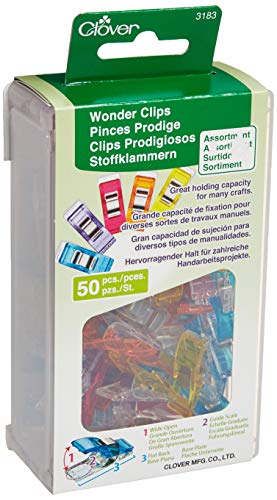
Though originally marketed for quilters, these clips have become a staple in knitting bags worldwide. The flat base is a genius design feature, allowing the clipped fabric to sit perfectly level on a table without creating unwanted bumps or ridges.
The internal rubber grip ensures that even the slickest superwash wools stay locked in place. Because they have a wide opening capacity, they can hold several layers of fabric, making them perfect for pinning down tricky button bands or thick collars.
Unlike spring-loaded clothespins that can exert uneven pressure, these clips provide consistent, gentle force. They are an essential tool for blocking complex lace or securing double-thick edges where precision is paramount.
Fons & Porter Pin-Up Clips: Best for Heavy Duty
When a project involves dense, high-twist cables or heavy fisherman’s wool, standard clips often fail to provide enough clamping force. These heavy-duty clips feature a specialized jaw that locks onto thick fabric with an iron-clad hold.
They are designed to withstand significant tension, making them ideal for stretch-blocking projects that require intense, directional pull. The padding is thicker than most, offering a protective barrier that prevents the fibers from being crushed under the pressure.
While they may be overkill for lightweight lace, they are indispensable for structural assembly. Use them whenever heavy seams need to be kept perfectly aligned for extended periods of time.
Generic Padded Hanger Clips: Best Budget Pick
Often found as repurposed laundry tools, these clips provide a functional, low-cost solution for knitters on a budget. The key is to source versions that explicitly state they have rubber or felt pads on the interior jaws.
These are best utilized for long, straight edges where you simply need to keep a piece of knitting from shifting on a blocking board. They lack the specialized ergonomic design of premium clips, but they get the job done for basic applications.
Be aware that the springs in budget clips can degrade over time, leading to a loss of tension. If you notice the clips starting to slip, it is time to upgrade or replace the rubber pads to avoid damaging your fiber.
Hemline Quilt Clips: Best for Bulk Projects

These clips excel in scenarios where you have a massive amount of fabric to manage, such as a large-scale heirloom afghan. They are generally sold in larger packs, which helps when you need to pin down an entire project perimeter at once.
The design focuses on a light but secure touch, which is beneficial when you want to avoid flattening the loft of a fluffy fiber. They are easy to manipulate with one hand, which is helpful if you are holding your knitting steady with the other.
They represent a great mid-range option for knitters who find themselves frequently working on blankets or shawls. Having a surplus of clips allows for more frequent pinning, which leads to a more uniform block and a cleaner final shape.
What to Look for in a Fabric Manipulation Clip
The primary consideration when selecting a clip is the clamping mechanism. You want a spring that is firm enough to hold the weight of wet wool but not so aggressive that it damages the yarn.
The padding material is equally important. Look for silicone or rubber-coated interiors, as these materials offer the best grip on smooth, synthetic, or protein-based fibers.
- Size: Larger clips are needed for bulky weight yarns, while smaller ones suffice for laceweight.
- Flatness: A flat base allows for better manipulation on a flat surface without distorting the fabric.
- Grip: Ensure the inner surface is textured to prevent the clip from sliding off the edge of your project.
Padded Clips vs. T-Pins: Which Should You Use?
T-pins are traditional for a reason, as they offer precise, point-by-point control over every stitch. However, they can rust if left in damp, light-colored yarn and occasionally leave small, visible holes in the fabric.
Padded clips offer a non-invasive alternative that treats the yarn with more care. They are superior for quick adjustments during the seaming process or for blocking items that do not require intense, aggressive stretching.
For most modern knitters, a combination is ideal. Use T-pins for the final, permanent shape of a project, and utilize padded clips during the assembly, steaming, or initial layout phases.
Creative Ways to Use Clips Beyond Just Blocking
Clips are surprisingly adept at solving common knitting frustrations beyond the blocking board. Use them to hold the beginning of a long-tail cast-on together to prevent the strands from tangling while working the first few rows.
They are also excellent for “clamping” your knitting bag to a table edge to keep it from slipping off while you work. When working on stranded colorwork, use a clip to keep your floats from catching on your project bag or knitting chair.
If you are following a printed chart, use a clip to hold your pattern to your work surface or to mark your current row. This eliminates the need for bulky weights and keeps your focus where it belongs: on the rhythm of your stitches.
How to Clean and Care for Your Fabric Clips
While clips are simple tools, they require occasional maintenance to keep them working at their best. Dust and fiber debris can build up on the rubber pads, causing them to lose their grip over time.
Wipe down the pads periodically with a damp, lint-free cloth to remove stray fibers. If the rubber becomes hard or brittle, a tiny drop of mineral oil or silicone lubricant can help restore the grip, but be sure to let it dry completely before it touches your yarn.

Store your clips in a dedicated box or jar to keep them from getting lost or crushed under heavier equipment. Proper care ensures that your clips remain a reliable part of your knitting kit for many years.
By choosing the right padded clip for your specific project and fiber, you can elevate the final quality of your work from homemade to heirloom. Focus on the tools that offer the best balance of tension and protection for your favorite yarns.