6 Best Yarn Swifts Wooden Pegs For Skein Adjustment
Discover the 6 best wooden peg yarn swifts for seamless skein winding. Learn how these adjustable tools ensure tangle-free fiber prep for every project.
Transitioning from pre-wound balls to luxurious hand-dyed hanks is a rite of passage for every knitter, but it brings the inevitable challenge of winding yarn without creating a tangled disaster. A quality yarn swift is the difference between a meditative, rhythmic winding session and an hour spent detangling a "yarn barf." By utilizing adjustable wooden pegs, these tools allow you to customize the tension and circumference to fit any skein, from delicate lace-weight silk to bulky wool. Investing in a reliable swift ensures your yarn remains in pristine condition, free from the unnecessary stress that ruins fiber loft.
Stanwood Needlecraft Tabletop Swift: Best Overall
The Stanwood tabletop swift is widely regarded as the gold standard for a reason. Its smooth, ball-bearing operation allows the swift to spin with the slightest pull, which is crucial when you are winding high-twist yarns that might snap if subjected to sudden resistance.


The adjustable wooden pegs are spaced perfectly to accommodate everything from small 50g lace hanks to massive 200g skeins of worsted weight yarn. Because it sits securely on your table, you don’t have to worry about the unit tipping over during a fast-paced winding session.
If you frequently switch between different yarn weights, the fluid movement of the Stanwood makes it the most versatile tool in your arsenal. It is the reliable workhorse that won’t let you down when you’re in the middle of a project.
Lacis Wooden Umbrella Swift: The Classic Choice
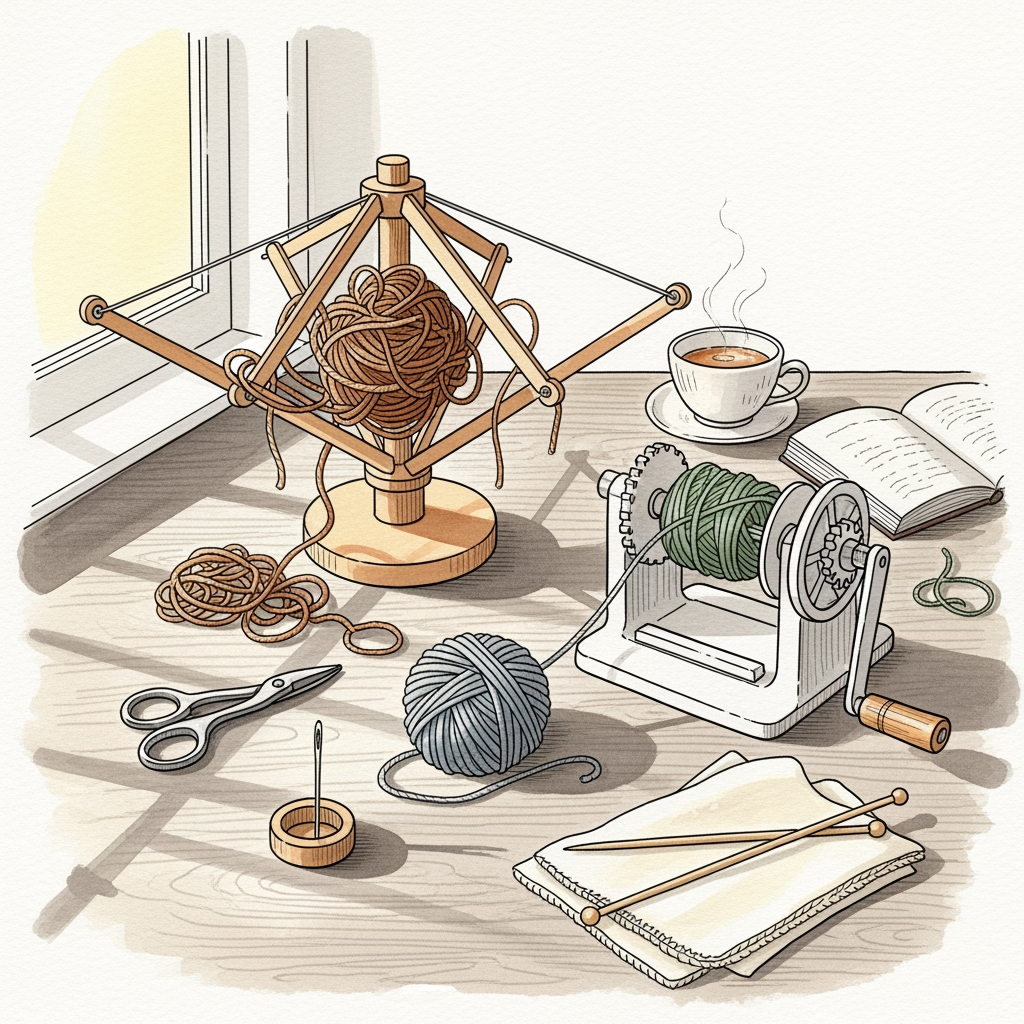
The Lacis umbrella-style swift is a traditional design that has graced knitting rooms for decades. It functions like a folding umbrella, expanding outward to hold your skein taut, which is ideal for those who prefer a compact storage solution when the swift isn’t in use.
The wooden pegs on this model are sturdy and well-finished, ensuring they won’t snag delicate fibers like alpaca or cashmere. Because it uses a vertical orientation, it takes up very little footprint on your craft table, leaving more room for your ball winder and project notes.
However, keep in mind that umbrella swifts require a bit more care during setup to ensure the tension remains even. If you enjoy the tactile, classic feel of wooden tools, this is a beautiful addition to your collection.
Knit Picks Yarn Swift: Best Value for Beginners
For those just starting to build their stash, the Knit Picks swift offers a fantastic balance of functionality and affordability. It is straightforward to assemble and provides a smooth rotation that is more than sufficient for most standard knitting projects.
The pegs are simple and effective, allowing you to quickly adjust the diameter for different skein sizes. While it may not have the heavy-duty bearings of higher-end models, it handles standard wool and acrylic blends with ease.
If you are just beginning to explore hand-dyed yarns, this swift is a perfect entry point. It gets the job done without breaking the bank, leaving you more budget for beautiful yarn.
Amish Style Wooden Swift: Best Non-Folding Design
The Amish-style swift is a unique, horizontal design that is essentially a rotating cross made of wood. Because it doesn’t have the complex folding mechanism of umbrella swifts, it is incredibly durable and unlikely to break over time.
The wooden pegs are inserted into pre-drilled holes, allowing you to move them to accommodate any skein size with absolute precision. This design is excellent for those who find the movement of umbrella swifts distracting or who want a tool that can be disassembled and stored flat in a drawer.
Because it operates horizontally, it offers a very stable base for winding. It is a fantastic choice for knitters who value simplicity and longevity over fancy mechanical features.
ChiaoGoo Wooden Umbrella Swift: Premium Quality
ChiaoGoo is well-known for their high-quality knitting needles, and their swift lives up to that reputation. The wood is polished to a glass-like finish, which is a major advantage when working with sticky fibers like mohair or mohair-silk blends that tend to cling to rough surfaces.
The mechanical action is incredibly smooth, providing a level of control that helps prevent uneven tension in your wound balls. When your yarn is wound with consistent tension, your gauge remains more accurate throughout your project.
This is a premium investment for the dedicated maker. If you spend significant time winding yarn, the tactile pleasure and smooth operation of this swift are well worth the cost.
Strauch Wooden Skein Winder: Best for Heavy Use

The Strauch winder is designed for the serious fiber artist who might be winding multiple skeins in a single sitting. It is built with heavy-duty materials that can withstand constant, vigorous use without wobbling or losing its balance.
The pegs are robust and designed to hold large, heavy hanks securely in place. If you are a spinner who regularly winds your own hand-spun yarn, this is the level of equipment you need to manage the weight and volume of your output.
While it is a larger investment, it is built to last a lifetime. It is the professional choice for those who view yarn preparation as a fundamental part of their craft.
Why Wooden Pegs Matter for Skein Adjustment
Wooden pegs are far superior to plastic alternatives because they provide a gentle, non-slip surface for your yarn. When you adjust the pegs to match the circumference of your skein, you are essentially creating a custom frame that keeps the yarn from sagging or tangling.
Proper peg placement ensures that the yarn feeds off the swift at an even rate. If the pegs are too close together, the skein will be loose and prone to tangling; if they are too far apart, you risk overstretching the fibers.
Always take the time to measure your skein before placing it on the swift. A well-adjusted swift prevents the "yarn barf" that happens when a skein collapses mid-wind.
How to Properly Set Up Your Wooden Yarn Swift
Start by placing your swift on a flat, stable surface, ensuring the clamp or base is tightened securely. Open the swift slightly, then place your skein around the pegs before expanding it further to reach the desired tension.
The goal is to have the yarn held firmly but not stretched tight. If you are winding delicate fibers like silk or high-twist merino, err on the side of a slightly looser fit to preserve the yarn’s natural elasticity.
Always check that the yarn can rotate freely without catching on any part of the swift’s frame. A few seconds spent double-checking your setup will save you minutes of frustration later.
Maintaining Your Swift for Long-Term Smoothness
Wood is a natural material that responds to its environment, so keep your swift away from extreme heat or damp areas. Periodically check the joints and screws to ensure they are tight, as the vibration from winding can loosen them over time.
If your swift begins to feel stiff, a tiny amount of wood-safe wax or lubricant on the moving parts can restore that smooth, silent spin. Avoid using heavy oils that might stain your yarn or attract dust.
Treat your swift as a partner in your knitting process. With minimal care, a wooden swift will last for decades, becoming a fixture in your creative space.
Troubleshooting Common Swift Tension Problems
If your yarn is constantly falling off the pegs, your swift is likely under-expanded or the yarn is too loose. Simply expand the swift further until the skein is held taut enough to rotate without slipping.
If the yarn feels like it is resisting your winder, check for "catches" where the yarn might be snagged on a wooden peg or a rough spot on the frame. Sometimes, the issue is simply that the swift is too close to the ball winder, which creates an awkward angle for the yarn to feed.
Always remember that different fibers have different "memory" and elasticity. Adjust your technique based on the yarn—be gentle with delicate luxury fibers and more confident with sturdy, high-twist wools.
Selecting the right yarn swift is an investment in the longevity of your yarn and the enjoyment of your craft. Whether you opt for the classic reliability of an umbrella-style model or the sturdy, horizontal design of an Amish swift, the ability to adjust your pegs ensures every skein is treated with care. Take your time to choose the tool that fits your specific knitting habits and space requirements. With a properly set up swift, you’ll find that the process of winding yarn becomes a peaceful, productive prelude to your next beautiful project.