
6 Best Knitting Scissors For Precise Trimming Reviewed
Find the perfect pair with our review of the 6 best knitting scissors. We analyze sharpness, comfort, and precision to help you trim your yarn with ease.
Every knitter knows the frustration of a dull blade snagging a delicate strand of mohair or fraying a tightly twisted wool yarn. Having a dedicated pair of high-quality scissors in your project bag is just as vital as choosing the right needle size for your gauge. From snipping yarn tails to precise embroidery work, the right tool transforms a tedious task into a seamless part of your craft. Here is a curated look at the best cutting tools to keep your knitting projects looking sharp and professional.
Gingher 4-Inch Stork Scissors: Best for Detail


There is a reason these iconic bird-shaped scissors have been a staple in sewing kits for decades. The slim, needle-sharp points are designed for getting into tight spaces, making them ideal for snipping loose ends on intricate lace projects or stranded colorwork.
When you are working with fine silk or lace-weight yarns, you need a tool that cuts cleanly without pulling at the fibers. The Gingher Stork offers a precision point that ensures you only cut the yarn you intend to, protecting your delicate stitches from accidental nicks.
However, keep in mind that these are specialty tools. Because the blades are so fine, they aren’t meant for heavy-duty tasks like cutting through thick, multi-ply worsted wool or cotton cord. Use these for finishing touches, and your pair will stay sharp for years.
LDH Scissors Midnight Thread Snips: Best Overall
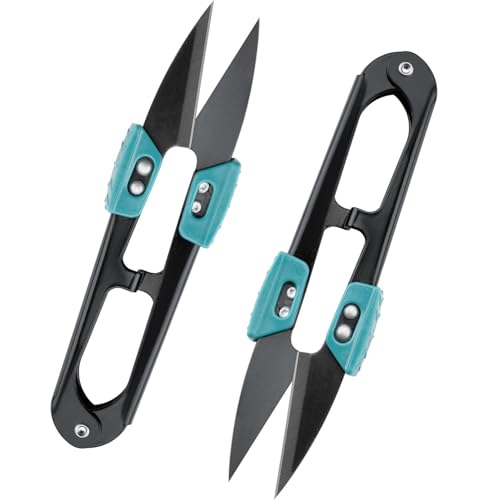
If you want a tool that feels like an extension of your hand, the LDH Midnight Thread Snips are a masterclass in balance. These snips are incredibly lightweight, which reduces hand fatigue during long marathon knitting sessions where you are constantly weaving in ends.
The high-quality carbon steel provides a crisp, satisfying "snap" with every cut. Whether you are trimming a bulky wool blend or a slippery synthetic, these snips glide through the fiber without leaving ragged edges that could eventually pill or fray.
While they come at a higher price point than basic craft store shears, the durability is unmatched. They are the workhorse of my knitting bag, reliable enough for daily use and sharp enough to handle any fiber weight I throw at them.
Westcott Titanium Bonded Scissors: Best Value

For the knitter who tends to lose their tools at the bottom of a project bag, Westcott offers the perfect balance of performance and affordability. The titanium-bonded blades stay sharper for longer than standard stainless steel, resisting the buildup of sticky fibers or residue.
These scissors are surprisingly versatile and can handle a variety of yarn weights, from fingering-weight sock yarn to heavy, unspun roving. Their ergonomic handles provide a comfortable grip, even if you have larger hands or struggle with dexterity.
You don’t always need a luxury tool to get a clean cut. If you are a beginner building your first kit, start here; you get professional-grade cutting power without the sticker shock, allowing you to invest more of your budget into quality yarn.
Cohana Seki Mini Scissors: Best for Travel
When you are knitting on a plane or at a crowded fiber festival, you need tools that are compact and safe. Cohana’s Seki Mini scissors are beautifully crafted in Japan, featuring a tiny, protective leather case that keeps the blades shielded and your bag lining intact.
Despite their diminutive size, they are remarkably effective for trimming yarn tails on the go. They are small enough to fit in a notions tin, yet the handle design allows for a surprisingly stable grip that doesn’t feel flimsy or awkward.
These are a delight for the detail-oriented knitter who appreciates fine craftsmanship. They aren’t meant for bulk cutting, but for a quick snip while traveling, they are the gold standard of portability and style.
Havel’s Sewing Snip-Eze: Best Ergonomic Design

If you suffer from hand strain or arthritis, the Snip-Eze design is a game-changer. Instead of traditional finger loops, these utilize a spring-loaded mechanism that cuts when you squeeze your entire hand, requiring very little physical effort.
This design is particularly helpful when you are finishing a large project, like a sweater, and need to weave in dozens of ends in one sitting. By eliminating the repetitive motion of opening and closing finger loops, you can keep your hands comfortable and pain-free.
The blades are also exceptionally sharp, ensuring that you don’t have to "saw" at the yarn. Just a gentle squeeze is all it takes to get a clean, professional finish on your work.
Fiskars Micro-Tip Scissors: Best for Precision
Fiskars is a household name for a reason, and their Micro-Tip line is a favorite among knitters who prioritize accuracy. The blades are designed to be extremely thin, allowing you to get right up against a knot or a transition point without disturbing the surrounding stitches.
These are particularly useful for stranded colorwork, where you might need to trim a float or a tail in a very confined area. The precision allows you to cut with confidence, knowing you won’t accidentally snip your live stitches.
They are also very easy to find and replace, making them a reliable staple for any knitter. While they may not have the aesthetic appeal of artisanal scissors, their performance is consistent, sharp, and highly effective for everyday knitting tasks.
Key Features to Consider When Buying Snips
When selecting your scissors, look first at the blade length and point profile. For knitting, you want a shorter blade (under 4 inches) with a pointed tip to reach into dense stitch patterns or tight cable crossings.
Consider the handle ergonomics as well. If you spend hours knitting, you know how quickly your hands can tire; a handle that fits your grip style—whether you prefer loops or a spring-loaded squeeze—is essential for long-term comfort.
Finally, think about portability and safety. If you carry your project bag everywhere, a pair of scissors with a protective cap or a compact, foldable design will save your yarn and your fingers from accidental snags.
Why Blade Material Impacts Your Cutting Edge
The material of your scissors determines how often you need to sharpen them and how they handle different fibers. Carbon steel provides the sharpest edge, which is ideal for clean, crisp cuts on natural fibers like wool or alpaca.
Stainless steel is a more durable, rust-resistant option that holds up well in humid environments. It is a great choice if you live near the coast or tend to store your knitting tools in damp basements or garages.
Titanium-bonded blades offer a middle ground, providing extra hardness that helps the blades resist dulling over time. This is particularly useful if you frequently cut synthetic yarns, which can sometimes be more abrasive on metal than natural fibers.
Maintaining Your Scissors for Long-Term Use
Treat your knitting scissors as a precision instrument rather than a general-purpose utility tool. Never use them to cut paper, cardboard, or wire, as these materials will dull the fine edges almost instantly, making them useless for delicate yarn.
Keep your blades clean by wiping them down with a soft, dry cloth after use to remove any lint or lanolin residue. If you notice them starting to snag, a simple professional sharpening can often restore them to their original glory.
Store them in a dry place, preferably in a case or a dedicated notions pouch. Moisture is the enemy of sharp steel, and keeping them protected will ensure they remain a reliable part of your knitting kit for years to come.
Safety Tips for Storing Your Knitting Tools
Safety is paramount, especially if you share your space with children or pets. Always store your scissors in a closed container, a leather sheath, or a designated notions tin when they are not actively in use.
If you are traveling, be mindful of local regulations regarding sharp objects in carry-on luggage. Many knitters keep a small, TSA-compliant pair of blunt-nosed scissors or thread snips specifically for air travel to avoid the heartbreak of having their favorite tools confiscated.
Finally, develop the habit of "tool discipline" by returning your scissors to the same spot in your project bag every time. This not only keeps your tools safe but also prevents you from accidentally leaving a sharp blade loose where it could damage your finished work.
Choosing the right pair of knitting scissors is a small investment that pays off every time you finish a row or weave in a tail. Whether you prioritize ergonomic comfort, portability, or surgical precision, there is a tool here to suit your specific knitting style. Keep your blades sharp, your project bag organized, and your hands ready for the next cast-on. Happy knitting!
