7 Best Project Journals For Gift Ideas To Inspire
Discover the 7 best project journals to fuel creativity. These top picks offer structure and inspiration, making them ideal, thoughtful gifts for any maker.
Every knitter eventually reaches a point where they forget which needle size they used for a specific sweater or how many grams of yarn remained after binding off. A dedicated project journal transforms these fleeting details into a permanent, searchable library of your personal craft history. Whether you are tracking complex cable charts or simple garter stitch scarves, the right notebook acts as both a roadmap and a legacy. These seven journals offer distinct approaches to capturing the nuance of your fiber arts journey.
The Knit Notes Journal: Best Overall Organization
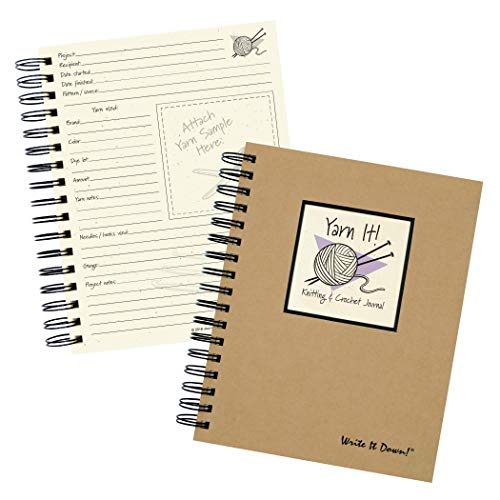

The Knit Notes Journal excels because it treats knitting as a structured process rather than just a hobby. It provides dedicated fields for gauge, yarn substitution notes, and needle sizes, ensuring you don’t have to scramble to remember your tension after a long break.

This journal is ideal for the knitter who loves data but hates designing their own layout. By providing a consistent template, it forces you to record the "why" behind your choices—like why you opted for a specific wool-nylon blend for a pair of socks.
The downside is its rigid structure; if you prefer to sketch or add bulky swatches, you might find the boxes too small. However, for maintaining a clean, professional record of your stash and active projects, it remains the gold standard.
Cocoknits Maker’s Journal: Best Modular Design
The Cocoknits approach is brilliant because it recognizes that knitting rarely happens in a vacuum. This journal uses a clever system of inserts and pockets, allowing you to swap out pages as your project evolves from planning to finishing.
It is perfect for the maker who juggles multiple projects at once and needs to keep patterns, swatches, and notions in one place. The modularity means you can pull out a specific project’s progress and keep it in your project bag without lugging the entire book.
Be aware that this system requires a bit of "maintenance" to keep organized. If you aren’t the type to tuck away scraps or update your index regularly, the modular pieces might end up scattered.
The Knitter’s Year: Best for Project Planning

If you tend to start a dozen projects in January and finish them in December, this journal is your best friend. It focuses on the calendar aspect of knitting, helping you pace your projects to avoid the dreaded "last-minute gift panic."
It includes space for goal setting, which is surprisingly helpful for managing your yarn stash. By tracking your progress over a full year, you gain a clearer sense of your actual knitting speed, which prevents the common mistake of overestimating how many sweaters you can realistically complete.
The trade-off here is that it is less focused on individual pattern technicalities and more on the timeline. If you need deep technical space for complex lace charts, you may need an additional notebook.
Fringe Association Field Guide: Best for Portability

When you are knitting on the train or at the local coffee shop, you don’t want a heavy, oversized binder. The Fringe Association Field Guide is compact, durable, and designed to survive the bottom of a busy knitting bag.
It is specifically built for the "on-the-go" knitter who needs to record gauge or row counts while away from their main desk. The paper quality is excellent, handling everything from fountain pen ink to graphite without bleeding through.
Because it is small, it lacks the expansive space for long-form journaling or extensive pattern drafting. It is a tool for the field, not a scrapbook for your entire knitting life.
Rowan Knitting & Crochet Journal: Best for Swatches
Swatching is the most overlooked part of knitting, yet it is the only way to ensure your garment fits correctly. The Rowan journal provides specialized graph paper designed specifically for mapping out stitch patterns and recording swatch dimensions.
This is essential for knitters who frequently modify patterns or design their own garments from scratch. Having a dedicated space to tape down a washed and blocked swatch allows you to see exactly how a yarn behaves after it has been introduced to water and heat.
The layout is very focused on the technical side of fiber arts. If you are looking for a place to write emotional reflections on your knitting journey, you might find this journal a bit too clinical.
Moleskine Pro Collection: Best for Custom Layouts

Sometimes, the best system is the one you build yourself. The Moleskine Pro Collection offers high-quality, blank or dotted pages that allow you to design your own project trackers, yarn inventory lists, and needle conversion charts.
This is the best choice for the "creative" knitter who wants to combine sketches, pattern notes, and photos of finished objects. You aren’t confined to a box, which is a major advantage when you are working on something non-standard, like a complex intarsia colorwork piece.
The drawback is the total lack of guidance. If you don’t have a clear idea of what you want to track, you might end up with a messy, disorganized notebook that doesn’t actually help you when you sit down to knit.
Leuchtturm1917 Notebook: Best for Bullet Journaling
The Leuchtturm1917 is the gold standard for the Bullet Journal method, which is arguably the most effective way to track knitting projects. By using an index and numbered pages, you can create a "Table of Contents" for your knitting life.
You can dedicate specific sections to "Stash," "WIPs" (Works In Progress), and "Gift Ideas." It is incredibly flexible, allowing you to scale your notes based on the complexity of the project, whether it’s a simple cowl or a multi-month cabled cardigan.
This approach requires the most time investment. You must be willing to manually set up your trackers, but the result is a perfectly tailored system that fits your specific needs as a maker.
Why You Should Track Your Knitting Projects Today
Tracking your projects is not just about nostalgia; it is a vital tool for improving your craft. When you record the needle size, yarn brand, and gauge for every project, you build a personal database of what works for your specific tension.
Over time, you will notice patterns—perhaps you consistently knit tighter with bamboo needles than with nickel-plated ones. This knowledge allows you to make informed decisions before you ever cast on a new project.
Ultimately, a journal turns your knitting into a continuous learning experience. You stop making the same mistakes twice and start understanding the physics of your own hands.
Key Features to Look for in a Knitting Journal
When shopping for a journal, prioritize paper quality first. You will be erasing and rewriting notes, and cheap paper will tear or ghost ink under the pressure of a pencil.
Look for these essential elements:
- Gauge tracking: A dedicated area for pre- and post-blocking measurements.
- Yarn inventory space: Room to attach a small yarn label or a sample of the actual fiber.
- Needle logs: A place to note which needle material (wood, metal, plastic) you used, as this changes your gauge.
- Pocket storage: A back sleeve for loose pattern printouts or swatches.
Consider your own habits: do you prefer a spiral-bound book that lays flat, or a hardbound journal that feels like a keepsake? The best journal is the one you actually reach for when you finish a row.
How to Archive Your Finished Projects Effectively
Archiving your projects is the final step in the knitting process. Once a piece is off the needles, take a photo and attach it to your journal entry along with the date of completion.
Include a "lessons learned" section for every project. Note if the yarn pilled, if the garment stretched out after washing, or if you would change the length of the sleeves next time.
By keeping these notes, you create a living reference guide. Five years from now, when you decide to knit that same sweater again, you won’t have to guess—you will have your own expert advice waiting for you.
Investing in a project journal is a commitment to your growth as a maker. Whether you choose a highly structured planner or a blank notebook, the act of writing down your process is what elevates a hobby into a craft. Take the time to find the format that matches your personal style, and watch how your knitting confidence flourishes. Your future self will thank you every time you pick up your needles.