6 Best Circular Needle Adapters For Cable Versatility
Unlock seamless knitting with our top 6 circular needle adapters. Discover how these versatile tools enhance your cable setup for any project with ease.
Every knitter has experienced the frustration of a project outgrowing their current cable length mid-row. Interchangeable needle adapters act as the bridge between your existing tool collection and the specific needs of a complex pattern. Mastering these connectors allows you to combine cables for longer circulars or transition between different tip brands seamlessly. This guide explores the best adapters on the market to help you maximize the utility of your knitting stash.
ChiaoGoo Small to Large Cable Connector Set


ChiaoGoo is the gold standard for many lace knitters because their cables are memory-free and remarkably durable. The Small to Large adapter is a clever piece of engineering that allows you to use your delicate, small-diameter needle tips on sturdier, larger-diameter cables.
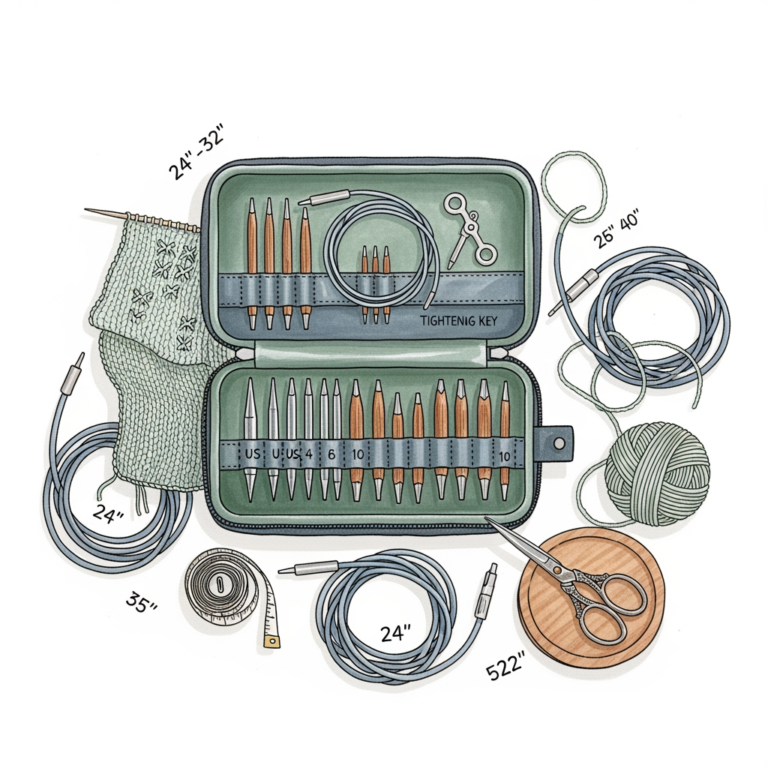
This is particularly useful when you are working on a massive project, like a heavy wool blanket, where you need the weight-bearing capacity of a larger cable but the precision of a smaller tip. The transition is seamless, provided you use the included tightening key to ensure the connection is flush.
- Key Advantage: Allows cross-compatibility between ChiaoGoo’s distinct needle sizing categories.
- Tradeoff: The added length of the adapter can make the transition area slightly rigid if you aren’t careful.
- Bottom Line: An essential purchase if you already own a mix of ChiaoGoo Small and Large sets.
HiyaHiya Interchangeable Needle Tip Adapters

HiyaHiya is famous for their swivel cables, which prevent the "coiling" effect that often drives knitters mad during long sessions. Their adapters are designed to maintain that signature smooth rotation while extending your reach.
If you are working on a garment with a high stitch count, these adapters provide the flexibility to join two shorter cables together. This effectively turns your existing gear into a custom-length circular needle, saving you from purchasing specialized cord lengths for one-off projects.
- Key Advantage: Maintains the swivel mechanism that reduces wrist strain during repetitive work.
- Tradeoff: The adapter adds a small amount of weight to the cable joint, which can be noticeable when working with very lightweight lace weight yarns.
- Bottom Line: If your hands fatigue easily, these adapters are the best way to extend your cables without losing ergonomic benefits.
KnitPro Mindful Collection Cable Connectors

The Mindful Collection focuses on the meditative aspect of knitting, and these connectors reflect that with their smooth, snag-free finish. They are designed to be visually clean, ensuring that your yarn slides over the join without catching on the threading.
These are an excellent choice for knitters working with delicate, single-ply wools that are prone to splitting. Because the join is so precise, you won’t find yourself constantly picking at the connection point to move your stitches along.
- Key Advantage: Extremely smooth transition that prevents fiber breakage.
- Tradeoff: They are brand-specific and will not work with most other interchangeable systems.
- Bottom Line: A must-have for those who prioritize a snag-free experience above all else.
Lykke Interchangeable Cable Connector Set

Lykke needles are beloved for their warm, wooden aesthetic, and their adapters maintain that same focus on quality and tactile feel. These connectors are ideal for knitters who prefer the grip of wood but need the versatility of a longer cable for large-scale projects.
When using these with wooden tips, the weight distribution remains balanced, preventing the "tipping" sensation that can occur with heavier metal adapters. They are perfect for long, circular-knit skirts or sweaters where you need to hold hundreds of stitches on the cord.
- Key Advantage: Lightweight construction that doesn’t unbalance your needle tips.
- Tradeoff: Because they are often made of lighter materials, they require careful handling to avoid cross-threading.
- Bottom Line: The best aesthetic and functional match for a knitter who exclusively uses Lykke wooden tips.
Addi Click System Needle Tip Adapters

The Addi Click system is unique because it uses a spring-loaded "push-and-twist" mechanism rather than a traditional screw-in thread. Their adapters are robust and designed for heavy-duty use, making them perfect for knitters who frequently switch between different tip materials.
Because there are no threads to wear down, these adapters are incredibly long-lasting. They are the most reliable option for knitters who tend to be a bit rough on their equipment or who work with heavy, high-friction fibers like cotton or linen.
- Key Advantage: No threads to strip, ensuring a secure connection for years.
- Tradeoff: The click mechanism can feel bulky compared to sleek, screw-in alternatives.
- Bottom Line: Ideal for the knitter who wants a "set it and forget it" connection that won’t come undone mid-row.
Seeknit Koshitsu Interchangeable Connectors
Seeknit offers a high-end Japanese bamboo experience, and their connectors are crafted with the same precision as their needles. These are perfect for the knitter who values natural materials and wants a seamless, lightweight connection for their bamboo tip collection.
Using these with bamboo needles creates a very quiet, rhythmic knitting experience. If you are working in a public space or a library, the lack of metallic "clacking" is a significant advantage that these connectors help facilitate.
- Key Advantage: Maintains the silent, warm, and natural feel of bamboo knitting.
- Tradeoff: Bamboo connectors are more susceptible to snapping if subjected to excessive tension or force.
- Bottom Line: Perfect for the mindful, quiet knitter who prefers natural materials.
How to Match Threading Types Between Brands
The knitting industry lacks a universal standard for threading, which is the biggest hurdle for stash-builders. Before attempting to mix brands, you must verify the thread pitch and diameter of your connectors.
Most brands use a proprietary threading system that is physically incompatible with others. Forcing a screw-in connector from one brand into another will almost certainly damage the internal threading of your needle tips, rendering them useless. Always keep your adapters organized by brand in labeled containers to avoid this costly error.
- Verification Tip: Check the diameter of the screw post using a digital caliper if you are unsure of the brand origin.
- Rule of Thumb: Never force a connection; if it doesn’t glide in easily, it is not the right adapter.
- Bottom Line: Stick to the same brand for your adapters and needles to ensure longevity and safety.
Why Cable Connectors Are Essential for Stash
Cable connectors are the ultimate "problem solvers" for your knitting kit. They allow you to transform two 24-inch cables into a 48-inch cord, which is essential for working large-circumference projects like shawls or blankets.
Investing in a few sets of connectors is far more cost-effective than buying a new cable for every single project. They allow you to scale your existing needle collection to fit any pattern, making them the most versatile tool in your notions bag.
- Versatility: Allows for "try-on" cables that are longer than your actual project needs.
- Efficiency: Enables you to hold stitches on a cable while you use the tips for another section of the project.
- Bottom Line: They are the secret to a smaller, more functional, and less cluttered knitting stash.
Troubleshooting Common Cable Snagging Issues
If your yarn is catching at the join, the most common culprit is a slight misalignment between the adapter and the cable. Even a microscopic gap can cause a plied yarn to catch, snag, or fray as you slide your stitches.
Always ensure that your cable is pushed fully into the adapter and tightened with the provided key. If the snagging persists, inspect the junction for any leftover fiber debris or a slight burr on the metal surface.
- Quick Fix: Use a fine-grit emery board to gently smooth out any burrs on the metal connector.
- Prevention: Regularly check your joins every few rows to ensure they haven’t loosened due to the natural twisting motion of your knitting.
- Bottom Line: A snag-free join is a clean join; keep your connections tight and your surfaces smooth.
Best Practices for Maintaining Needle Joints
Needle joints are the most stressed part of your knitting setup, as they bear the weight of the entire project. To keep them in top condition, avoid over-tightening your connectors, which can strip the threads or cause the metal to fatigue over time.
When you finish a project, unscrew your cables and store them separately. Leaving them connected for months can lead to oxidation or "seizing," where the threads become difficult to separate. A tiny drop of wax on the threads can also help keep them moving smoothly.
- Storage Tip: Keep your adapters in a small, dedicated tin to prevent them from getting lost in the bottom of your project bag.
- Maintenance: Wipe down your connectors with a soft cloth after every project to remove skin oils and fiber dust.
- Bottom Line: Treat your joints with care, and they will support your knitting projects for decades to come.
Investing in the right cable adapters transforms your knitting experience from a series of limitations into a world of endless possibilities. By understanding the mechanical nuances of your specific needle system, you can extend the life of your gear and tackle any project with confidence. Remember that the best tool is the one that allows you to focus on the rhythm of your stitches rather than the mechanics of your needles. Happy knitting, and may your joins always be smooth and secure.