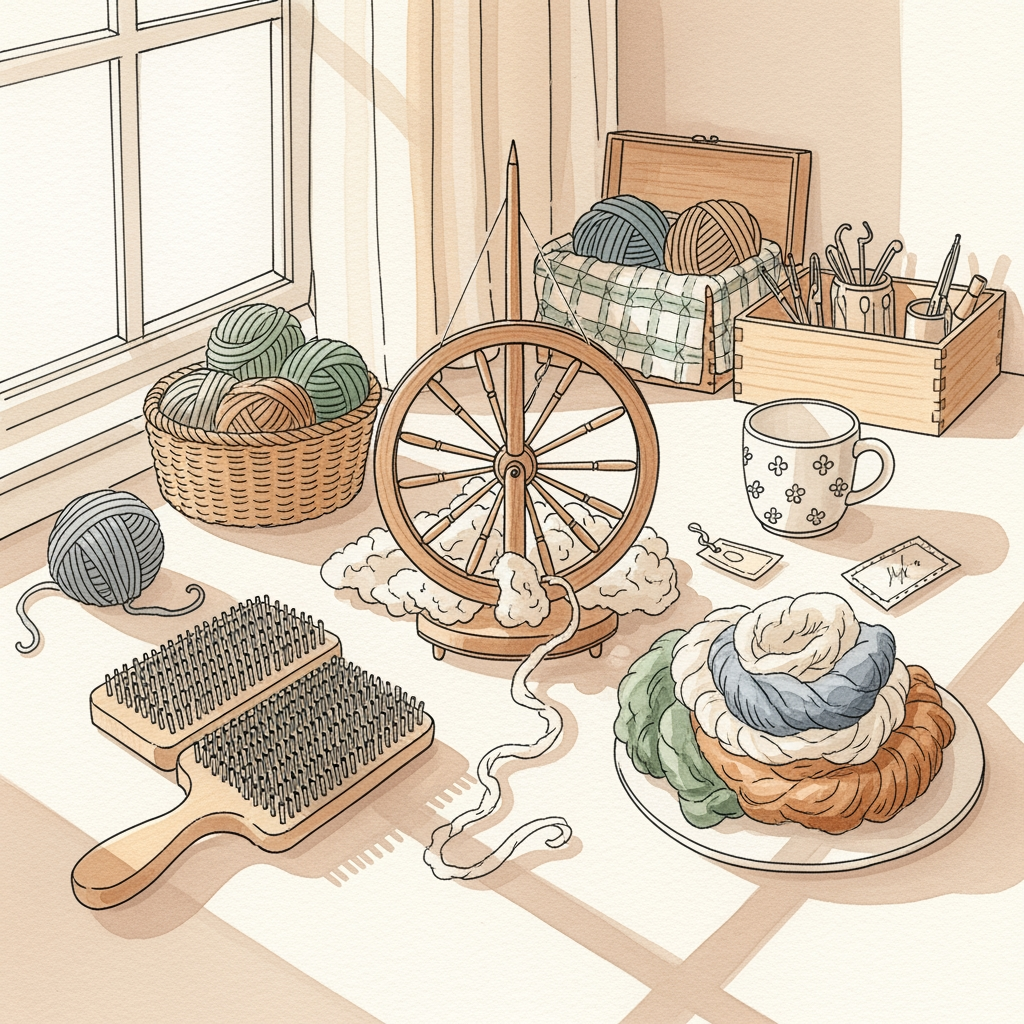
6 Best Wool Roving For Needle Felting Accessories
Discover the top 6 wool rovings for needle felting. This guide covers texture, color, and fiber quality to help you choose the perfect material for your crafts.
Needle felting is a transformative craft that turns raw, airy wool into dense, sculptural art through the rhythmic motion of a barbed needle. Whether you are crafting delicate accessories or sturdy figures, the quality of your fiber dictates the ease of your process and the finish of your work. Understanding the specific properties of different wools can save you hours of frustration and prevent your projects from becoming fuzzy or misshapen. This guide explores the best fibers on the market to help you achieve professional results in your next fiber art endeavor.
Living Felt MC-1 Batts: Best For Beginners
If you are just picking up your first felting needle, you need a fiber that behaves predictably. The Living Felt MC-1 batts are a masterclass in consistency, offering a medium-fine texture that grabs onto itself quickly.
This fiber is remarkably forgiving, which is essential when your muscle memory for needle depth and angle is still developing. Beginners often struggle with "surface fuzz," but the MC-1 structure minimizes this by locking fibers together firmly with every strike.
Because these are batts—meaning the fibers are carded in multiple directions—they provide a stable base that doesn’t pull apart under tension. Think of them as the "worsted weight" of the felting world: reliable, easy to handle, and perfect for learning the fundamentals of shape building.
Ashford Corriedale Wool: Best For Sculpting
When you move from simple shapes to intricate, three-dimensional sculptures, you need a wool with a bit of "backbone." Ashford Corriedale is the industry standard for this exact reason, offering a sturdy, medium-grade crimp that holds its shape beautifully.
Unlike finer fibers that might collapse or sag when you add weight to a sculpture, Corriedale stands tall. It is the fiber equivalent of a high-twist yarn; it has enough structural integrity to maintain sharp edges and defined features.
I recommend this for anyone making decorative items like animals or ornaments that require firm, dense cores. It takes a bit more needle work to compress, but the resulting durability is well worth the extra effort.
Woolbuddy Felting Wool: Best Variety Packs
Sometimes, you don’t need a pound of one color; you need a rainbow of possibilities for small, detailed accents. Woolbuddy offers excellent variety packs that prevent you from overbuying materials for small-scale projects.
These packs are ideal for the "tinkerer" who loves to make small charms, jewelry, or colorful embellishments. Having a wide range of colors at your fingertips allows for experimentation without the commitment of purchasing full-sized batts.
While these fibers are generally best suited for surface decoration or small figures, they are consistent in quality and very easy to work with. They are the perfect addition to any crafter’s stash for those moments when inspiration strikes and you need a specific shade immediately.
Bear Creek Felting Wool: Best For Details
Detail work is where many felters hit a wall, especially when trying to create fine lines or facial features. Bear Creek wool is exceptionally clean and well-processed, making it the go-to choice for those fine, finishing touches.
The fiber is incredibly smooth, which reduces the amount of "flyaway" hairs that can ruin a crisp design. If you are adding eyes, whiskers, or intricate patterns to a surface, this wool lays flat and stays put.
Think of this as your "lace weight" fiber; it is delicate, precise, and meant for high-definition work. Using this for your core construction would be a waste of its quality, so save it for the final layers where clarity really counts.
Sarafina Fiber Art Wool: Best Color Range
Color is the soul of any artistic project, and Sarafina Fiber Art provides a palette that is truly unmatched in depth and vibrancy. Their wool is dyed with an artist’s eye, offering subtle gradients and rich, saturated tones that can elevate a simple project into a masterpiece.
When you are working on a piece that requires shading or realistic color blending, you need a range that isn’t just bright, but nuanced. This wool blends seamlessly, allowing you to create painterly effects on your felted surfaces.
If you are a fan of "needle painting," where you use wool like pigment, this is your primary resource. The fibers are soft and easy to manipulate, ensuring that your color transitions are smooth rather than abrupt or muddy.
Felted Sky Merino Top: Best Fine Texture


Merino is known for its luxurious softness, and Felted Sky’s merino top is the gold standard for projects requiring a delicate touch. Because it is a "top"—meaning the fibers are combed parallel—it is incredibly smooth and sleek.
This fiber is perfect for projects that need a high-end, professional finish or a soft, tactile feel. It is less about structural stability and more about surface beauty, making it ideal for delicate accessories like felted brooches or soft-sculpted flowers.
Be aware that because it is so fine, it can be slightly more challenging to felt into a hard, dense shape compared to a coarser wool. Treat it like a luxury silk-blend yarn: handle it with care, and use it where you want the finished product to feel premium and refined.
Understanding Fiber Micron Counts For Felting
Micron count is the measurement of the diameter of a wool fiber, and it is the single most important technical factor in your felting success. A lower micron count means a finer fiber, while a higher count indicates a coarser, thicker fiber.
- 20-23 microns: Fine, soft, and ideal for surface details or luxury items.
- 25-30 microns: Medium, sturdy, and the best choice for structural cores and sculptures.
- 30+ microns: Coarse, very durable, and excellent for heavy-duty items like rugs or bags.
If you try to build a complex sculpture out of 19-micron merino, you will spend hours trying to get it firm. Conversely, using a 32-micron wool for delicate facial features will result in a clunky, uneven look. Match your micron count to your project’s structural needs.
Why Wool Batts Outperform Roving For Projects
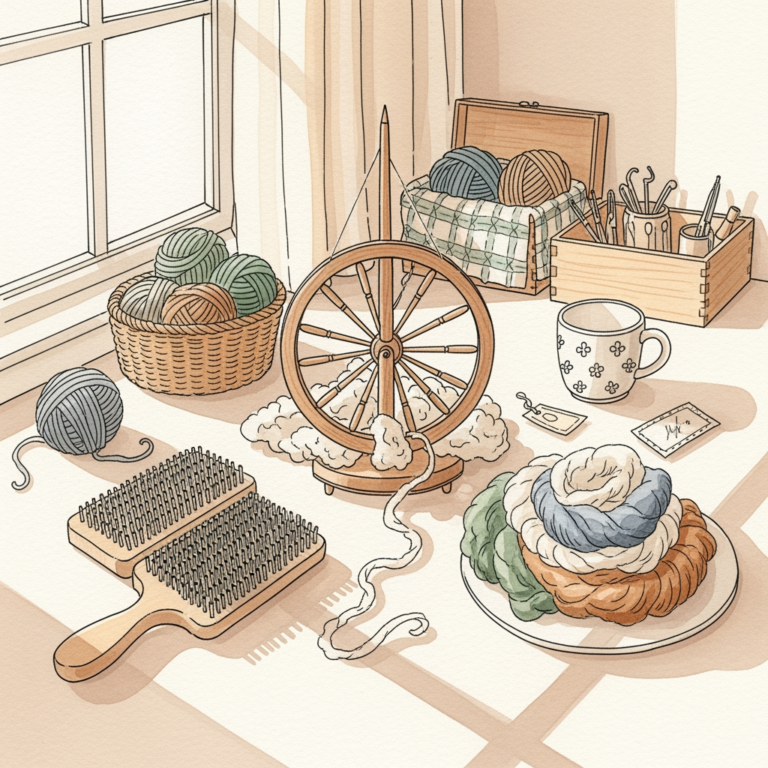
In the fiber world, there is a distinct difference between "batts" and "roving," and it comes down to how the fibers are organized. Roving is combed into a long, parallel rope, which is perfect for spinning yarn but often frustrating for needle felting.
When you use roving, the fibers are all facing the same way, which can make it difficult to create a solid, multi-directional felt. Batts, however, are carded into a web where fibers crisscross in every direction.
This multi-directional structure acts like a woven fabric, locking together much faster under the needle. If you want to save time and reduce the risk of your project pulling apart, always reach for a batt for your core construction.
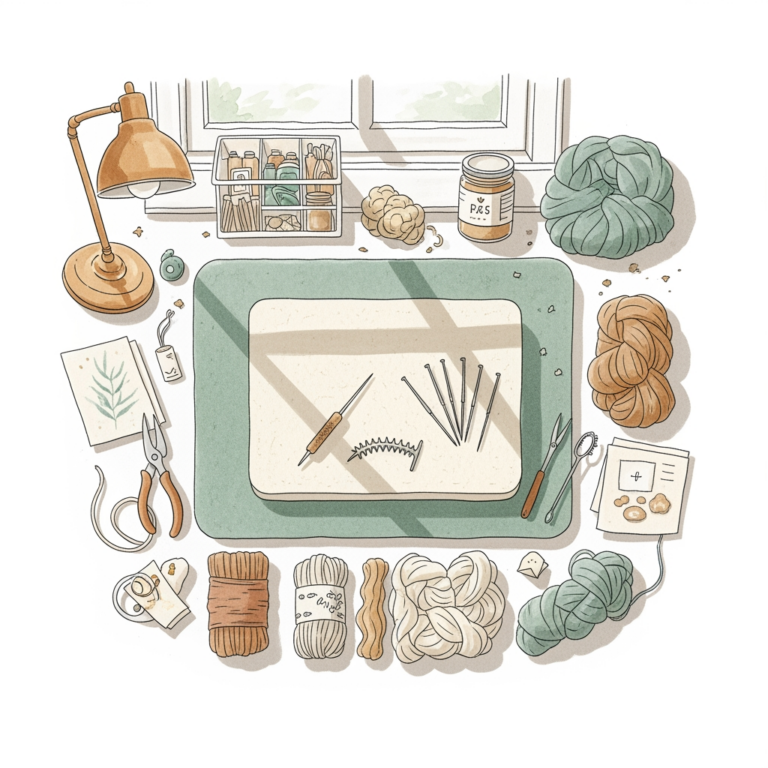
Essential Tools For Needle Felting Success
Just as you wouldn’t knit a chunky sweater on size 1 needles, you shouldn’t use the wrong needle for your felting project. Felting needles come in various gauges, with higher numbers indicating thinner needles and lower numbers indicating thicker ones.
- Coarse needles (32-36 gauge): Best for initial shaping and joining large pieces of wool.
- Medium needles (38-40 gauge): The workhorse of the craft, perfect for general sculpting.
- Fine needles (42+ gauge): Essential for surface finishing and adding tiny details.
Always keep a variety of gauges on hand. If you find your needle is leaving large holes in the wool, you are using a needle that is too thick for that stage of the project. Switch to a finer gauge to "heal" the surface and refine your work.
How To Store And Protect Your Felting Wool
Wool is a natural protein fiber, which means it is susceptible to environmental damage and pests. Proper storage is the difference between a pristine stash and a ruined collection of expensive fiber.
Always store your wool in airtight, clear plastic bins to keep out moths and carpet beetles. Adding a sachet of dried lavender or cedar wood can act as a natural deterrent, but nothing beats a physical barrier like a sealed container.
Keep your stash out of direct sunlight to prevent the colors from fading over time. If you have a large collection, labeling your bins by fiber type or color family will save you from having to dig through your stash every time you start a new design.
Mastering the nuances of wool roving and batts is a journey that rewards patience and experimentation. By choosing the right fiber for your specific goal, you move from merely manipulating wool to truly sculpting it with precision. Remember that your choice of fiber is the foundation of your project, so select with intention and enjoy the tactile process. Happy felting, and may your needles stay sharp and your fibers stay perfectly dense.