6 Best Knit Blockers For Edge Tension To Try
Achieve professional finishes with these 6 top-rated knit blockers. Discover tools that ensure perfect edge tension and consistent shaping for every project.
Achieving a professional finish on your hand-knits often comes down to the final, critical step of blocking. While your stitch work provides the foundation, the right blocking tools act as the architectural scaffolding that defines your project’s final shape. Choosing the correct pins or combs can be the difference between a garment that looks homemade and one that looks boutique-quality. This guide explores the best tools to help you master edge tension and achieve those crisp, clean lines every time.


KnitIQ Stainless Steel Blocking Combs

These combs are a game-changer for anyone who struggles with the tedious task of placing individual pins. By grouping multiple needles into a single, sturdy plastic base, they allow you to cover long, straight edges in seconds rather than minutes.
The stainless steel construction ensures they won’t rust or stain your delicate fibers, even when working with wet, light-colored wools. Because they feature a wider footprint, they provide superior stability when you need to exert significant tension on a heavy sweater or a large blanket.
However, be mindful that these are best suited for straight edges. They don’t offer the precision required for intricate, curved lace shaping where individual pin placement is paramount.
Cocoknits Plastic-Coated Blocking Pins

If you have ever had a metal pin leave a rust mark on a pristine white alpaca shawl, you know why these are a staple in many professional kits. The plastic coating provides a gentle barrier between the sharp metal tip and your precious fibers.
These pins are remarkably durable and maintain their shape even after repeated use in damp environments. They are specifically designed to be easy on the hands, featuring a slightly larger head that makes them simple to push into blocking mats without causing finger fatigue.
While they are slightly thicker than traditional sewing pins, this extra girth actually helps them hold their position more firmly in foam mats. They are an excellent investment if you frequently work with luxury fibers that are prone to snagging or discoloration.
Clover Patchwork Blocking Pins Review

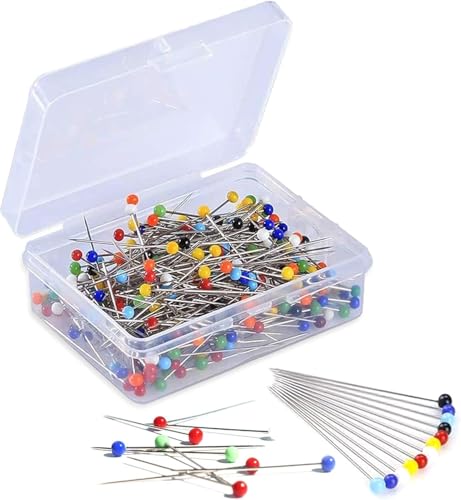
Clover is a brand that understands the intersection of quilting and knitting, and these pins reflect that crossover expertise. They are exceptionally sharp, allowing them to glide through dense, tightly-knit fabrics without splitting the plies of your yarn.
These pins are a favorite for those who prefer a minimalist approach to their tool kit. Because they are thin and lightweight, you can use a high density of them to create very precise, minute adjustments along a scalloped edge or a complex lace border.
Keep in mind that their thin profile means they can bend if you are working with heavy, wet cotton or wet-blocked wool that requires significant stretching. Use these for finishing touches and delicate shaping rather than heavy-duty anchoring.
Knitter’s Pride Rainbow Blocking Pins
Beyond the aesthetic appeal of the vibrant colors, these pins offer a practical benefit for organizational knitters. You can use different colors to mark specific sections of a project, such as identifying the start and end of a repeat in a complicated lace pattern.
The heads are large and easy to grip, which is a lifesaver for knitters who experience hand stiffness or arthritis. The material is smooth and snag-free, ensuring that even the most delicate silk or mohair blends remain pristine throughout the drying process.
They are a middle-ground option that balances strength with user-friendly ergonomics. If you find standard T-pins too industrial or uncomfortable, these provide a much more pleasant tactile experience.
Boye T-Pins for Reliable Edge Tension
For years, the T-pin has been the industry standard for a reason: they are incredibly effective and widely available. The "T" shape allows you to create a secure anchor point that won’t pull through your blocking mat, even when you are applying high tension to a stubborn wool.
These are the workhorses of the knitting world. If you are blocking a large, heavy wool afghan that needs to be stretched to its absolute limit, the T-pin is your most reliable ally.
The only real downside is that they are utilitarian and lack the refined finish of specialty knitting pins. Always ensure you are using stainless steel versions to avoid the risk of oxidation during the long drying process.
Susan Bates Steel T-Pins for Projects

Susan Bates is a name synonymous with reliability, and their steel T-pins are no exception. They are engineered to be rigid and unyielding, which is exactly what you want when you are trying to force a piece of knitting into a specific geometric shape.
These pins are particularly well-suited for blocking heavy-weight garments, such as cabled sweaters or thick, stranded colorwork pieces. Because they are made of high-quality steel, they resist bending and maintain their structural integrity over years of use.
One tip: always keep a small magnet in your notions bag to collect these after you unblock. Their small size makes them easy to lose in the deep pile of a rug or the crevices of a sofa.
Why Edge Tension Matters for Final Projects
Edge tension is the secret language of a well-finished garment. When you block, you aren’t just wetting the yarn; you are teaching the fabric how to behave, ensuring that your seams align perfectly and your hems remain flat rather than curling.
Proper tension prevents the "wavy" look that often happens when a knitter binds off too tightly or too loosely. By pinning the edge to a specific dimension, you essentially reset the tension across the entire row, creating a professional, uniform appearance.
This is especially critical for garments that require seaming, such as set-in sleeves. If your edges aren’t uniform, your seams will inevitably be puckered or stretched, ruining the drape of the final piece.
How to Properly Use Blockers for Lace Work
Lace requires a different strategy than a standard sweater because it relies on the "open" structure of the yarn to reveal the pattern. You need to pin from the center outward, ensuring that the tension is distributed evenly across the entire motif.
Start by pinning the corners of your project to establish the basic shape. Then, work your way toward the center, using pins to gently pull the lace loops into their intended geometric form.
Avoid the temptation to over-stretch. While lace is designed to be opened up, pulling too hard can distort the fiber and permanently damage the yarn’s structure, causing it to lose its bounce and elasticity.
Comparing Metal Pins Versus Blocking Combs
Metal pins are the precision instruments of the blocking world. They allow you to manipulate individual stitches, making them ideal for lace, cables, and complex shaping where every millimeter counts.
Blocking combs, conversely, are the masters of efficiency. They are perfect for long, straight edges like the hem of a skirt or the sides of a scarf, where you need consistent tension over a large area without the hassle of individual placement.
The best-equipped knitters have both in their arsenal. Use your combs for the long hauls to save time and your pins for the detailed work that requires a delicate, surgical touch.
Essential Tips for Perfect Knitting Finishes
- Always check for rust: Before using any metal pin, ensure it is stainless steel; if you are unsure, test it on a scrap piece of light-colored yarn first.
- Match the pin to the fiber: Use thicker pins for heavy wools and thinner, smoother pins for delicate silks or synthetics.
- Invest in quality mats: A good set of interlocking foam mats is just as important as the pins themselves.
- Let it dry completely: Never remove your pins until the project is 100% dry; removing them early can cause the fabric to "creep" back into its original shape.
Choosing the right blocking tools is a personal journey that evolves as your knitting skills grow and your project list expands. Whether you prefer the surgical precision of individual pins or the rapid efficiency of blocking combs, the goal remains the same: transforming your hard work into a polished, professional masterpiece. Take the time to experiment with these tools, and you will find that the final step of blocking becomes just as rewarding as the cast-on itself. Happy knitting, and may your edges always be crisp and your tension perfectly balanced.