7 Best Cutting Mats For Blocking Preparation
Discover the 7 best cutting mats for blocking preparation. Learn how these essential tools ensure precision, stability, and fabric safety for your projects.
Achieving a professional finish on your hand-knitted garments depends almost entirely on how you treat the fabric after the final bind-off. While many knitters focus exclusively on needles and yarn, the surface you use to shape your work is just as critical. A quality cutting or blocking mat provides the stable, gridded foundation necessary to ensure your lace opens properly or your cables lay flat. Here are the seven best mats that will transform your blocking process from a chore into a precise craft.
Knitter’s Pride Knit Blockers: Best Overall Pick


When you are working with delicate lace or large-scale colorwork, you need a system that anchors the fabric without distorting the stitch pattern. These blockers are technically a tool-and-mat hybrid system that excels because they distribute tension evenly across a wider surface area than standard T-pins.
The beauty of this system lies in the way it prevents the "scalloped" edge effect common with traditional pins. By using a bar with multiple pins, you maintain a straight, consistent line along the selvedge, which is vital for seaming later.
If you are a frequent knitter of shawls or sweaters, this is the most efficient investment you can make. It saves time and ensures your hard work doesn’t end up with uneven, pucker-prone edges.
Clover Self-Healing Mat: Best for Precision Work
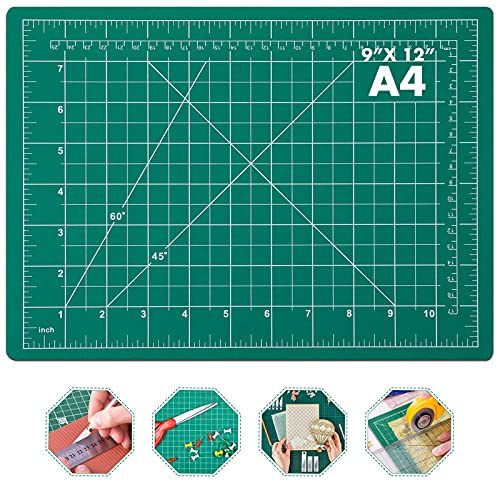
Clover is a staple in the sewing world, but its application in knitting is often overlooked. These mats are remarkably dense, meaning they hold pins firmly in place without the "wiggle" that can ruin the symmetry of a complex lace motif.
The grid lines are printed with extreme precision, which is a lifesaver when you are trying to block two sweater sleeves to identical dimensions. If your measurements are off by even a quarter-inch, your final garment will feel lopsided.
I recommend this for knitters who prioritize geometric accuracy. If you are blocking a square-neck top or a structured cardigan, the reliable grid on this mat acts as a built-in ruler for your blocking wires.
Fiskars Rotating Mat: Best for Large Projects
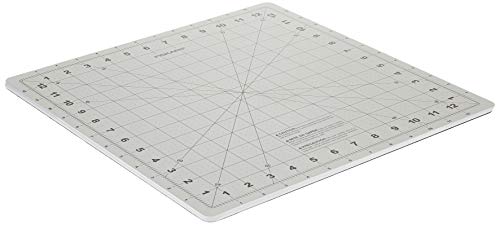
Blocking a massive, circular tablecloth or a heavy wool blanket can be a logistical nightmare. The Fiskars rotating mat allows you to pivot your project 360 degrees without having to crawl around on the floor or lean precariously over a table.
This rotation feature is a game-changer for ergonomics. You can keep your project stationary and simply turn the mat to access different sections, which prevents the accidental stretching or pulling that happens when you try to reach across a large piece.
While it is a larger investment, the back-saving benefits alone are worth it. It is the ultimate tool for the knitter who refuses to compromise on the size of their projects.
Dahle Vantage Self-Healing Mat: Best Durability
If you are the type of knitter who keeps their blocking station set up permanently in a craft room, you need a surface that won’t warp or degrade over time. The Dahle Vantage mat is constructed with a multi-layer design that resists the deep puncture marks left by years of consistent pinning.
Cheaper mats often develop "memory" where the pin holes remain open, eventually making the surface uneven. This mat maintains its integrity, ensuring that your pins always sit flush against the surface, which is essential for maintaining consistent tension in your fabric.
It is a "buy it once" kind of tool. For the dedicated maker who blocks every single project, the durability here provides peace of mind that your equipment won’t fail you mid-block.
Olfa Double-Sided Mat: Best for Versatility

Sometimes you need a light background to contrast with dark yarn, and other times you need a dark background to see the structure of light-colored lace. The Olfa mat offers a reversible surface, giving you the flexibility to choose the best backdrop for your specific yarn color.
The grid markings are clear and durable, standing up to the moisture that inevitably comes with wet blocking. Whether you are using a spray bottle or a full soak, the mat remains stable and easy to wipe down.
This is a versatile choice for the knitter who works with a wide variety of fibers, from dark, moody mohair to bright, bleached cotton. It keeps your workspace clean and adaptable to whatever is currently on your needles.
Arteza Self-Healing Mat: Best Budget Option

You do not need to spend a fortune to get a professional-grade blocking surface. The Arteza mat offers a reliable, self-healing surface that performs exceptionally well for those who are just starting to build their toolkit.
While it may not have the heavy-duty longevity of more expensive professional mats, it offers a perfectly functional grid and a surface that holds pins securely. It is an ideal entry point for a new knitter who is still learning the nuances of blocking.
Don’t let the lower price tag fool you into thinking it’s low quality. It is a solid, dependable workhorse that will easily handle your first dozen sweaters and shawls.
Quilter’s Select Mat: Best Non-Slip Surface

One of the most frustrating aspects of blocking is having your mat slide across a smooth dining room table. The Quilter’s Select mat features a unique backing that grips the table surface, providing a rock-solid foundation that won’t shift while you are pinning.
When you are working with heavy, wet wool that requires significant tension to open up the stitches, having a mat that stays put is essential. You want your focus on the yarn, not on chasing a sliding mat across the floor.
This is a premium choice for those who value stability above all else. If you have limited space and need to block on a slippery surface, this mat is your best friend.
Why Blocking Mats Are Vital for Professional Finishes
Blocking is the bridge between a "homemade" look and a professional garment. It relaxes the fibers, evens out your tension, and sets the final dimensions of your piece. Without a proper mat, you are essentially guessing at the shape and size of your work.
A good mat ensures that you aren’t just pinning your work to a soft surface, but that you are actually stretching it to its intended geometry. It allows for the use of blocking wires or pins to create clean, sharp edges that make seaming and finishing much easier.
Remember that blocking isn’t just for lace; it’s for everything. Even a simple stockinette sweater benefits from a light block to smooth out the transition between rows and give the fabric a professional "drape."
Key Features to Consider When Buying Blocking Mats
When shopping for a mat, look for three primary indicators: density, grid clarity, and size. You want a mat that is dense enough to hold a pin firmly, but soft enough that you aren’t fighting to push the pin into the material.
- Grid Accuracy: Ensure the lines are printed clearly and align with standard measurement systems.
- Self-Healing Properties: This prevents the mat from becoming a "Swiss cheese" surface that loses its ability to hold pins over time.
- Portability: Consider if you need a mat that rolls up or one that stays flat in a dedicated space.
Think about the largest project you intend to make. If you primarily knit socks, a smaller mat is fine, but if you dream of knitting full-length afghans, look for modular options or larger, single-piece surfaces.
How to Properly Maintain Your Knitting Blocking Mat
Your mat is a tool, and like your needles, it deserves proper care. Keep it away from direct sunlight, as UV rays can cause the material to become brittle and warp over time.
If you are wet blocking, always ensure your mat is fully dry before storing it. While most mats are water-resistant, trapped moisture can lead to mildew or degradation of the grid markings. A quick wipe with a damp cloth is usually sufficient for cleaning.
Finally, try to distribute your pin placements across the entire mat rather than always using the center. By rotating where you pin, you ensure the mat wears evenly and lasts for many years of knitting enjoyment.
Investing in a quality blocking mat is the final step in honoring the hours you spent with your needles and yarn. Whether you choose a rotating mat for ease or a high-density surface for precision, the right tool will make every project look better. Take your time to select the option that fits your space and your knitting habits, and you will see the difference in every finished garment. Happy blocking!