6 Best Yarn Winding Machines For Center Pull Cakes
Discover the 6 best yarn winders for perfect center-pull cakes. We compare top models to help you save space and keep your yarn tangle-free and organized.
There is nothing quite as satisfying as transforming a tangled, unruly hank of hand-dyed wool into a neat, organized center-pull cake. A reliable yarn winder is the unsung hero of a knitter’s studio, saving you from the dreaded "yarn barf" that happens when a skein collapses mid-project. Choosing the right tool depends on your stash size, how often you wind, and the types of fibers you prefer to work with. Let’s look at the best options to keep your yarn stash pristine and ready for your next cast-on.
Stanwood Needlecraft Large Metal Yarn Winder


If you find yourself frequently winding heavy worsted or bulky weight yarns, the Stanwood Needlecraft Large Metal Yarn Winder is an absolute powerhouse. Unlike smaller plastic models that can struggle with the tension of thicker fibers, this unit features a heavy-duty metal gear system that provides consistent, smooth rotation.
The increased capacity allows you to wind up to 10 ounces of yarn, which is a lifesaver when you are working with large skeins of Aran or chunky weight wool. Because it is built with durability in mind, you won’t experience the annoying gear-slipping that plagues cheaper, lighter-weight winders.
However, keep in mind that this is a larger, heavier tool that requires a sturdy table edge to clamp onto securely. It is an investment piece, but for the dedicated knitter who hates stopping to re-load the winder every few minutes, the efficiency is worth every penny.
Knit Picks Yarn Ball Winder: Best Value Pick
The Knit Picks Yarn Ball Winder is the quintessential "first winder" for many knitters, and for good reason. It is compact, affordable, and perfectly capable of handling standard fingering to worsted weight yarns without much fuss.

While it is made of plastic, it is surprisingly resilient for casual use. It is ideal for someone who only winds a few hanks a month and needs a tool that can be tucked away in a project bag or a small storage bin when not in use.
Don’t expect it to handle massive, heavy-weight skeins without some manual tension adjustment. If you try to force too much bulky yarn onto it, the gears will protest; keep your cakes to a moderate size to ensure the longevity of the plastic housing.
Nancy’s Knit Knacks Heavy Duty Yarn Winder
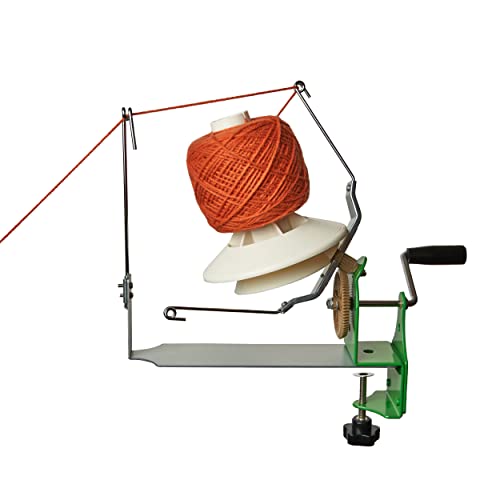
When you need a tool that can survive a lifetime of heavy use, Nancy’s Knit Knacks delivers a professional-grade experience. This winder is designed for the serious fiber artist who treats yarn winding as a regular part of their workflow.
The build quality is significantly higher than entry-level models, featuring a robust design that minimizes vibration and noise. It handles a wide range of yarn weights, from delicate lace-weight mohair to dense, multi-ply wools, with remarkable stability.
The primary tradeoff here is the price point and the size; it is a significant commitment for a hobbyist. But if you are a frequent buyer of hanks who is tired of replacing cheaper winders every two years, this is the "buy it once" solution.
Lacis Yarn Ball Winder: The Reliable Classic
The Lacis Yarn Ball Winder is a tried-and-true staple in the knitting community, prized for its simple, no-nonsense mechanics. It operates with a classic design that has remained popular because it prioritizes function over fancy aesthetics.
This winder is particularly good for those who prefer a tactile feel when winding; the handle turns smoothly, and the tension guide is straightforward to navigate. It creates a very uniform cake that sits flat, which is essential for preventing your yarn from rolling around the floor while you knit.
It is a mid-range option that bridges the gap between budget plastic winders and expensive heavy-duty gear. If you want a dependable workhorse that won’t break the bank but will last for years, this is a very safe, reliable bet.
CowGirl Yarn Hand-Operated Ball Winder

The CowGirl Yarn Hand-Operated Ball Winder is a favorite among knitters who appreciate a more artisanal or boutique feel to their tools. It is often lauded for its smooth operation and its ability to handle delicate fibers without snagging or over-stretching.
This winder is excellent for those who work with luxury fibers like silk, alpaca, or hand-spun yarns. Because the tensioning arm is well-calibrated, you are less likely to accidentally stretch out your yarn, which is critical when working with high-twist or elastic fibers.
It is a great choice if you are looking for something that feels a bit more "special" than a mass-produced plastic unit. While it may not have the massive capacity of the metal industrial models, it offers a level of care and precision that your finer yarns will appreciate.
ChiaoGoo Hand-Operated Yarn Ball Winder
Known for their high-quality needles, ChiaoGoo brings that same attention to detail to their yarn winder. This tool is designed with the user experience in mind, featuring an ergonomic handle and a very intuitive setup process.
It is particularly well-suited for knitters who already trust the ChiaoGoo brand for their circulars and DPNs. The winder is lightweight yet surprisingly sturdy, making it a great middle-ground option for both beginners and intermediate knitters.
One thing to note is that like many hand-operated winders, the quality of the cake depends on your rhythm. Keep a steady, consistent speed while turning the handle to ensure the yarn lays down evenly, creating a perfect center-pull structure every time.
How to Choose the Right Yarn Winder for Your Needs
To select the right winder, you must first assess the volume and weight of the yarn you typically purchase. If you exclusively knit with fingering weight sock yarn, a smaller, budget-friendly winder will likely suffice for years.

If you are a fan of chunky, bulky, or super-bulky yarns, you absolutely need a model with a larger capacity and a metal gear system. Trying to force a 200-gram skein of bulky wool onto a small winder will only lead to frustration and potential mechanical failure.
- Capacity: How many grams of yarn do you need to wind at once?
- Material: Do you need heavy-duty metal or is lightweight plastic sufficient?
- Storage: Do you have a permanent spot for it, or does it need to be portable?
Ultimately, consider your long-term knitting goals. If you plan on buying more hanks and fewer pre-wound balls, investing in a mid-to-high-tier winder will save you more time and money in the long run.
Manual vs. Electric Winders: Which is Best for You?

Manual winders, like the ones listed above, offer the knitter complete control over the speed and tension of the wind. This is invaluable when dealing with hand-dyed or delicate fibers that might be prone to tangling if wound too quickly.
Electric winders are undeniably faster and easier on the wrists, especially if you have a large stash to process at once. However, they can be unforgiving; if a tangle occurs, an electric motor won’t stop as quickly as your hand will, potentially snapping your yarn.
- Manual: Better for control, delicate fibers, and budget-conscious knitters.
- Electric: Better for high-volume winding and those with repetitive strain issues.
Most knitters find that a high-quality manual winder is more than enough for their needs. Unless you are running a small business or winding dozens of hanks a week, the manual approach keeps you connected to your materials.
Essential Tips for Winding Perfect Center-Pull Cakes
The secret to a perfect cake is all in the tension. Never let the yarn hang loose between the hank and the winder; keep a gentle but firm hold on the yarn as it feeds into the machine to ensure the cake doesn’t collapse.
If your yarn is coming from a hank, always use a swift. Trying to wind from a chair back or your knees is a recipe for a tangled disaster, regardless of how good your winder is.
- Use a swift: It prevents the yarn from twisting and catching.
- Start slow: Build momentum gradually to ensure the base of the cake is level.
- Watch for knots: Stop immediately if you see a join or a knot to ensure it doesn’t get buried in the center.
Remember that center-pull cakes are designed for convenience, but they can sometimes get "yarn barf" if the center is pulled out too aggressively. Always pull from the center gently, and never store your cakes under heavy weight, as this can compress the fibers and ruin the loft of your yarn.
How to Maintain Your Winder for Long-Term Usage
A yarn winder is a mechanical tool, and like any machine, it requires a little bit of care to stay in top shape. Periodically check the gears for any stray fibers or dust that may have accumulated, as these can cause the gears to grind or skip.
If you notice your winder becoming noisy or difficult to turn, a tiny drop of sewing machine oil on the main moving parts can work wonders. Be very careful to wipe away any excess oil so that it doesn’t transfer to your precious wool.
Store your winder in a clean, dry environment, preferably in its original box or a dedicated bag to keep it free from dust. By treating your winder with the same respect you show your favorite knitting needles, you’ll ensure it remains a reliable part of your knitting toolkit for years to come.
Finding the right yarn winder is a transformative step in your knitting journey, turning the chore of preparation into a meditative part of your craft. Whether you opt for a sturdy metal workhorse or a simple, portable plastic model, the goal is to create a tidy cake that lets you start your project with ease. Take your time, consider your specific fiber needs, and you will find the perfect companion for your stash. Happy winding and even happier knitting!