6 Best Waterproof Mats For Wet Blocking To Own
Blocking knitwear requires the right tools. Discover our top 6 waterproof mats that ensure precise shaping, moisture protection, and long-lasting durability.
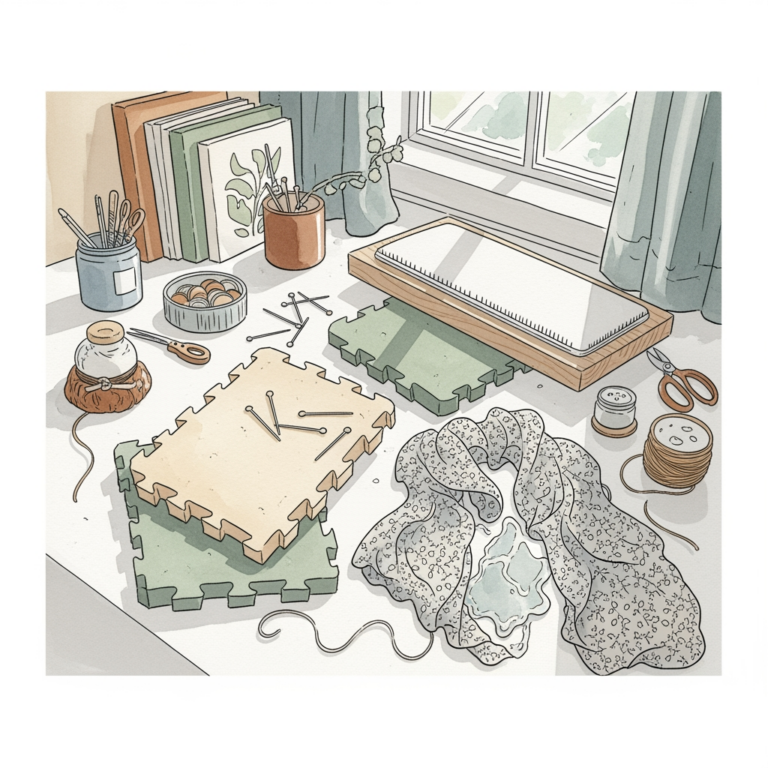
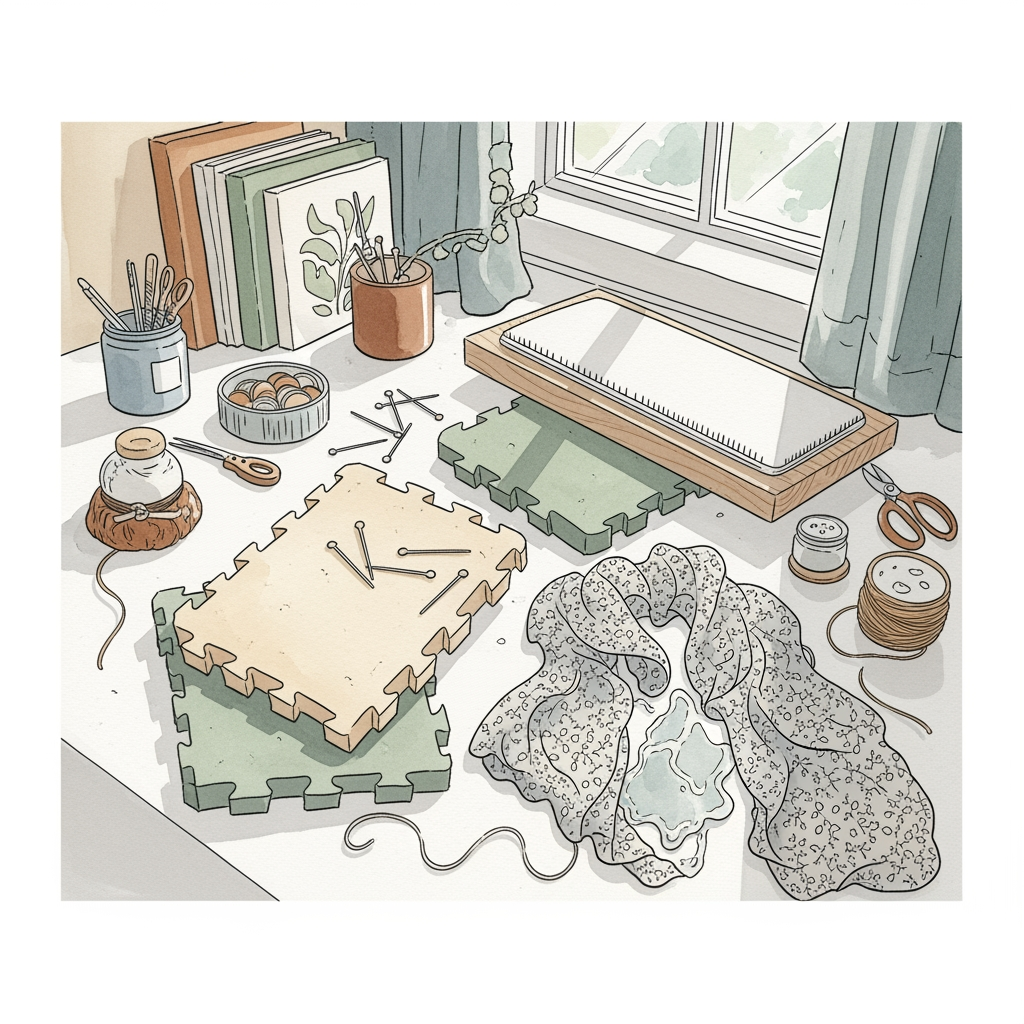
Blocking is the final, transformative step that turns a collection of stitches into a professional-grade garment. Without a reliable, waterproof surface, you risk uneven shapes and moisture-damaged floors or tables. Investing in the right mat ensures your hard work maintains its intended dimensions while drying properly. Here are the top choices to elevate your finishing process.
Knitter’s Pride Knit Blockers: Best Overall Pick


These aren’t just mats; they are a system. The primary advantage here is the inclusion of built-in anchor points that work seamlessly with the heavy-duty, waterproof foam tiles.
When you are blocking a delicate lace shawl, you don’t want to fiddle with hundreds of individual T-pins. The wide, plastic-topped blockers allow you to secure long stretches of fabric in a single motion, keeping your tension perfectly uniform across the edge.
The foam is dense enough to hold pins securely without crumbling over time. If you frequently block large garments, the consistent grid system on these tiles provides a reliable guide for symmetrical shaping.
Cocoknits Blocking Mats: Best Modular Design

Cocoknits has mastered the art of functional aesthetics. These mats feature a subtle, printed grid that is incredibly helpful when you need to match the dimensions of a sweater front to a sweater back.
The material is thick, heat-resistant, and completely waterproof, making it ideal for steam blocking. If you are working with protein fibers like wool or alpaca, the ability to steam without the mat warping is a significant benefit.
Because they are modular, you can snap them together to fit anything from a tiny pair of baby booties to a massive circular shawl. They are a bit of an investment, but for the knitter who values precision, the durability is worth every penny.
Boye Interlocking Foam Mats: Best Budget Choice

Sometimes you just need a reliable surface without the bells and whistles. Boye mats provide exactly that: a basic, functional, and waterproof area for your projects to rest.
These are excellent for beginners who are just starting to learn how blocking affects their gauge. They are lightweight, easy to store, and get the job done without taking up too much room in your stash closet.
Keep in mind that these are thinner than premium options. If you are using heavy-duty pins, you may find that they poke through to the surface underneath, so always place them on a table you don’t mind getting a little damp.
Tenstile Blocking Boards: Best for Lace Projects

If your passion lies in intricate lace, you know the struggle of keeping points sharp and edges straight. Tenstile boards are designed with a specific rigidity that excels at holding high-tension projects in place.
The surface is designed to prevent the "bounce-back" that can happen with softer foam. When you are blocking a complex chart with many yarn-overs, this stability is the difference between a crisp result and a sagging mess.
They are less portable than foam tiles, but they offer unparalleled control. Use these when you need to exert a fair amount of pull on your fabric to open up the lace motifs.
Clover Knit Blocking Mats: Best Surface Texture
Clover has designed these mats with a unique, non-slip surface that helps keep your knitting in place even before you drive the first pin home. This is a game-changer when working with slippery fibers like silk or bamboo blends.
The texture prevents the fabric from sliding around while you are trying to align your edges. It provides a tactile feedback that makes the pinning process feel much more secure and controlled.
While they are excellent for grip, they are also highly durable and resistant to water saturation. They are a great middle-ground option for the knitter who wants high quality without the bulk of professional-grade studio boards.
Magma Blocking Mats: Best for Durable Daily Use

Magma mats are built to survive the rigors of a high-volume knitting lifestyle. If you are a prolific knitter who finishes projects every single month, these are designed to withstand constant pin-pricking and moisture exposure.
The material is exceptionally dense, which means it doesn’t lose its shape or develop "pin fatigue" over time. Many cheaper mats will start to look like Swiss cheese after a year, but these hold their integrity remarkably well.
They are also quite easy to clean, which is a detail often overlooked. A quick wipe down is all it takes to remove any residual dye or dirt from your finished pieces.
Essential Features for Quality Blocking Mats
When shopping for mats, look for density above all else. A mat that is too soft will allow your pins to shift, which ruins the geometry of your garment.
Waterproof material is non-negotiable, but also consider the grid markings. A printed grid is helpful, but ensure it is accurate; I always double-check the squares with a metal ruler before relying on them for a complex garment.

- Interlocking edges: Essential for custom shapes.
- Thickness: At least 0.5 inches to protect your table surface.
- Heat resistance: Crucial if you plan on steam blocking your work.
Why Waterproof Material Matters for Blocking
Blocking is essentially a "wet" process, whether you are soaking a garment or using steam. If your mat absorbs water, it becomes a breeding ground for mold and can actually transfer moisture back into your project unevenly.
A truly waterproof mat ensures that the water stays in the fabric where it belongs, allowing for a controlled drying process. This is vital for superwash wool, which can become quite heavy and saturated when wet.
Without a waterproof barrier, you also risk damaging the surface beneath your mat. Don’t assume that a "foam" mat is automatically waterproof; always verify the material density and coating.
How to Properly Maintain Your Blocking Mats
After you finish blocking, don’t just toss your mats into a corner. Wipe them down with a damp cloth to remove any excess moisture or fiber bits left behind by your yarn.
Allow them to air dry completely before stacking them. If you store them while they are still damp, you risk trapping moisture, which can lead to unpleasant odors or warping.
Store them flat if possible, or in a cool, dry place. Avoid leaving them in direct sunlight for extended periods, as UV rays can cause the foam to become brittle and crack over time.
Tips for Achieving Perfect Blocking Results
Always pin from the center outward. This ensures that you aren’t pulling the entire piece off-center as you work toward the edges.
Use rust-proof pins, especially when working with light-colored yarns. There is nothing more heartbreaking than finishing a beautiful project only to find orange rust spots where your pins were placed.
Finally, be patient. Let your garment dry completely before unpinning it; if you move it while it is still slightly damp, the weight of the fabric can cause it to lose the shape you worked so hard to establish.
Choosing the right blocking mat is a quiet but essential investment in the longevity of your knitting. Whether you prioritize modular flexibility or sheer durability, selecting a waterproof surface will make your finishing process feel less like a chore and more like a craft. Take your time, choose the tool that fits your specific project needs, and enjoy the satisfaction of a perfectly blocked finished object.