6 Best Knitting Needles For Swatch Preparation Tested
We tested top knitting needles to find the best for swatch prep. Discover which materials and tips offer the most accurate gauge for your next project today.
Every seasoned knitter knows that the secret to a perfectly fitting garment begins long before the first row of the body is cast on. Swatching is the essential bridge between a beautiful skein of yarn and a finished piece that actually fits your body. Choosing the right needle for this process is not just about comfort; it is about ensuring your gauge is accurate and representative of your final project. Here are the top needle recommendations to help you master your swatches and achieve professional results every time.
ChiaoGoo Red Lace: Best for Precision Swatching
The ChiaoGoo Red Lace needles are the industry gold standard for those who demand absolute consistency. Their signature stainless steel finish offers a perfect balance between slickness and control, allowing stitches to glide without feeling like they are sliding off the tip.
These needles feature an incredibly smooth join where the cable meets the metal, which is vital when you are moving stitches back and forth during swatch measurements. If you are working on intricate stitch patterns or complex cables, the precision-engineered point helps you pick up stitches with ease.
The main tradeoff here is the stiffness of the red cable. While it is memory-free, some knitters find it a bit rigid for small-circumference swatching, though it excels when you need a stable platform for a larger 6×6 inch square.
Addi Turbo Circulars: Best for Fast Swatching
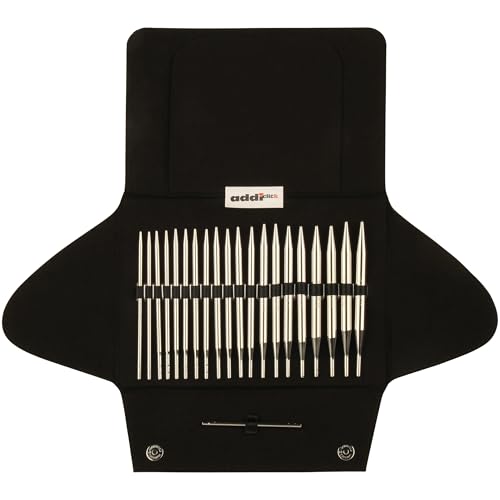

If your goal is to churn through a large swatch quickly, the Addi Turbo is your best friend. The nickel-plated brass surface is exceptionally fast, making it ideal for knitters who want to test their gauge without the needles slowing them down.
These needles are famous for their rounded, slightly blunter tips. While this might feel less "sharp" than other options, it is a significant advantage when working with plied wools that tend to split, as the tip slides into the stitch rather than piercing the fiber.
Be aware that because these needles are so slick, they can be unforgiving if your tension is naturally loose. If you find your stitches slipping off mid-row, you might need to adjust your grip or choose a slightly less polished surface.
Lykke Driftwood Needles: Best for Grip Control
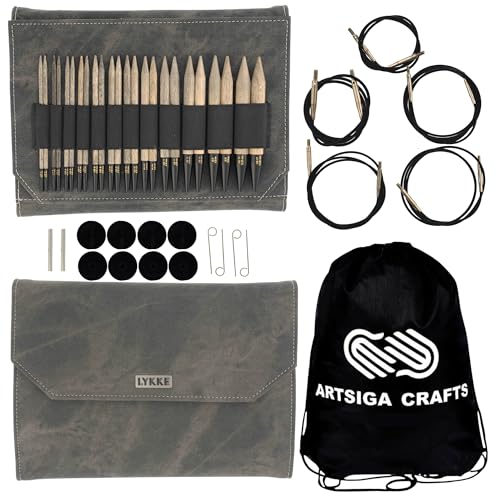
Lykke Driftwood needles are crafted from birch, providing a warm, tactile experience that feels natural in the hands. The wood has a subtle "grab" that prevents stitches from sliding around, which is a massive benefit when you are working with slippery fibers like silk, mohair, or superwash wool.
Because these needles offer more resistance, they can actually help regulate your tension if you are a nervous or fast knitter. The surface is smooth enough to avoid snagging, but the wood grain provides enough friction to keep your stitches exactly where you place them.
Keep in mind that wooden needles can be fragile in smaller sizes, such as 2.25mm or 2.50mm. Use them with care, and avoid applying excessive pressure if you are working a particularly tight gauge.
HiyaHiya Sharp Steel: Best for Fine Gauge Work
When you are working with lace weight yarn or trying to achieve a very dense gauge, the HiyaHiya Sharp Steel needles are unparalleled. The tips are remarkably pointed, allowing you to manipulate fine fibers and execute complex decreases with surgical precision.

The stainless steel construction is lightweight, which reduces hand fatigue during long swatching sessions. The swivel cable design is a standout feature, as it prevents the cable from twisting or kinking while you work your way across the row.
Because the tips are so sharp, they can sometimes pierce your fingertips if you have a habit of pushing the needle tip with your finger. If you are a "pusher," consider using a leather thimble or adjusting your technique to protect your skin.
KnitPicks Options Nickel: Best Budget Choice
KnitPicks Options Nickel needles provide a high-quality experience at a fraction of the cost of premium brands. They offer a smooth, plated surface that rivals much more expensive sets, making them an excellent choice for knitters building their first collection of tools.
These needles are versatile enough to handle a wide range of yarn weights, from fingering to bulky. They are a "middle-of-the-road" option in terms of slickness, meaning they work well for a variety of fiber types without being overly fast or overly grippy.
The primary tradeoff is the potential for the plating to wear down over years of heavy use. However, for the purpose of preparing swatches, they are reliable, accurate, and incredibly accessible for knitters on a budget.
Knitter’s Pride Karbonz: Best for Slippery Yarn
Knitter’s Pride Karbonz are a unique hybrid, combining carbon fiber shafts with plated brass tips. The carbon fiber provides a slight grip that makes them perfect for slippery yarns like alpaca or bamboo blends, while the metal tips ensure a smooth entry into the stitch.
The structural integrity of carbon fiber means these needles are incredibly strong, even in the smallest diameters. This makes them a fantastic investment if you frequently knit socks or lace and are tired of snapping wooden needles or bending aluminum ones.
Because they are a hybrid, they offer a distinct feel that some knitters take a moment to get used to. The transition from the carbon fiber body to the metal tip is seamless, but it does change the "drag" of the yarn as you move from one section to the other.
Why Swatching Accuracy Depends on Needle Material
Your choice of needle material is not just about comfort; it physically changes how you form your stitches. A metal needle will always produce a slightly different gauge than a wooden one because the yarn moves across the surface at a different speed.
- Metal: Increases stitch speed, often resulting in a slightly looser gauge due to reduced friction.
- Wood/Bamboo: Adds friction, which can help tighten up a loose gauge or keep slippery fibers in check.
- Carbon/Plastic: Provides a moderate middle ground for consistent, everyday knitting.
When you swatch, you must use the same material you intend to use for the final project. If you test with a slick metal needle but knit the sweater with a grippy wooden one, your finished garment will likely be the wrong size.
How Needle Surface Affects Your Tension Results
The surface of your needle dictates how much "work" your hands have to do to move the yarn. A highly polished surface requires less effort, which can lead to more relaxed, even tension.
Conversely, a textured or wooden needle requires you to physically push the yarn along the shaft. If you are prone to tight tension, this extra effort can actually cause your stitches to become even tighter as you struggle against the friction.
Always observe your hands while you swatch. If you find yourself gripping the needles tightly to overcome the friction of a wooden needle, your swatch will not accurately represent how you will knit a larger, more relaxed piece.
Testing Needle Tips for Different Fiber Blends
Not every yarn plays well with every tip style. Sharp tips are essential for lace and cables, but they can be a nightmare for loosely plied yarns that tend to split.
- Sharp Tips: Best for lace, intricate cables, and tight, dense fabrics.
- Blunt/Rounded Tips: Best for wool, alpaca, and soft, multi-ply yarns that split easily.
- Tapered Tips: A good balance for general-purpose knitting.
If your yarn is splitting while you swatch, stop immediately and switch to a blunter tip. Forcing a sharp needle through a sensitive fiber will result in a messy, uneven swatch that doesn’t reflect the true potential of the yarn.
Expert Tips for Consistent Swatch Measurements
The most common mistake knitters make is measuring their swatch while it is still on the needles. The tension of the needles themselves distorts the fabric, leading to an inaccurate count of your stitches per inch.
Always wash and block your swatch exactly as you intend to treat the final garment. Fibers like superwash wool can grow significantly after a bath, and if you don’t account for this "bloom," your final project could end up two sizes too big.
Finally, measure your gauge in the center of the swatch, away from the edges where the tension is often irregular. Use a dedicated gauge ruler, and if you are between sizes, always err on the side of the needle that gives you the fabric drape you desire.
Investing time in your swatch is the hallmark of a master knitter, and your choice of needle is the most critical tool in that process. By selecting the right material and tip style for your specific fiber, you eliminate the guesswork and ensure your hard work pays off in a perfect fit. Remember that swatching is a conversation between you, your needles, and your yarn, so listen to what the fabric is telling you. Happy knitting, and may your gauge always be spot on.