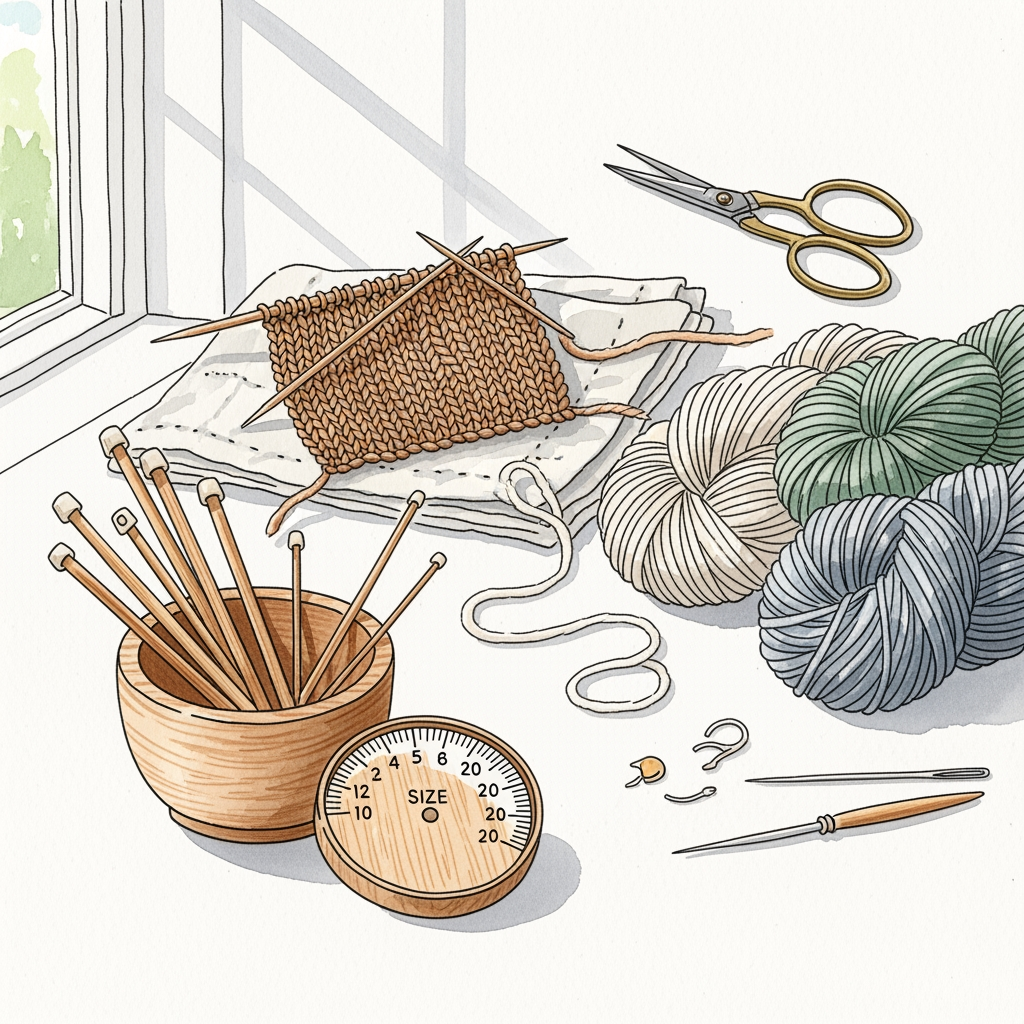
6 Best Miniature Knitting Needles For Doll Sweaters
Discover the 6 best miniature knitting needles for doll sweaters. Explore our top-rated recommendations to improve your precision and start crafting today.
Knitting for dolls requires a shift in perspective, where the scale of the needle becomes as critical as the tension of the stitch. Working with miniature needles transforms fine laceweight yarns into intricate, realistic garments that mirror high-fashion silhouettes. Precision is the primary challenge, as every millimeter of needle diameter significantly impacts the final fit of a sleeve or bodice. Navigating the world of ultra-fine needles demands an understanding of material physics, ergonomics, and the specific mechanics of small-scale circular knitting.
ChiaoGoo TWIST Shorties: Best for Tiny Circulars


ChiaoGoo TWIST Shorties solve the age-old problem of circular knitting in tight spaces by offering exceptionally short tips that allow for small circumferences without the struggle of DPNs. The join between the needle and the cable is notoriously smooth, preventing snagging during the delicate transition of fine thread.
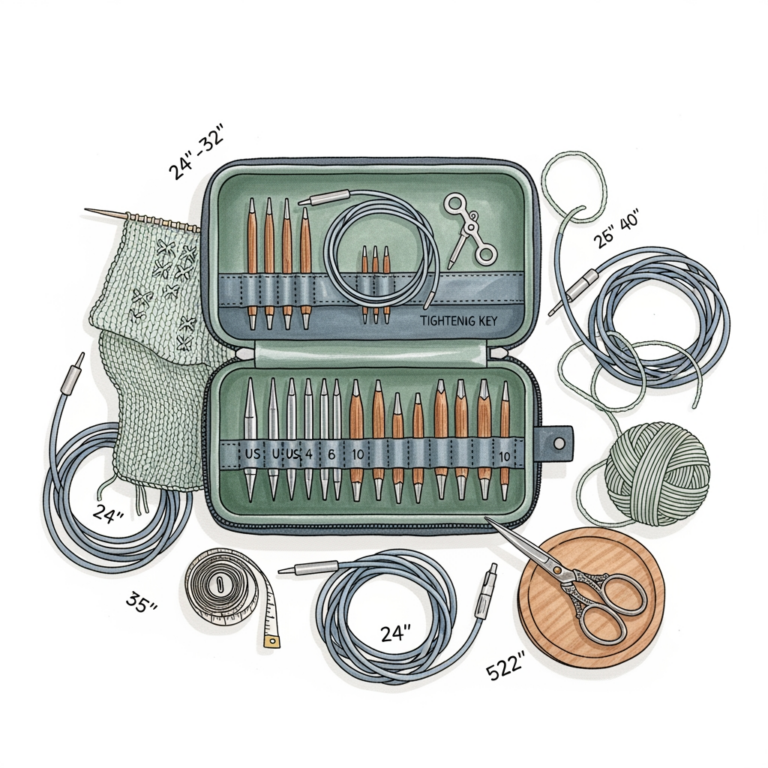
These sets are designed for the knitter who demands versatility. Because they come with interchangeable cables, one can adjust the total length of the circular needle to perfectly match the circumference of a doll’s waist or sleeve.
The medical-grade stainless steel construction provides a slick surface that keeps stitches moving quickly. However, the shorter tips can take time to adjust to, as they sit differently in the palm than standard-length needles. If a knitter prefers a longer grip, this system might require a period of ergonomic adaptation.
HiyaHiya Sharp Steel DPNs: For Intricate Stitches

HiyaHiya Sharp Steel DPNs are the gold standard for knitters who prioritize stitch definition above all else. The ultra-tapered points are essential for complex cabling or lace patterns on miniature sweaters where every stitch must be clearly articulated.
The stainless steel finish is exceptionally smooth, allowing stitches to glide with minimal friction. This makes them ideal for working with tight, high-twist cotton threads that often cling to less polished surfaces.
Be aware that these needles are truly sharp. While they are perfect for picking up stitches in dense knitting, they can easily pierce the skin or split fine yarn fibers if the tension is uneven. They are best suited for the experienced crafter who maintains consistent control over their needle tips.
Clover Bamboo DPNs: Great Budget-Friendly Option
Clover Bamboo DPNs offer a level of control that metal needles simply cannot match. The natural, porous surface of the bamboo grips the yarn fibers slightly, providing the necessary friction to prevent stitches from sliding off when the needles are held at awkward angles.
For those prone to dropping stitches while navigating tiny, 1.5mm needles, these provide a sense of security. They are lightweight, reducing hand fatigue during long sessions of detailed doll-scale work.
They do come with limitations, however. The tips are slightly blunter than steel, which can make it harder to maneuver into tight stitches. Furthermore, bamboo can warp or splinter over years of heavy use, meaning they are an investment in current projects rather than a lifetime tool.
KnitPicks Sunstruck DPNs: Best for Gripping Yarn

KnitPicks Sunstruck DPNs bridge the gap between the grip of wood and the precision of a refined taper. The laminated birch construction is incredibly strong, allowing for very thin diameters that do not bend or snap under tension.
These needles are light-colored, which provides excellent contrast against dark-colored yarns. Being able to clearly see the stitch architecture against the background of the needle is a massive advantage when working in low-light or with intricate, dark-hued threads.
The smooth finish allows for steady progress, but they retain just enough “tooth” to keep slippery silk or synthetic blends in check. They are a balanced, reliable middle ground for knitters who find steel too fast and bamboo too slow.
Signature Needle Arts DPNs: The Ultimate Luxury Pick
Signature Needle Arts needles are manufactured with an attention to detail that sets them apart as the premier luxury choice. Each needle is precision-engineered, ensuring perfect sizing and a consistent finish that prevents snagging on even the most delicate luxury fibers.
They offer a selection of tip shapes, allowing the knitter to choose between the “Stiletto” point for intense detail and the “Tapered” point for general comfort. This level of customization ensures that the needle complements the specific yarn and stitch pattern being used.
The weight and balance of these needles are superior, providing an effortless feeling in the hand. They are a significant financial commitment, but for the serious miniature knitter, the tactile experience and durability make them an unparalleled tool for long-term projects.
Addi FlexiFlips: Innovative DPN Alternative
Addi FlexiFlips represent a clever departure from traditional DPNs by using a flexible, corded center to connect two needles. By dividing the stitches across two needles and working with the third, the knitter can avoid the common “laddering” effect caused by tension gaps between DPNs.
The flexibility allows the needles to curve to the shape of the work, which is incredibly useful for small sleeves and necklines. This reduces the need to constantly reposition needles, leading to a more ergonomic and faster knitting experience.
While they require a different technique than standard DPNs, the learning curve is short. They are particularly well-suited for knitters who struggle with the physical logistics of juggling four or five rigid needles simultaneously.
DPNs vs. Magic Loop: Which Is Best for Doll Sleeves?
DPNs are the traditional choice for doll sleeves because they offer a rigid, straightforward path for the yarn. They allow for a natural circular motion, but the constant changing of needles can interrupt the rhythm of the knitting for some.
Magic Loop, on the other hand, utilizes a long cable to fold the work, meaning only two needle tips are in use at once. This effectively eliminates the risk of dropping loose DPNs and keeps the work contained in a single, stable loop.
The decision between the two often comes down to personal ergonomics. If working in a very small circumference, such as a toddler-sized doll arm, the cable of a Magic Loop can sometimes feel too bulky or restrictive. DPNs remain superior for the smallest of circumferences where cable tension might distort the delicate stitch work.
Choosing a Needle Material: Metal, Wood, or Bamboo?
Material choice is more than a preference; it is a mechanical decision based on the fiber being used. Metal needles are best for fast, slick yarns where the goal is speed and uniform stitch sizing.
Wood and bamboo needles serve as a stabilizing force. If a project involves slippery materials like silk, mohair, or rayon, wood provides the necessary surface resistance to keep the stitches under control.
Consider the “click” factor as well. Many knitters find the quiet, soft contact of wooden needles more relaxing, while others find the audible click of metal needles to be a rhythmic part of the knitting process. Always pair the material with the yarn’s inherent personality.
Pairing Tiny Needles with Thread and Laceweight Yarn
Miniature knitting often utilizes sewing thread or fine laceweight yarns, both of which require specific needle pairings. For thread-weight projects, a 1.0mm or 1.25mm needle is frequently necessary to achieve the desired gauge.
Always consider the “ply” of the yarn. A loosely plied yarn will be more prone to splitting with sharp-tipped needles, whereas a tightly plied or cabled thread will handle the precision of a metal needle much better.
Test swatches are non-negotiable at this scale. A change of just 0.25mm in needle diameter can result in a sweater that either fits a doll perfectly or looks like a tent, so patience in the planning phase prevents significant rework later.
Tips for Handling and Managing Super Tiny Stitches
Working at this scale can be physically taxing, leading to hand cramping if the needles are gripped too tightly. Maintain a loose hold, allowing the weight of the needle to do the work rather than squeezing the tip with your thumb and forefinger.
Proper lighting and magnification are essential, not just for the eyes, but for the posture. Using a task lamp or a magnifying visor prevents leaning over the work, which is the primary cause of neck and back strain in small-scale knitting.
Keep the work organized by using stitch markers specifically designed for fine needles. Large, bulky markers will distort the stitches on tiny sweaters; instead, use small loops of contrasting thin silk thread to keep track of sleeve decreases and row counts.
Selecting the right miniature needles is the foundation of successful doll-scale knitting. By matching the needle material and style to the specific project requirements, you ensure that the creative process is as rewarding as the final garment. Whether opting for the precision of steel or the comfort of bamboo, the right tool will elevate the work to a professional standard.