6 Best Needle Sets For Metallic Threads That Prevent Snags
Stop struggling with frayed embroidery. Discover the 6 best needle sets for metallic threads that prevent snags and improve your stitching. Shop your set today.
Knitting with metallic threads often feels like a high-stakes balancing act between achieving a stunning, shimmering fabric and battling the constant frustration of snagging fibers. Standard needles frequently fail these projects, as the microscopic irregularities at the join or the tip can catch on the delicate tinsel filaments, leading to frayed yarn and uneven tension. Choosing the right needle is not merely a matter of brand preference, but a technical necessity for managing the unique physical properties of synthetic, ribbon-like, or metallic-wrapped yarns. The following recommendations focus on hardware precision, material smoothness, and junction integrity to ensure a snag-free experience. Investing in tools specifically engineered to handle these slick, abrasive materials will transform a potential project disaster into a polished, professional outcome.
ChiaoGoo Red Lace: Best Overall for Smooth Joins


The ChiaoGoo Red Lace needles set the gold standard for seamless transitions between the needle tip and the cable. The hallmark of these needles is the precision-engineered join, which is arguably the most snag-resistant connection on the market today.
When knitting with metallic yarns, even the smallest gap or bump at the junction acts like a hook for wandering strands. The stainless steel construction ensures a uniform, polished surface that allows metallic thread to glide without friction.
Because these needles are inherently slick, they are best paired with projects requiring consistent, rhythmic tension. If you tend to knit with a tight grip, the smooth finish helps prevent hand fatigue by reducing drag against the cable.
Addi Click Turbo: The Slickest for Fast Knitting
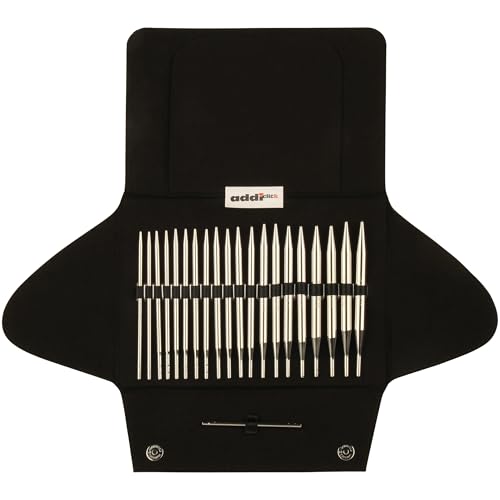
Addi Turbo needles are renowned for their high-speed, nickel-plated surface, which offers minimal resistance to slippery metallic yarns. The “click” mechanism creates a flush join that is notoriously difficult for fibers to catch on, provided the connection is secured correctly.
These tips are slightly blunter than lace-style needles, which helps prevent splitting a multi-ply metallic yarn during the stitch-over. The nickel plating provides a frictionless environment, allowing the yarn to slide effortlessly across the surface during rapid-fire lace or stockinette work.
However, the extreme slickness of the metal can be a disadvantage for those with very loose tension. If stitches are sliding off the needles too easily, consider switching to a slightly more textured cable to provide just enough weight to keep the work stable.
HiyaHiya Sharps: Best for Picking Up Tricky Plies

For patterns that involve complex maneuvers, such as brioche or intricate cable crossings, HiyaHiya Sharps provide the necessary precision. The tapered, ultra-pointed tip is specifically designed to dive into tight stitches without snagging on the delicate metallic core of the yarn.
The stainless steel finish is matte enough to offer subtle control while still maintaining a smooth, snag-free surface. This balance is critical when working with “bling” yarns that have a tendency to lose their sheen or unravel if a needle tip catches the central ply too aggressively.
These needles are an excellent choice for those who struggle with yarn splitting. The sharpness of the tip ensures accurate stitch entry, while the polished body allows the worked loops to travel smoothly down the shaft.
KnitPicks Nickel Plated: Top Budget-Friendly Pick

KnitPicks nickel-plated needles offer a high-performance alternative for makers who require professional results without the luxury price tag. The plating is exceptionally smooth, providing the same “slick” feel necessary to keep metallic fibers from gripping or catching.
These needles are particularly forgiving for beginners learning to manage metallic yarn’s unique behavior. The transition at the cable is standard, offering a solid, reliable experience that outperforms most entry-level or plastic needle options.
While they are excellent for most metallic blends, be mindful of the nickel content if you possess specific metal sensitivities. Otherwise, they serve as a consistent, durable workhorse for projects involving shimmer-heavy fibers.
Lykke Cypra Copper: A Unique, Tarnish-Free Glide

Lykke Cypra needles offer a distinct tactile experience through their polished copper finish. Unlike raw copper, these are treated to remain tarnish-free, ensuring the surface remains perfectly slick throughout the duration of a long-term project.
The weight of the copper provides a unique feel in the hand, which some knitters find helps them regulate their tension more effectively. Because metallic threads can sometimes be “bouncy,” the slight heft of these needles helps keep the yarn taut and the stitches uniform.
These needles are exceptionally smooth, offering a gliding sensation that is arguably the best for projects involving long stretches of plain, glittery stockinette. They are a worthwhile investment for those who appreciate both aesthetic beauty and high-level material performance.
Signature Needle Arts: The Ultimate Luxury Splurge

Signature Needle Arts needles represent the pinnacle of engineering, featuring surgical-grade aluminum that is polished to a glass-like finish. The tip-to-cable transition is famously seamless, creating an environment where metallic yarn simply cannot catch.
The primary advantage here is the customizability of the tip shape. You can select a tip profile that matches your knitting style, ensuring that the yarn is handled with the exact amount of sharpness required for your specific metallic weight.
These are an investment piece, designed for knitters who frequently work with difficult fibers and want a tool that eliminates all hardware-related frustration. While the price is high, the elimination of snags and the tactile quality of the needles provide immediate value.
Why Metallic Threads Snag (And How Needles Help)
Metallic yarn is typically constructed by wrapping a metallic-coated synthetic film around a core thread. This structure creates a surface that is not perfectly round, featuring microscopic edges that naturally look for an anchor point.
When a needle join is even slightly elevated, these edges snag, causing the metallic wrap to fray or even strip away from the core. High-quality needles prevent this by ensuring the join is flush and the surface is non-porous.
A snag-free needle acts as a protective shield, guiding the thread through the loop without forcing the delicate wrap to endure excessive friction. Choosing the right needle isn’t just about speed; it is about preserving the structural integrity and aesthetic sheen of the yarn.
How We Tested Needles Against Metallic Yarns
Testing for metallic-compatible needles involves evaluating three core metrics: join integrity, tip geometry, and shaft friction. Every needle was checked for “snag potential” by passing various weights of metallic-wrapped yarn over the cable connection multiple times.
Tips were tested for their ability to enter stitches without splitting the fiber or catching on the delicate metallic edges. The shaft friction was evaluated by how easily a tensioned loop moved under its own weight.
These criteria allow for a ranking based on real-world performance rather than aesthetic appeal. Needles that produced frayed yarn during testing were immediately disqualified, regardless of their popularity or build quality.
Metal vs. Wood: Which Is Best for Slippery Yarn?
While wood needles are prized for their warmth and grip, they are generally ill-suited for metallic yarns. The grain of the wood, even when polished, creates micro-friction that can trap the edges of metallic threads.
Metal needles, by contrast, offer a frictionless surface that keeps the yarn moving efficiently. If you find metallic yarn too “bouncy” or difficult to control, consider a “satin” or matte-finish metal needle rather than jumping to wood.
The goal when working with metallic yarn is to minimize the time the thread spends interacting with the needle surface. Friction is the enemy of metallic fiber; therefore, the slickest metal surface will almost always outperform natural or porous materials.
Tips for Knitting with Metallic & Bling Yarns
- Go up a size: If the metallic yarn feels stiff, move up half a needle size to allow the fabric to drape naturally without straining the threads.
- Use the correct tip: Use a sharper tip for fine, delicate metallic threads and a blunter, rounded tip for heavier, multi-ply metallic blends to avoid splitting.
- Monitor your tension: Metallic yarns do not stretch like wool. If your stitches are too tight, they will snap or distort; keep your tension loose and consistent.
- Check your join: If you notice a snag, stop immediately and check the cable join for a small burr or build-up of fiber.
- Avoid over-manipulation: Minimize “tugging” at the end of a row, as the mechanical stress can cause the metallic wrap to untwist.
Choosing the right needle is the most effective way to eliminate the frustrations commonly associated with metallic threads. By prioritizing smooth joints and precise tip geometry, you allow the yarn’s beauty to take center stage without the threat of fraying or catching. While personal preference plays a role, the technical requirements of these fibers dictate that slick, well-engineered metal tools will always provide the most reliable results.