7 Best Blocking Grids For Geometric Precision
Master geometric precision with our guide to the 7 best blocking grids. Discover essential tools to ensure perfect alignment for every intricate craft project.
Achieving professional-level results in knitting often comes down to the final, transformative step of blocking. A reliable grid is the difference between a garment that looks homemade and one that looks boutique-finished. By providing a structural guide, these mats ensure your stitch patterns, cables, and lace motifs are perfectly symmetrical. Here are the top tools to help you master the geometry of your finished pieces.
KnitIQ Extra Thick Blocking Mats: Best Overall Pick


These mats are a favorite because they solve the most common frustration in blocking: the "sag" that happens when a mat is too thin to hold a pin upright. At 0.75 inches thick, they provide enough depth for even the sturdiest T-pin to sit securely without wobbling.
The surface is firm but forgiving, making it easy to insert pins at precise angles. Because they are extra thick, you can block heavier items like wool blankets or dense cabled sweaters without the mat bending under the weight of the damp fiber.
The bottom line: If you want a long-term investment that handles everything from delicate mohair to heavy-weight alpaca, these are your best bet. They offer a stable foundation that won’t warp over time.
Knitter’s Pride Lace Blocking Mats: Best for Detail

When you are working with fine-gauge lace, every millimeter matters. These mats are designed specifically for the precision required by intricate patterns, featuring a grid that is printed with high contrast to make alignment effortless.
What sets these apart is the density of the foam. It is slightly firmer than standard exercise mats, which prevents the "creeping" effect that can occur when you are tensioning a delicate lace shawl. You won’t find your pins sliding out of place while you are working your way around a complex scalloped edge.
If you are a lace enthusiast, the grid layout is a lifesaver for ensuring your points are uniform. They are the gold standard for projects where symmetry is the primary goal.
Boye Interlocking Foam Mats: Best Budget Choice

Sometimes you just need a functional surface without the premium price tag. The Boye interlocking system provides a reliable, modular setup that gets the job done for basic blocking needs.
These are excellent for beginners who are just starting to experiment with blocking and don’t want to invest heavily in specialized equipment. While they are thinner than professional-grade mats, they are perfectly adequate for blocking light-to-medium weight acrylics or standard wool blends.
Keep in mind that with thinner mats, you may need to use more pins to distribute the tension. They are a practical, no-frills choice for the knitter who values utility over heavy-duty thickness.
Cocoknits Bamboo Blocking Board: Best for Garments

This is a unique departure from the standard foam tile. Made from a sustainable bamboo laminate, this board offers a rigid, non-slip surface that is ideal for blocking individual garment pieces like sweater fronts and sleeves.
Because it is a solid board rather than interlocking foam, you don’t have to worry about seams interfering with your layout. It’s particularly useful if you are blocking pieces to specific measurements, as the surface is designed to be used with the Cocoknits specialized pins and magnets.
This is the professional’s choice for garment construction. It provides a flat, uncompromising surface that ensures your seaming lines are perfectly straight every time.
Foam Tiles with Grid Lines: Best for Precision

If your biggest struggle is getting your squares to be perfectly square, look for tiles with pre-printed grid lines. These tiles act as a built-in ruler, allowing you to measure your work directly against the mat without needing a separate measuring tape.
These are invaluable for blocking multiple identical squares, such as those used in a sampler afghan. By lining up the edges of your knitting with the printed grid, you ensure that every block is the exact same size before you begin joining them.
The tradeoff is that the grid lines can wear off over time if you use very damp or chemically treated wool. Treat them with care, and they will remain your most accurate tool for geometric consistency.
Darice Interlocking Mats: Best for Large Projects
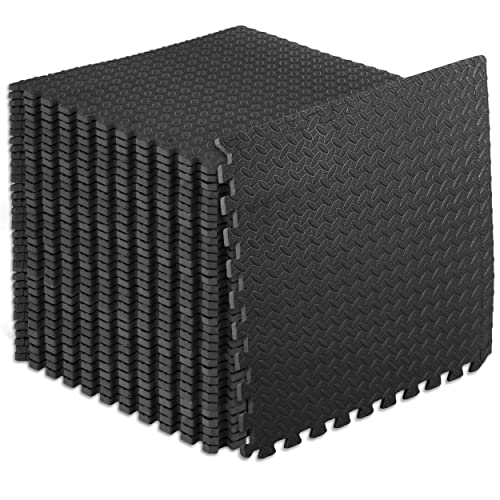
When you are blocking a full-sized adult sweater or a large throw, you need a massive amount of surface area. Darice mats are known for their ability to interlock seamlessly, allowing you to expand your workspace as much as needed.
The key advantage here is the scale. You can create a giant, flat rectangle that accommodates even the largest knitting projects without having to move the piece while it’s still wet.
They are lightweight and easy to store, making them a great option if you have a dedicated craft room or a corner where you can leave a project to dry for several days. They provide the sheer square footage required for large-scale fiber arts.
Clover Blocking Mats: Best for Durability
Clover is a brand that understands the longevity required by serious knitters. Their mats are constructed from a high-density, closed-cell foam that resists water absorption, meaning they won’t get "soggy" or develop odors after repeated use.
The surface texture is designed to grip the knitting, which helps keep your work in place while you are pinning. This is especially helpful if you are working with slippery fibers like silk or bamboo blends that tend to slide around on smoother surfaces.
While they are a bit more expensive, they are built to last for years. If you are a prolific knitter who blocks projects weekly, the durability of these mats makes them a wise purchase.
Why Grid Lines Are Essential for Geometric Shapes
Grid lines are not just for aesthetics; they are the primary tool for achieving structural integrity in your knitting. Without a grid, it is easy to accidentally stretch one side of a project more than the other, leading to a lopsided finished garment.
When working with geometric shapes like hexagons, triangles, or squares, the grid acts as a visual guide for your tension. You can verify that your corners are at perfect 90-degree angles and that your edges are perfectly parallel to the mat’s axis.
For complex cables, the grid helps you keep the "flow" of the pattern straight. By aligning the central spine of a cable with a grid line, you ensure the entire motif remains centered and balanced throughout the drying process.
How to Properly Secure Knits Using T-Pins and Combs
T-pins are the industry standard for a reason: the "T" head prevents the pin from slipping through the fabric, allowing you to apply firm tension. Always insert the pin at an angle pointing away from the center of the project to create a "hook" that holds the fabric securely.
Blocking combs are a fantastic alternative for long, straight edges. By using a comb, you apply tension across a wider area of the knitting simultaneously, which produces a much smoother edge than individual pins ever could.
- For delicate lace: Use fine-gauge T-pins to avoid distorting the stitches.
- For heavy wool: Use sturdy, rust-proof pins to prevent staining and ensure the weight of the wool doesn’t bend the pin.
- For straight edges: Use blocking combs to achieve a clean, professional line.
Tips for Maintaining Your Blocking Mats Over Time
To keep your mats in top condition, always ensure your knitting is damp rather than soaking wet before placing it on the surface. Excessive water can cause some foam mats to degrade or warp at the edges over time.
After you finish blocking, allow the mats to air-dry completely before stacking them. If you store them while they are still damp, you risk mold growth or the development of unpleasant odors in the foam.
- Clean gently: Wipe with a damp cloth and mild soap if they get dusty or accumulate fiber bits.
- Avoid heat: Never place your mats near a radiator or in direct, intense sunlight, as this can cause the foam to shrink or become brittle.
- Store flat: Keep them in a cool, dry place where they can remain flat to prevent the interlocking tabs from bending.
Blocking is the final act of creation that transforms a collection of stitches into a professional garment. By choosing the right mat for your specific project—whether it’s a delicate lace shawl or a heavy, cabled sweater—you set yourself up for success. Invest in a quality surface, respect your fibers, and enjoy the satisfaction of a perfectly blocked piece. Your knitting deserves to look as good as it feels.