
6 Best Crafting Mats For Surface Protection To Use
Protect your workspace with ease! Explore our top 6 picks for the best crafting mats for surface protection and find the perfect durable base for your projects.
Every fiber artist eventually faces the challenge of protecting their workspace during projects that involve more than just needles and yarn. Whether trimming long tails after finishing a complex stranded colorwork sweater or preparing fabric for an embroidered detail, a high-quality surface is essential. Protecting your table from rotary cutters and sharp fabric shears preserves both your tools and your furniture. Selecting the right mat transforms a cluttered, messy workstation into an efficient, professional environment for every craft.
OLFA Rotary Mat: The Gold Standard for Quilters


The OLFA mat is widely recognized for its exceptional self-healing properties, which allow blade marks to close up almost instantly after a cut. For those who frequently use rotary cutters to square off knitted squares or prepare fabric backing for bags, this reliability is paramount.
The surface is engineered to be slightly softer than plastic or glass, which effectively extends the lifespan of expensive rotary blades. This is a critical consideration; dull blades snag on fibers and create uneven edges, which can lead to disastrous results when finishing delicate projects.
While the grid lines are precise and highly visible, they can sometimes show wear if the mat is exposed to intense, direct sunlight for extended periods. This is a professional-grade tool that rewards those who store it flat rather than rolling it up. If consistency in cutting is the goal, the OLFA mat remains the industry benchmark.
Cricut Self-Healing Mat: Best for Mixed-Media Use

Cricut mats offer a dual-sided surface that provides extra versatility for makers who transition between different types of crafting. One side usually features a patterned grid, while the reverse provides a clean, solid surface for projects where you need a neutral background to evaluate color depth or stitch patterns.
Because these mats are designed to withstand the rigors of digital die-cutting machines, they are remarkably tough. They handle light crafting tasks, such as cutting heavy cardstock for project tags or templates, without creating deep, permanent grooves that would later snag a knitted fabric or delicate silk thread.
However, they may feel slightly firmer than dedicated quilting mats, which requires a bit more pressure when using a hand-held rotary cutter. Choose this option if the workspace serves multiple hobbies beyond knitting and fiber arts.
Fiskars Cutting Mat: A Durable, All-Purpose Choice

Fiskars is a staple in the craft world for a reason: their mats are consistently reliable and widely available. The surface is textured just enough to provide a slight grip, ensuring that fabric or lightweight patterns do not slide around while you are working.
For those who use spray adhesives or blocking pins on a mat surface, the material cleans up surprisingly well. The durability is high, and the grid markings are designed to resist fading even after significant use. It is a workhorse that doesn’t demand delicate handling.
The only real trade-off is the thickness; these mats are substantial and take up significant space. They are not intended for travel, but for a dedicated studio corner, they offer the kind of long-term stability that a hobbyist appreciates.
Arteza Cutting Mat: The Best Value for Hobbyists

The Arteza mat stands out for offering a high-quality self-healing surface at a price point that makes it accessible for beginners. It features a five-layer construction that effectively masks blade marks and prevents curling over time.
For a knitter who is just starting to accumulate tools, the inclusion of clear, non-glare grid lines is a massive advantage. Measuring swatches or cut lengths of yarn for fringe becomes significantly easier when the mat provides a high-contrast guide.
It is important to note that the surface is slightly more prone to showing white “stress” marks if you use a very dull blade. Keep your cutters sharp, and this mat will serve you well for years. It is the perfect entry point for building a professional setup on a modest budget.
Dahle Vantage Mat: The Pro-Grade Investment Piece
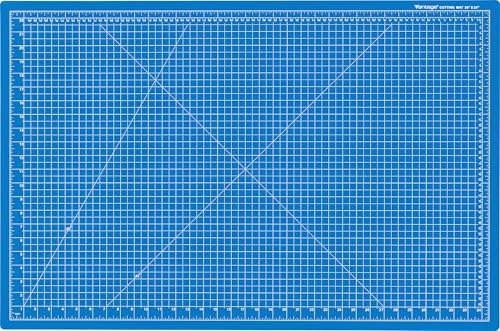
Dahle mats are engineered with a unique, multi-layered composition that feels denser and more resilient than standard self-healing options. If your workspace involves heavy-duty tasks, such as cutting thick leather labels for cowls or trimming dense, felted wool, this mat is designed to handle the pressure without deforming.
The mat features a non-slip backing that is particularly effective on smooth, polished wooden tables. This is an overlooked but essential feature for anyone who needs their workspace to stay put while maneuvering large, heavy knitting projects.
Because of the high-density construction, these mats are heavier than their competitors. Treat this as a permanent fixture for your crafting station rather than a portable tool. The investment pays off in a surface that remains pristine long after cheaper alternatives have begun to crater.
Anezus Silicone Mat: For Messy Glue and Resin Work

A silicone mat is the ideal companion for the messy side of fiber arts, such as applying fabric stiffener to crochet baskets or using resins to seal wooden shawl pins. Unlike self-healing mats, which are porous by design, silicone is completely non-porous and impervious to liquid.
The flexibility of silicone allows for easy storage; you can fold or roll the mat without worrying about permanent creases. Once the glue or resin cures on the surface, it usually peels off with a simple flick of the finger, leaving the mat clean and ready for the next task.
While it is excellent for messy projects, avoid using sharp blades directly on this material. It is meant for protection and heat resistance, not for cutting. Keep this mat as a secondary surface to preserve the condition of your primary self-healing cutting mat.
How to Choose the Right Craft Mat for Your Projects
The primary factor in your decision should be the nature of the tasks you perform most frequently. If your routine centers on cutting fabric for quilting or trimming yarn ends precisely, prioritize a dedicated self-healing mat with high-visibility grids.
Consider the surface area required for your specific projects. A small mat is sufficient for trimming yarn or measuring swatches, but it will prove frustrating if you are blocking large, finished garments or cutting yardage for backing.
Lastly, assess your storage situation. If you have a permanent table space, go for a larger, high-density mat. If you share your table with other activities, look for a mat that can be stored flat or a flexible silicone option that rolls away easily.
Self-Healing vs. Silicone vs. Glass Cutting Mats
Self-healing mats are made from dense, layered polymers that pull back together after a blade passes through them, creating an ideal surface for rotary cutting. They are the standard for fabric and fiber work because they protect your blade’s edge while preventing surface damage.
Silicone mats are completely non-stick and heat-resistant, making them the superior choice for glue, paint, or resin work. They will not hold up to repeated slicing with a sharp blade, but they offer the best protection against spills and sticky messes.
Glass cutting mats offer a sleek, easy-to-clean surface that will never develop cuts or grooves. However, they are unforgiving on rotary blades, which will dull almost instantly upon contact. Only choose glass if you need a surface for heavy crafting like metalwork or clay, and avoid using it for fabric-related cutting tasks.
How to Clean and Maintain Your Self-Healing Mat
To maximize the life of your mat, avoid exposing it to extreme temperature fluctuations, such as leaving it in a hot car or near a heating vent. Heat will cause the polymers to warp and lose their self-healing integrity.
Clean the surface periodically with a mild soap and water solution, using a soft cloth to gently remove dust and fiber remnants. If the mat begins to look dull, wiping it with a very light coating of baby oil or a specific mat cleaner can help restore the appearance and keep the surface supple.
Never store your mat standing on its edge unless it is supported perfectly straight, as this can lead to bowing. Keeping your mat flat, away from direct sunlight, and always using sharp blades will ensure it remains a smooth surface for your finest work.
Finding the Perfect Craft Mat Size for Your Space
Always measure your primary work surface before committing to a mat size. An oversized mat that hangs over the edge of your desk will inevitably warp, rendering the edges useless for accurate measuring and cutting.
For most knitters, a 18×24-inch mat provides a perfect balance of utility and space-saving design. It is large enough to block smaller items and handle most cutting needs, yet it fits comfortably on standard kitchen tables or office desks.
If you are working on large-scale items, such as full-sized blankets or garments, consider a modular approach by purchasing two smaller mats that can be pushed together. This offers the best of both worlds: compact storage and the ability to expand your working area when the project demands it.
Choosing the right craft mat is a foundational step in creating a workspace that serves your creative process rather than hindering it. By matching the properties of the mat to the specific demands of your knitting and finishing tasks, you ensure that your tools remain sharp and your fabric remains pristine. Invest in quality materials now to provide the steady, reliable support your fiber arts projects deserve for years to come.

