6 Best Laundry Bags For Soaking Handknits To Try
Keep your delicate handknits safe with our top 6 laundry bag picks. Discover durable, mesh options designed to ensure gentle soaking and prevent snagging.
After spending hundreds of hours perfecting the tension on a lace shawl or a complex colorwork sweater, the final soak is often the most nerve-wracking part of the process. Handknits are incredibly vulnerable when wet, as the fibers expand and become prone to stretching or accidental agitation. Using a dedicated laundry bag provides a crucial structural barrier that keeps your hard work safe from the hazards of the sink or basin. Here are the best tools to ensure your finished pieces emerge from their bath as beautiful as the day you bound off.
Baggu Duck Bag: Best Durable Canvas Option


If you prefer a structured, heavy-duty option, the Baggu Duck Bag acts as an excellent basin liner for larger projects. Its thick canvas construction holds its shape well, preventing the bag from collapsing inward and tangling your delicate stitches.
Because it is made of natural cotton, you don’t have to worry about synthetic materials reacting poorly with your wool soak. It is particularly useful for heavy sweaters that might otherwise put too much pressure on a flimsy mesh bag.
The trade-off here is drainage; canvas doesn’t allow water to pass through as quickly as mesh. Use this for the soaking phase, but be prepared to lift the item out carefully before transferring it to a towel for the final squeeze.
Eucalan Fine Mesh Lingerie Bag: Best for Soaking

This bag is a staple in the fiber arts world, specifically designed with the delicate nature of protein fibers in mind. The mesh is exceptionally fine, which prevents snagging on decorative buttons, wooden toggles, or intricate lace picots.
What makes this stand out is the generous size, which allows your garment to "bloom" in the water. When a handknit is cramped in a tiny bag, the fibers cannot absorb the wool wash evenly, which can lead to uneven blocking results.
I recommend this for your most precious heirloom projects. It provides just enough structure to keep the garment contained while ensuring the water-to-yarn ratio remains optimal for a thorough, gentle clean.
Brabantia Large Mesh Laundry Bag: Best Protection

If you are worried about your knitting catching on the hardware of your sink or the rough edges of a basin, the Brabantia bag offers a robust layer of defense. It is constructed with a thicker, more rigid mesh that holds its form under the weight of water-logged wool.
This rigidity is a double-edged sword; while it protects your work, it is less "moldable" than softer bags. It is best suited for items with a bit of weight, like a cabled wool pullover, rather than a wispy mohair lace scarf.
The secure closure system is particularly reliable. You won’t find yourself fishing for a stray sleeve that has escaped during the soak, which is a common frustration with cheaper, loose-weave bags.
Honey-Can-Do Mesh Wash Bag: Best Budget Choice
Sometimes the simplest tool is the most effective, and this basic mesh bag is a workhorse for the everyday knitter. It is lightweight, inexpensive, and takes up virtually no space in your notions bag.
While the mesh is slightly wider than the Eucalan option, it is perfectly safe for most sturdy wools and superwash blends. If you are washing a heavy-duty work sock or a simple garter stitch scarf, you don’t need a high-end bag.
Keep in mind that the zipper on budget bags can occasionally snag. Always ensure the zipper pull is tucked into the protective elastic flap before you submerge your project to prevent the metal from catching on your yarn.
Whitmor Delicates Mesh Bag: Best Zipper Closure
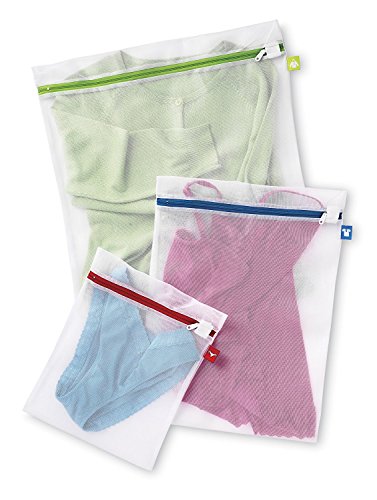
The zipper closure on the Whitmor bag is designed to stay shut, even when the bag is jostled during a deep soak. For knitters who are prone to anxiety about their work unraveling, this provides significant peace of mind.
The mesh is soft to the touch, which is essential if you are working with luxury fibers like cashmere or angora. You want a bag that feels as gentle as the yarn itself, and this fabric minimizes friction against delicate fiber halos.
The main consideration here is size; these bags come in various dimensions. Always measure your project when it is laid flat before purchasing to ensure you have enough room for the garment to move freely without being folded over itself.
Kikkerland Zippered Mesh Bag: Best Travel Size

Traveling with handknits often means washing them in hotel sinks, which are notoriously unpredictable in terms of cleanliness and surface texture. This compact bag is the perfect companion for blocking small items like socks, cowls, or hats on the go.
Its small footprint makes it easy to pack in a project bag without taking up space meant for needles or yarn. Despite its size, the mesh is durable enough to handle the weight of a soaking wet pair of wool socks.
Don’t use this for large sweaters, as the lack of space will cause the garment to compress. However, for a quick "refresh" soak while you’re away from home, it is an indispensable tool in your travel kit.
Why Use a Mesh Bag for Soaking Your Handknits
Using a mesh bag isn’t just about convenience; it is a vital step in protecting the structural integrity of your knit fabric. When wool is wet, the fibers become heavy and the stitches lose their "memory," making them susceptible to stretching out of shape.
A mesh bag acts as a cradle, supporting the weight of the garment so you aren’t pulling on the fabric when you lift it out of the water. It prevents the yarn from getting snagged on drain covers or basin hardware, which can cause unsightly pulls.
Furthermore, a bag keeps your project contained if you are soaking multiple items at once. It ensures that your colorwork doesn’t bleed into other pieces and that your lace doesn’t tangle with a heavier cabled item.
How to Safely Submerge Delicate Wool Garments
The act of submerging a handknit is where most accidents happen. Never drop a heavy, wet garment directly into a basin, as the sudden weight can cause the fibers to snap or the fabric to distort permanently.
Instead, place your clean, dry garment inside the mesh bag first. Gently lower the entire bag into the basin of lukewarm water mixed with your wool wash, allowing the water to penetrate the fabric slowly.
Use your hands to gently press down on the bag, encouraging the water to saturate the fibers. Avoid wringing, twisting, or aggressive agitation, as these motions are the primary causes of felting and structural damage.
Preventing Fiber Felt During the Soaking Process
Felting is the enemy of all knitters, occurring when heat, moisture, and agitation cause the scales on wool fibers to lock together. To prevent this, always keep your water temperature consistent and lukewarm; never use hot water.
Limit the time your project spends in the soak to about 15 to 20 minutes. Extended soaking can cause the fibers to become overly saturated and heavy, which increases the risk of the garment losing its intended shape.
Avoid using harsh detergents or excessive amounts of soap. A specialized wool wash is formulated to clean gently without stripping the natural lanolin from the fiber, which helps keep the wool soft and resistant to future felting.
Essential Tips for Drying Your Handknitted Items
Once the soak is complete, lift the bag out of the basin and gently squeeze the water out by pressing the bag against the side of the sink. Never wring the item, as this puts immense stress on the yarn and can permanently twist your stitches.
Transfer the garment from the bag onto a clean, dry towel. Roll the towel up like a sleeping bag and press down firmly to wick away the excess moisture; this is the most effective way to speed up the drying time.
Finally, lay the garment flat on a blocking mat or a dry surface, shaping it to your desired dimensions. Keep it away from direct heat sources or harsh sunlight, as these can cause the fibers to dry out and become brittle over time.
Investing in a quality mesh bag is a small price to pay for the safety of your finished handknits. By choosing the right bag for your specific project, you ensure that your hard work is preserved and properly blocked for years to come. Remember, the goal is always to treat your wool with the same care you used to knit it. Happy blocking, and may your stitches always dry perfectly in place.