6 Best Knitting Belts For Ergonomic Support Tested
We tested six knitting belts to find the best ergonomic support. Discover which designs reduce strain and improve comfort for long, pain-free knitting sessions.
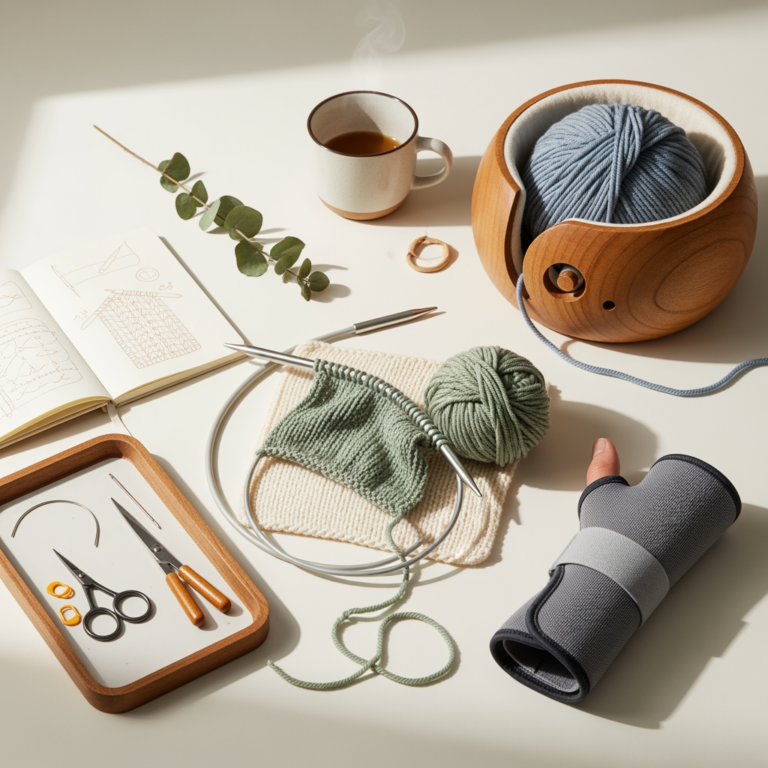
Knitting for hours on end often leads to shoulder strain and wrist fatigue that can cut a productive session short. The traditional knitting belt, or "makkin belt," is a time-honored solution that shifts the workload from your small hand muscles to your torso. By anchoring one needle securely, you unlock a faster, more ergonomic way to work that mimics the efficiency of a knitting machine. This guide explores the best options on the market to help you find the perfect support for your craft.
The Original Shetland Wool Brokers Knitting Belt
This is the quintessential choice for those wanting to experience the authentic Shetland method. It features a thick, firm leather pad packed with long-staple wool, which provides the necessary resistance to hold a needle steady without slipping.


Because it is modeled after historical designs, it is incredibly durable and built for years of heavy use. The wool padding eventually compresses to the exact angle of your preferred knitting style, creating a custom fit over time.
However, be prepared for a break-in period. The leather can feel stiff initially, and you may need to adjust the strap placement to find your "sweet spot" for needle height.
Schoolhouse Press Traditional Leather Belt

Schoolhouse Press is synonymous with high-quality, traditional tools, and their belt is no exception. It is designed with a focus on simplicity and longevity, making it a favorite among those who prioritize function over flair.
The leather is supple yet substantial, ensuring it stays in place without digging into your waist. It accommodates a wide range of needle sizes, from fine lace needles to thicker wooden ones, without losing its grip.
If you are transitioning from standard hand-knitting, this belt offers a very intuitive experience. It helps maintain consistent tension, which is a lifesaver when working on large projects like ganseys or stranded colorwork sweaters.
Hazel Tindall’s Signature Hand-Crafted Belt
Designed by a world-record-holding knitter, this belt is engineered for pure speed and ergonomic efficiency. It is noticeably lighter than traditional industrial models, which prevents that "heavy" feeling during marathon knitting sessions.
The construction focuses on the angle of the needle hole, which is precisely calibrated to reduce wrist flicking. If you struggle with repetitive strain, the geometry of this belt is a significant upgrade.
Because it is handcrafted, the quality is consistent and refined. It is an investment piece, but for the serious knitter, the difference in comfort and speed is immediately apparent.
The Ashford Traditional Style Knitting Belt

Ashford is a staple in the fiber arts world, and their knitting belt reflects their commitment to accessible, functional design. It is a fantastic entry-level option for anyone curious about lever knitting without wanting to commit to a bespoke price tag.
The belt is straightforward and easy to adjust, which is helpful if you share your tools or change your posture frequently. It works exceptionally well with metal needles, providing a secure "bite" that prevents the needle from wobbling while you work.
Keep in mind that the padding is slightly firmer than artisanal options. If you prefer a softer, more cushioned feel, you might consider adding a small piece of felt or wool batting behind the pad.
Custom Hand-Tooled Leather Knitting Belts

For those who view their tools as an extension of their personal style, custom-tooled belts offer the best of both worlds. You can often specify the thickness of the leather, the size of the needle holes, and even the padding density.
These belts are often made by leatherworkers who understand the mechanics of knitting. They can tailor the strap length to your specific waist size, which prevents the belt from sliding down during long sessions.
While these are the most expensive options, the ergonomic benefit of a perfectly fitted tool cannot be overstated. A belt that fits your body correctly is one you will actually use every day.
Posh Yarn Hand-Stitched Support Belts
Posh Yarn brings a touch of luxury to the knitting belt, utilizing high-quality hides and meticulous stitching. These belts are designed to be as beautiful as they are functional, often featuring soft linings that are comfortable against the skin.
The hand-stitching ensures that the needle holes don’t stretch out prematurely, even if you frequently switch between needle sizes. They offer a very stable base, which is crucial when you are working with slippery materials like silk or bamboo yarns.
If you value aesthetics alongside ergonomics, this is a premium choice. It is a tool that feels just as good as it looks, turning your daily knitting practice into a refined experience.
Why Knitting Belts Improve Ergonomic Comfort
The primary benefit of a knitting belt is the elimination of the "death grip" on your needles. By anchoring the right needle in the belt, your right hand is freed to simply "flick" the yarn over the needle tip.
This shift in mechanics significantly reduces the workload on your carpal tunnel and thumb joints. It also encourages better posture, as you are less likely to hunch over your work when the needles are held at a comfortable, elevated position.
- Decreased tension: Your hands spend less time holding the weight of the project.
- Improved speed: Lever knitting is inherently faster than throwing or picking.
- Consistent gauge: Because the needle is fixed, your tension remains stable across rows.
How to Choose the Right Belt for Your Style
Choosing a belt depends heavily on the types of projects you tackle most often. If you exclusively knit socks, you need a belt with a secure, smaller hole that won’t allow a 2.25mm needle to wiggle.
Consider the weight of your typical projects as well. A heavy, cabled wool sweater puts more torque on the belt than a lace shawl, so a wider, more rigid belt is usually better for larger garments.
- Check the padding: Is it wool-filled (firm) or foam-filled (soft)?
- Verify hole size: Ensure it matches your preferred needle diameter.
- Test the strap: A buckle is more secure than velcro, but velcro is easier to adjust on the fly.
Understanding Lever Knitting and Belt Use
Lever knitting is the technique enabled by the knitting belt, where the needle is held stationary and the yarn is moved by the right hand. It is a highly efficient motion that creates a smooth, rhythmic flow.
Many knitters find that their gauge changes when they switch to a belt. Because you are no longer fighting to hold the needle, your tension often relaxes, which might mean you need to drop down a needle size to maintain your original gauge.
Don’t be discouraged if it feels awkward for the first few hours. Like any new muscle memory, it takes time for your hands to learn the new, more efficient path.
Essential Tips for Masterful Belt Knitting
Start by positioning the belt at your hip rather than your waist. This allows your arm to rest naturally at your side, which is the most ergonomic position for long-term comfort.
Experiment with different needle materials. Slick metal needles work beautifully with the firm grip of a wool-stuffed belt, while wooden needles may require a slightly tighter hole to prevent slipping.
Finally, remember to stand up and stretch every 30 minutes. Even with the best ergonomic support, static posture is the enemy of the knitter; keep your body moving to stay pain-free.
Investing in a quality knitting belt is one of the most impactful decisions you can make for your long-term comfort as a fiber artist. By transferring the weight of your project to your torso, you protect your hands and wrists from the cumulative strain of thousands of stitches. Whether you choose a traditional Shetland style or a modern custom piece, the goal is to make your knitting experience sustainable for years to come. Take the time to find the right fit, practice the lever motion, and enjoy the newfound speed and ease in your craft.