6 Best Fiber Wash Basins For Yarn Care To Try
Discover the 6 best fiber wash basins to preserve your yarn’s quality. Learn how these tools ensure gentle, effective cleaning for all your delicate projects.
Hand-washing your finished handknits is the final, most critical step in the creative process, transforming stiff stitches into a cohesive, draped fabric. Using the wrong vessel can lead to snagged fibers or uneven soaking, which compromises the integrity of your hard work. Choosing a dedicated basin ensures your wool, alpaca, or silk receives the gentle care it deserves without the risk of residue from household cleaning products. This guide explores the best basins to protect your investment in every yard of yarn.
Eucalan Collapsible Basin: Best Overall Choice


The Eucalan Collapsible Basin is designed specifically for the fiber artist who values both efficiency and space. Its primary advantage is the ability to fold completely flat, making it an ideal companion for small apartments or craft rooms where storage is at a premium.
When you are soaking a delicate lace shawl, the last thing you want is a basin that feels flimsy under the weight of water. This basin provides a stable, generous capacity that allows your garment to float freely, preventing the fibers from being crushed or distorted during the soak.
The trade-off here is the silicone material, which requires a thorough rinse after each use to prevent any dust or lint buildup. If you are washing multiple projects, ensure you wipe it clean between sessions to maintain a pristine environment for your next piece.
OXO Good Grips Small Basin for Delicate Knits

If your knitting focus is primarily on socks, cowls, or mittens, the OXO Good Grips Small Basin is a perfect fit. Its compact size ensures you aren’t wasting gallons of water or excess wool wash on smaller items.
The standout feature is the non-slip base, which prevents the basin from sliding across your countertop while you are gently massaging the water into your yarn. This stability is crucial when working with delicate fibers like angora or cashmere that can felt if handled too aggressively.
Keep in mind that this basin is not meant for larger sweaters or blankets. Attempting to force a bulky-weight cardigan into this space will lead to uneven saturation and potential stretching of the fabric.
Rubbermaid Commercial Sink Basin for Wool Care

There is a reason you see simple, heavy-duty plastic basins in professional studios and older knitting workshops. The Rubbermaid Commercial Sink Basin is built for longevity and can handle the weight of heavy, water-logged wool sweaters without bowing or cracking.
Its rigid construction is its greatest strength, offering a secure environment for long-term soaking sessions. Unlike collapsible models, there are no hinges or silicone folds where soap residue or fiber debris can hide, making it incredibly easy to sanitize.
While it lacks the "bells and whistles" of modern collapsible gear, its simplicity is its virtue. If you knit heavy, traditional ganseys or wool-heavy blankets, this basin provides the structural integrity you need for a safe soak.
Sterilite 12-Quart Basin for Blocking Projects

The Sterilite 12-Quart Basin is a workhorse for those who enjoy the blocking process as much as the knitting itself. Its rectangular shape is particularly well-suited for blocking smaller flat pieces, as it allows for a more even distribution of water across the fabric.
I often recommend this for knitters who are just starting to experiment with different yarn weights. It is large enough to accommodate a standard sweater, yet it remains lightweight and easy to maneuver to the sink for draining.
Because it is made of hard plastic, be mindful of the edges. While generally smooth, it is always a good practice to ensure your garment is fully submerged so that no delicate yarn ends catch on the rim during the draining process.
Prepworks Collapsible Tub for Compact Storage
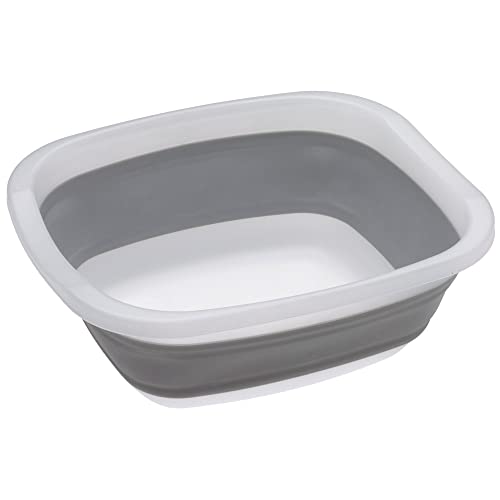
The Prepworks Collapsible Tub is a versatile tool that bridges the gap between kitchen utility and fiber care. Its deep walls are excellent for ensuring that even high-loft yarns, like bulky roving-style wools, are completely submerged during the cleaning process.
The locking mechanism on the folding walls is robust, which is a major plus for those who worry about a basin collapsing mid-soak. It provides the security of a rigid basin with the storage benefits of a collapsible one.
However, because the bottom is made of a different material than the sides, it can feel slightly less rigid than a solid plastic basin. If you are soaking a heavy, water-heavy item, place it on a flat, stable surface rather than trying to carry it while full.
Joseph Joseph Wash&Drain Basin for Knitwear
The Joseph Joseph Wash&Drain is a clever piece of design that features a built-in plug and a strainer. This is a game-changer for knitters who struggle with the physical act of lifting a heavy, wet basin to drain it into the sink.
The strainer prevents small fiber bits or stray yarn ends from clogging your pipes, which is a common issue when washing loosely plied or shedding yarns. It keeps your workspace clean and makes the transition from soaking to blocking much smoother.
The only downside is the complexity of the drain mechanism, which requires a quick check to ensure it is sealed properly before filling. It is a fantastic choice for those who value convenience and want to minimize the heavy lifting involved in hand-washing.
Why Proper Soaking Basins Protect Your Fiber
Using a dedicated basin is not just about convenience; it is about protecting the structural integrity of your yarn. Household sinks are often exposed to harsh chemicals, abrasive cleaners, or food residue that can permanently damage delicate animal fibers.
When you use a clean, dedicated basin, you ensure that your yarn is soaking in a neutral, safe environment. This is especially important for natural fibers like wool, which have scales that can open and trap unwanted scents or residues if the water quality is not pristine.
- Avoids Cross-Contamination: Keeps your yarn away from kitchen grease or bathroom chemicals.
- Controls Saturation: Allows for precise measurement of water and wool wash.
- Prevents Stretching: Provides a safe, supported surface for wet garments.
Essential Tools for Hand Washing Handknits
Beyond a good basin, your hand-washing kit should include a few other staples to ensure a successful outcome. A gentle, no-rinse wool wash is the most important addition, as it eliminates the need for excessive agitation.
You should also keep a supply of clean, lint-free towels nearby for the "taco method" of drying. Having a dedicated space for your basin and your drying rack will make you much more likely to block your projects consistently.
- No-Rinse Wool Wash: Saves time and reduces handling.
- Large Towels: Essential for removing excess moisture before blocking.
- Blocking Mats/Pins: To shape your garment once the soak is complete.
How to Safely Soak Your Finished Garments
The golden rule of soaking is to never, ever agitate the garment. Fill your basin with lukewarm water and your chosen wool wash first, then gently submerge your piece, pressing it down until it is fully saturated.
Let the garment soak for at least 15 to 20 minutes, allowing the fibers to relax and the wash to penetrate the yarn. If you are washing a sweater with colorwork, ensure the water remains clear; if the dye bleeds, keep the item submerged and do not move it until the water is drained.
Never twist or wring your knitting, as this can snap the fibers and distort the stitch definition. Instead, lift the garment carefully, supporting its weight, and prepare to transfer it to your drying station.
Best Practices for Drying Your Woolen Items
Once your garment is soaked, the drying phase is where the final shape is determined. Lay your item flat on a clean, dry towel and roll it up like a sleeping bag, pressing down firmly to extract the excess water.
Transfer the garment to a blocking mat or a flat drying rack, pinning it to the required measurements. Avoid direct sunlight or high heat, as these can cause natural fibers to become brittle or fade over time.
- Support the Weight: Never hang a wet sweater, as gravity will stretch the shoulders and body.
- Airflow is Key: Ensure there is circulation underneath the garment to prevent mildew.
- Patience: Let the item dry completely before removing pins to ensure the shape holds.
Investing in the right basin is a small step that pays dividends in the longevity and appearance of your finished handknits. By moving away from kitchen sinks and toward dedicated, gentle tools, you ensure your work stays beautiful for years to come. Remember that every fiber type has unique needs, and taking the time to soak properly is the true mark of a master knitter. Happy washing, and may your stitches always drape perfectly.