7 Best Blocking Weights For Keeping Edges Flat
Master the art of finishing with our guide to the 7 best blocking weights. Learn how to keep your knitted edges perfectly flat with these essential tools.
Achieving a professional finish on your hand-knits often comes down to the final, crucial step of blocking. While many focus on the wash, the physical act of pinning edges into submission is what transforms a "homemade" garment into a boutique-quality piece. Selecting the right blocking tools is the difference between a frustrating afternoon of curling edges and a seamless, crisp result. Here is how to choose the right hardware to ensure your hard work stays perfectly flat.
KnitIQ Stainless Steel Blocking T-Pins: Best Overall


When you need reliability, stainless steel is the gold standard. These pins resist the moisture inherent in the blocking process, ensuring you won’t find unsightly rust stains on your delicate light-colored wools.
The T-bar head is a game-changer for ergonomics. It provides a solid surface to push against, which is essential when you are pinning through multiple layers of a heavy sweater or a dense, felted edge.
Because they are consistent in gauge and strength, they are my go-to recommendation for almost any project. They offer the perfect balance of rigidity and ease of use, making them a staple for any serious knitter’s kit.
Cocoknits Maker’s Keep Magnetic Wristband Weights
These are not traditional pins, but they are a brilliant solution for keeping your workspace organized. If you’ve ever fumbled for a pin while holding a wet, heavy shawl in place, you know how quickly things can go sideways.
The magnetic wristband keeps your pins within reach at all times. It effectively turns your own arm into a mobile pincushion, saving you from the constant back-and-forth to a table or project bag.
While they don’t hold the fabric down themselves, they facilitate the speed and efficiency required to pin an edge before the yarn dries. They are a luxury, but for those who struggle with dexterity or just want a smoother workflow, they are indispensable.
Knitter’s Pride Rainbow Knit Blockers: Best Set

If you find individual T-pins tedious to place, these plastic-encased blockers are the solution. They feature multiple pins in a single comb, allowing you to secure several inches of fabric with one motion.
These are particularly effective for long, straight edges like scarves or the hem of a cardigan. They create a beautifully uniform tension that is difficult to achieve when placing individual pins by hand.
The vibrant colors aren’t just for show; they help you keep track of your progress. Just be mindful that the pins are thicker than standard steel, so they are best suited for medium-weight yarns rather than fine, delicate lace.
Clover Patchwork Pins: Ideal for Delicate Lace
When working with fine lace or silk blends, standard T-pins can sometimes leave visible holes in the fabric. These patchwork pins are thinner and sharper, designed to glide through intricate stitch patterns without distorting the yarn.
The fine gauge of these pins makes them perfect for lace shawls where every stitch needs to be positioned with surgical precision. They are gentle on the fiber, minimizing the risk of snagging or breaking delicate filaments.
Because they are shorter, they are less likely to get caught on your clothing or the surrounding environment while the piece is drying. They are a must-have for the lace knitter who demands a clean, undisturbed finish.
Susan Bates Rust-Resistant Blocking T-Pins
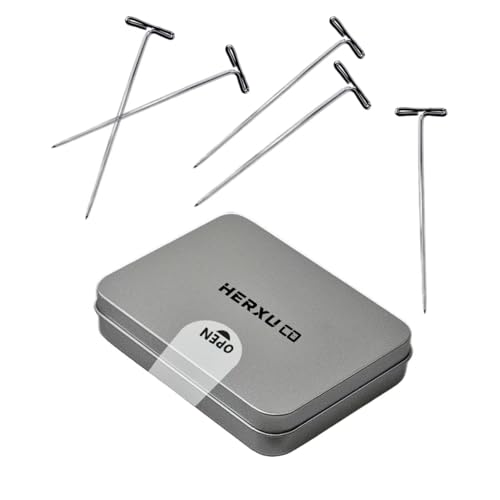
Susan Bates has been a household name for a reason: they understand the practical needs of the everyday knitter. These pins are specifically treated to resist rust, which is the number one enemy of a long-duration blocking session.
I find these to be incredibly robust. They don’t bend easily, even when you are stretching a stubborn, high-twist wool that wants to snap back to its original shape.
They are a no-nonsense tool. If you are looking for a reliable, affordable set that will last for years without corroding, this is the smart, pragmatic choice.
Boye Steel T-Pins for Heavyweight Wool Projects
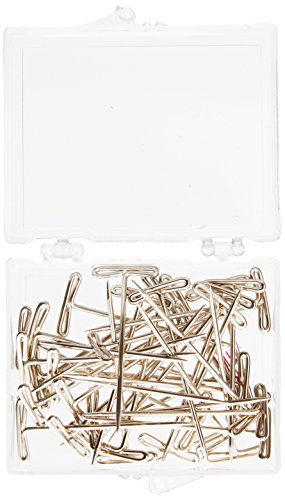
Sometimes you aren’t blocking a delicate shawl; you are blocking a heavy, cabled fisherman’s sweater. For these projects, you need a pin that won’t buckle under the tension of the weight.
Boye steel pins are heavy-duty and stiff. They are designed to withstand the pressure of pinning thick, dense fabrics into place without bending or losing their shape.
If you are working with bulky yarns or projects that require a significant amount of "pull" to open up the stitch definition, these are your best friends. They provide the structural integrity required for serious blocking.
Dritz Extra-Long Quilting Pins for Edge Control

Sometimes the standard pin length just isn’t enough to capture a curling edge. These extra-long quilting pins offer the reach you need to secure multiple layers of fabric or dense ribbing.
The added length allows you to anchor the pin deeper into your blocking mat, providing a more secure hold. This is particularly useful for edges that have a natural tendency to roll, such as stockinette hems.
While they require a bit more care to avoid bending, their reach is unmatched. They give you the leverage to force stubborn edges to lie flat, ensuring your final garment looks as structured as a store-bought piece.
Why Blocking Weights Are Vital for Flat Edges
Blocking is the process of using moisture and heat to set the shape of your stitches. Without the right pins or weights, your fabric will naturally try to return to the state it was in while on the needles.
Weights and pins act as the mechanical force that overrides the yarn’s "memory." By pinning an edge, you are essentially telling the fibers where to sit while they dry, which is critical for achieving a professional, finished look.
Think of it as the final step of construction. A well-blocked edge makes sewing pieces together significantly easier and ensures that your finished garment hangs correctly on the body.
How to Choose the Right Pins for Your Fiber Type
The fiber content of your yarn should dictate the type of pin you reach for. Here is a quick guide to help you decide:
- Delicate/Lace Weight: Choose thin, sharp pins like Clover Patchwork pins to prevent yarn distortion.
- Heavy Wool/Bulky: Opt for thick, steel T-pins like the Boye or KnitIQ sets to handle the tension.
- Light-Colored/Natural Fibers: Always prioritize rust-resistant stainless steel to avoid permanent staining.
- Stubborn/High-Twist Fibers: Use extra-long pins to anchor the fabric deeply into your blocking board.
Always consider the density of the knit as well. If you have a tight gauge, you will need a stronger pin that can penetrate the fabric without bending.
Pro Tips for Achieving Crisp Edges Every Time
To get the crispest edges, don’t rush the drying process. Let your project dry completely while pinned; if you remove the pins while the fibers are still damp, the edge will likely curl back up.
Space your pins evenly. Instead of pinning every inch, start by pinning the corners, then the center, and work your way out in halves. This distributes tension evenly and prevents the fabric from becoming "wavy."
If you are blocking a garment with a ribbing, be careful not to overstretch it. Ribbing is meant to have elasticity, and pinning it too wide will leave you with a stretched-out, limp hem that won’t hold its shape when worn.
Mastering the art of blocking is a journey that elevates your knitting from a simple hobby to a refined craft. By matching the right pins to your specific project needs—whether it’s delicate lace or heavy wool—you ensure that your hard work is presented in its best possible light. Don’t be afraid to experiment with different tools to find what works best for your personal tension and style. Happy knitting, and enjoy the satisfaction of those perfectly flat, professional edges.