
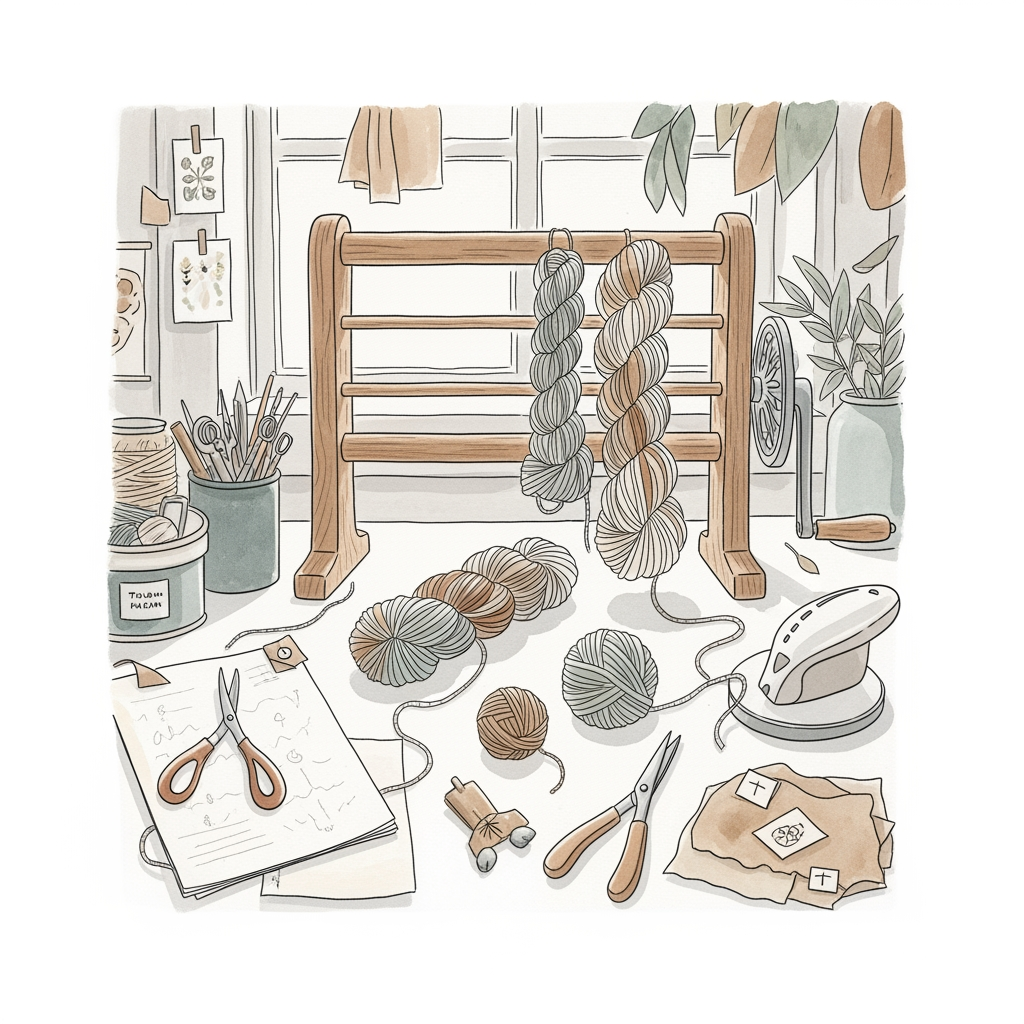
6 Best Drying Racks For Wet Skein Ventilation
Proper airflow is vital for yarn care. We review the six best drying racks to ensure your wet skeins dry evenly, prevent mildew, and maintain fiber integrity.
Drying hand-dyed or freshly washed skeins is a critical step that many knitters overlook until they find a musty surprise. Proper ventilation prevents fiber degradation and ensures your yarn remains as vibrant and bouncy as the day it was dyed. Choosing the right rack transforms a tedious chore into a seamless part of your fiber care routine. These six recommendations are curated to protect your precious stash from the hazards of moisture and mildew.
Ecopure Foldable Bamboo Drying Rack: Best Overall


The Ecopure Bamboo rack hits the sweet spot between aesthetic appeal and functional performance. Its natural, smooth finish is gentle on delicate wools, preventing the snags that can occur on rougher, unfinished metal surfaces.
Bamboo is naturally resistant to moisture, which is a massive plus when you are hanging dripping wet superwash wool. Because the material is lightweight, you can easily move it to a sunny, well-ventilated spot in your home without straining your back.
The primary trade-off is that bamboo can be slightly less rigid than heavy-duty steel. If you are drying large quantities of heavy, water-logged wool, ensure you distribute the weight evenly across the rungs to prevent bowing.
Honey-Can-Do Heavy Duty Metal Rack: Best Stability

If you are a prolific dyer or a knitter who washes entire sweater quantities at once, you need a rack that won’t tip over. The Honey-Can-Do metal rack features a reinforced frame that handles the weight of heavy, soaked fiber with ease.
Stability is non-negotiable when you have several pounds of wet yarn hanging in a balanced, precarious state. This rack stays put, even if you accidentally bump into it while navigating your craft room with a basket of needles and notions.
However, be mindful of the finish on metal racks. Ensure the coating is smooth and free of burrs, as even a microscopic snag can ruin a hand-dyed skein of fine lace-weight yarn.
Songmics Three-Tier Folding Rack: Best Capacity

Vertical space is often the most underutilized asset in a knitter’s home. The Songmics three-tier rack allows you to maximize your drying footprint by stacking your skeins, which is perfect for small-batch dyers.
By utilizing vertical tiers, you create a chimney effect that encourages air to circulate through all levels. This is vital when you are drying high-twist yarns, which tend to hold onto moisture in their core for much longer than single-ply fibers.
Keep in mind that the bottom tiers will dry slower than the top ones due to gravity and airflow patterns. Rotate your skeins periodically to ensure even drying throughout the entire batch.
Brightmaison Wall-Mounted Rack: Best for Small Rooms
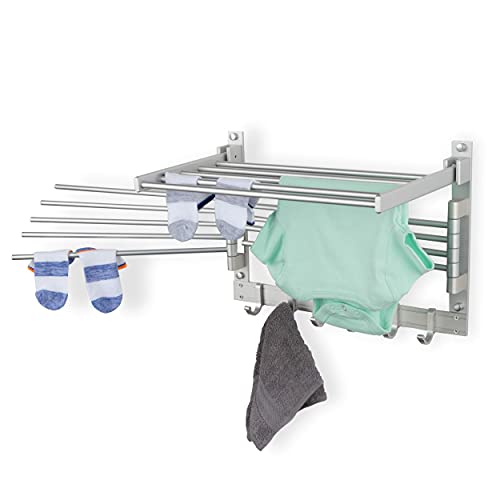
For those of us living in apartments or working out of a dedicated "closet" studio, floor space is gold. A wall-mounted rack like the Brightmaison keeps your yarn elevated and out of the way of foot traffic.
This setup is excellent for creating a permanent drying station that doesn’t need to be broken down after every use. It keeps your wet skeins away from curious pets or small children who might be tempted to pull on dangling yarn.
The limitation here is the fixed capacity. Because you cannot move it to follow the sun or a draft, you must ensure it is installed in a room with excellent natural ventilation or a nearby dehumidifier.
Household Essentials Cedar Rack: Best Fiber Care

Cedar is a legendary material in the fiber arts world for its natural ability to repel moths and provide a pleasant, woody scent. Using a cedar rack is a proactive, low-tech way to keep your yarn stash healthy while it dries.
The aromatic oils in the wood provide a subtle defense, though you should never rely on them as a total replacement for proper storage. The wood is also incredibly absorbent, helping to draw excess moisture away from the yarn more effectively than plastic or metal.
Because cedar is porous, keep it clean and dry when not in use. If the scent fades over time, a light sanding can often refresh the wood and bring those protective properties back to the surface.
Brabantia T-Model Drying Rack: Best Durability

The Brabantia T-Model is built to withstand years of heavy use without the hinges getting loose or the frame warping. If you treat your drying rack as a long-term investment, this is the one to choose.
Its unique T-shaped design provides excellent balance and makes it very easy to drape skeins over the ends. This shape prevents the yarn from bunching up, which is a common cause of uneven drying and potential mildew growth.
While it is more expensive than generic options, the durability means you won’t be replacing it every two years. It is a workhorse designed for the serious knitter who views fiber care as a lifelong commitment.
Why Proper Airflow Matters for Wet Wool Skeins
Wool is a protein fiber that thrives on oxygen, yet it can be a breeding ground for bacteria if left in a damp, stagnant environment. When you wash a skein, you are saturating the core; if that core doesn’t dry within 24 hours, you risk permanent fiber damage.
Proper airflow ensures that moisture evaporates evenly from the inside out. Without it, the outer layers of the yarn may feel dry to the touch while the center remains damp, creating the perfect conditions for a "wet dog" smell or worse.
- Avoid: Placing racks in dark, windowless bathrooms or laundry closets.
- Encourage: Air movement using a small floor fan placed several feet away from the rack.
How to Prevent Mildew in Your Hand-Dyed Yarns
Mildew is the enemy of every hand-dyer, and it often starts during the drying process. Once mildew spores take hold in the fibers, they are incredibly difficult to remove without damaging the yarn’s structural integrity.
The key is to speed up the initial drying phase. Use a salad spinner or a gentle spin cycle in your washing machine to remove as much excess water as possible before hanging the skeins.
- The Squeeze Test: If you can wring more water out of the skein, it is still too wet to hang.
- Environment: Always prioritize low humidity levels over high heat.
Essential Tips for Drying Hand-Dyed Fiber Safely
When drying hand-dyed yarn, you must be wary of color bleeding and uneven fading. Even colorfast dyes can migrate if a skein stays wet for too long in a clumped position.
Always shake out your skeins after spinning or wringing to ensure the strands are separated. This simple step increases the surface area exposed to air, significantly reducing drying time and preventing "color pooling" at the bottom of the loop.
- Avoid Direct Sunlight: Prolonged exposure can fade natural and synthetic dyes.
- Use Clips: Use plastic clothespins to keep skeins from sliding into a heap on the rack.
Proper Skein Weight Distribution for Drying Racks
Weight distribution is the difference between a rack that lasts a decade and one that collapses under the weight of a sweater’s worth of yarn. Always place your heaviest, wettest skeins closer to the support legs or the center of the rack.
If you are drying a large number of skeins, distribute them evenly across all rungs. Loading one side of a folding rack will cause it to tilt, potentially causing your yarn to slide off and pick up dust or debris from the floor.
- Balance: If you hang a heavy skein on the left, hang a similar one on the right.
- Check: Periodically walk around the rack to ensure no skeins have slipped into a pile.
Investing in a quality drying rack is a small step that yields massive rewards for the longevity of your hand-dyed stash. By prioritizing airflow, stability, and proper weight distribution, you ensure your yarn remains in pristine condition for years to come. Treat your fiber with care during the drying phase, and your finished garments will reflect that attention to detail. Happy knitting, and may your yarn always dry perfectly.
