7 Best Yarn Winders For Bulk Skein Prep For Speed
Streamline your fiber prep with our top 7 yarn winders. Discover durable, high-speed tools designed to turn bulky skeins into neat, tangle-free cakes quickly.
Transitioning from tangled hanks to organized center-pull cakes is a rite of passage for every dedicated knitter. When you are staring down a stash of five or ten skeins for a sweater project, speed and mechanical reliability become your best friends. The right yarn winder doesn’t just save time; it protects the integrity of your fiber by preventing unnecessary stretching or friction. Here are the top tools to streamline your prep process and get you to the actual knitting faster.
Stanwood Needlecraft Large Metal Yarn Winder


This winder is the gold standard for those who treat their yarn stash like a serious investment. Its heavy-duty metal construction provides the stability needed to wind large, 10-ounce skeins without the winder "walking" across your table.
The gear system is remarkably smooth, which is critical when working with delicate fibers like silk or high-twist merino. Because the gears are metal, you don’t have to worry about the stripped teeth that often plague cheaper plastic models after a few months of heavy use.
If you are a frequent sweater knitter who buys bulk hanks, the Stanwood’s capacity is its greatest asset. It handles heavy worsted and bulky weights with ease, ensuring your cakes don’t collapse mid-wind.
KnitPicks Ball Winder: Best Budget Choice
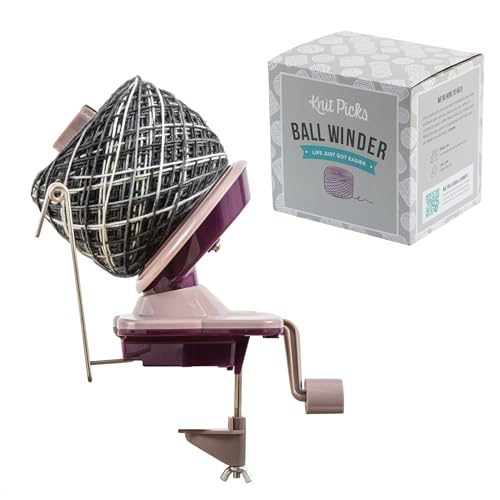
If you are just beginning your journey into dyeing or buying hanks, the KnitPicks winder is the classic entry point. It is lightweight, portable, and gets the job done for standard 100-gram skeins of fingering or sport weight yarn.
While it is made of plastic, it is surprisingly resilient for the price point. It works best when clamped securely to a stable, thin-edged table, though you may find it struggles slightly with very heavy, sticky wools like unwashed Highland sheep breeds.
It is an honest tool that doesn’t pretend to be a professional-grade machine. For the casual hobbyist or the knitter on a budget, it provides the perfect balance of affordability and utility.
Lacis Jumbo Yarn Winder for Bulk Projects
When you are prepping yarn for a massive project, such as a king-sized afghan or a long-term stash-busting endeavor, the Lacis Jumbo is a powerhouse. It is designed specifically to handle those massive, oversized hanks that would choke a standard-sized winder.
The wider base and larger bobbin mean you can wind significantly more yardage in a single go. This reduces the number of times you have to stop, cut the yarn, and restart, which is a major advantage for maintaining consistent tension.
Be aware that because of its size, it requires a bit more "driving" skill. Keep a steady hand on your yarn guide to ensure the cake doesn’t become too wide and rub against the base.
Nancy’s Knit Knacks Heavy Duty Yarn Winder
Nancy’s Knit Knacks has built a reputation on high-quality, durable tools that prioritize the health of your yarn. Their heavy-duty winder is essentially a tank, built for the knitter who wants to buy a tool once and never replace it.
The mechanics are incredibly precise, which is essential if you are winding expensive hand-dyed yarns that are prone to tangling. It is quieter than many metal competitors, making it a better choice if you like to wind while listening to podcasts or watching TV.
It is an investment piece, certainly, but it is one that pays for itself in frustration-free prep. It is the ideal choice for someone who values longevity over the lowest possible price.
U-nitt Large Metal Yarn Winder for Skeins
The U-nitt winder sits in a sweet spot between the professional-grade machines and the entry-level plastic models. Its metal construction gives it a satisfying weight, and it handles the tension of winding quite well.
It is particularly effective for those who work with a variety of fiber types, from slippery acrylic blends to grippy, rustic wools. The tension dial is responsive, allowing you to tighten or loosen the wind based on the yarn’s "memory" or bounce.
The biggest takeaway here is consistency. If you appreciate a uniform cake shape for storage or display, this winder produces a very tidy, symmetrical result every time.
ChiaoGoo Hand-Operated Yarn Winder Review
ChiaoGoo is a brand synonymous with quality needles, and their winder carries that same attention to detail. This is a compact, efficient tool that is perfect for knitters who have limited space in their craft room.
It operates with a very smooth, rhythmic motion that is easy on the wrists. For those who suffer from repetitive strain or arthritis, the low-torque requirement of this winder is a significant ergonomic benefit.
It is not designed for massive, multi-skein projects, but it is a dream for winding small batches of leftovers or single skeins. It is a reliable, "set it and forget it" tool for the everyday knitter.
Strauch Jumbo Ball Winder: The Pro Standard
This is the "Ferrari" of yarn winders. If you are a prolific knitter who goes through dozens of skeins a month, or if you are a small-scale dyer, the Strauch is the only choice that makes sense for high-volume work.
It is built to handle massive amounts of yarn without skipping a beat or straining the gears. The speed at which you can process a full pound of fiber is unmatched, and the cakes it produces are professional-grade.
Yes, it is expensive, and yes, it is large. But for the serious fiber artist, the time saved is worth every penny.
How to Choose the Right Winder for Bulk Skeins
Choosing a winder is all about matching the tool to your typical project size. If you mostly knit socks, a small plastic winder is perfectly adequate. If you are a sweater-knitter, you need the capacity of a large metal model.
Consider your workspace as well. A heavy metal winder needs a sturdy, thick table to clamp onto, while lighter plastic models can handle thinner surfaces.
- Capacity: How many grams of yarn do you usually wind at once?
- Material: Are you looking for a lifetime tool (metal) or a starter tool (plastic)?
- Space: Do you need something that stores away easily, or will it live on your desk?
Always prioritize a winder that offers a smooth rotation. A jerky winder will cause your yarn to stretch, which can ruin the gauge of your finished garment.
Metal vs Plastic Gears: Durability Explained
The internal gears are the heart of your winder. Plastic gears are prone to wear and tear, especially if you wind quickly or use heavy, sticky fibers that create resistance. Over time, plastic teeth can "strip," leading to slipping or a winder that simply stops turning.
Metal gears, by contrast, are designed to withstand years of friction and force. They provide a smoother, more consistent wind, which is vital for maintaining the original twist of the yarn.
While metal is pricier, it is a one-time purchase for most knitters. If you plan on winding hundreds of yards annually, the durability of metal is almost always the better long-term investment.
Essential Tips for Perfect Center Pull Cakes
The secret to a perfect cake is all in the tension. If you wind too tightly, you will stretch the yarn, which can lead to "growing" garments after you wash them. If you wind too loosely, the cake will collapse in your knitting bag.
Always use a swift to hold your hank while winding. Trying to wind from a loose pile on the floor is the fastest way to create a tangled, knotted mess that will take hours to fix.
- Go slow: Speed is tempting, but a steady pace prevents internal tangles.
- Check your guide: Keep the yarn moving through the guide at a consistent angle.
- Don’t overfill: Stop before the cake gets so large it touches the frame of the winder.
By keeping your tension light and your yarn organized, you ensure that your knitting experience remains enjoyable from the first stitch to the last.
Investing in a quality yarn winder is one of the smartest upgrades you can make for your knitting practice. By selecting a tool that matches your volume and fiber preferences, you eliminate the biggest hurdle to starting a new project. Remember that the goal of these tools is to simplify your craft, so choose the one that makes your time at the needles feel effortless. Happy winding, and may your yarn always pull from the center without a single snag.