6 Best Ball Winders For Managing Delicate Hanks
Tired of tangled yarn? Discover the 6 best ball winders for delicate hanks, ensuring smooth, snag-free winding to keep your precious fibers in perfect shape.
Transitioning a tangled, hand-dyed hank into a neat, center-pull cake is one of the most satisfying rituals in a knitter’s life. However, delicate fibers like lace-weight mohair or hand-spun singles require a gentle touch to avoid stretching or snapping. Choosing the right tool ensures your yarn remains in pristine condition before it ever touches your needles. Here are the top six winders designed to keep your precious fibers safe and organized.
Stanwood Needlecraft Large Metal Ball Winder


This is the gold standard for knitters who regularly work with large, 100-gram hanks of luxury wool. Its heavy-duty metal gears provide a level of stability that plastic models simply cannot replicate, ensuring that your winding speed remains consistent.
The primary benefit here is the high-capacity spool, which handles bulky yarns without the cake collapsing mid-wind. If you’ve ever had a massive cake of merino-silk blend slide off the winder and turn into a "yarn barf" disaster, you’ll appreciate the structural integrity this machine offers.
Because it is built to last, it is an investment piece for your studio. Just be aware that the sheer weight and size mean it is best suited for a permanent spot on your craft table rather than being packed away after every project.
KnitPicks Yarn Ball Winder: Best Budget Choice
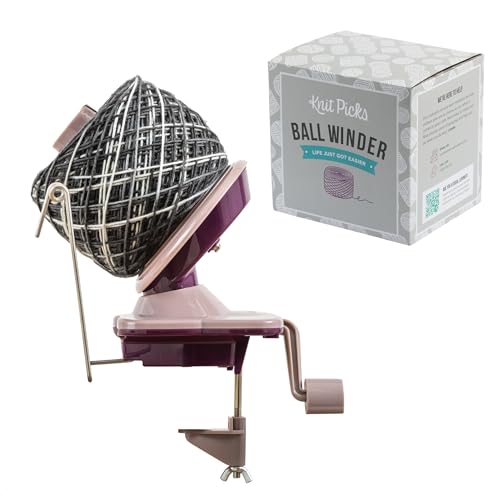
If you are a casual knitter or just starting to build your stash, this winder is an excellent entry point. It is lightweight, portable, and gets the job done without requiring a significant financial commitment.
While it is made primarily of plastic, it is surprisingly durable for standard-weight yarns. It excels at winding up those impulse-buy skeins that you want to start knitting with immediately.
Keep in mind that it can be a bit noisy compared to high-end metal models. For the price, it is a workhorse, but I suggest keeping your winding speed moderate to prevent the gears from wearing down prematurely.
Lacis Yarn Ball Winder: Best for Small Skeins
Sometimes you only need to wind a small amount of leftover yarn for colorwork or a delicate lace edging. The Lacis winder is compact and designed specifically for smaller, lighter loads.
It is incredibly gentle on fine threads, making it a favorite for those working with silk or gossamer-thin laceweight. Because the footprint is small, it fits easily into a project bag or a crowded workspace.
Do not try to force a massive, 200-gram skein onto this winder, as it isn’t designed for that volume. Use it for what it does best: precision winding for your smaller, more delicate fiber treasures.
Nancy’s Knit Knacks Heavy Duty Ball Winder

When you deal with expensive, hand-dyed yarns, you need a machine that minimizes tension and friction. This model is engineered with a focus on smoothness, which is critical for preventing the "stretching" that can ruin the loft of high-quality wool.
It features a robust design that feels solid under your hand. Many serious knitters prefer this brand because it offers a consistent tension arm, which is essential for ensuring your yarn isn’t wound too tightly.
Remember that tight winding can permanently alter the elasticity of your yarn, leading to gauge issues later. This winder helps mitigate that risk, keeping your fiber as bouncy as it was in the hank.
ChiaoGoo Hand-Operated Yarn Ball Winder

ChiaoGoo is a brand synonymous with quality knitting needles, and their winder follows that same philosophy of user-centered design. It is intuitive to set up and operates with a fluid, rhythmic motion.
This winder is particularly good for those who want a tactile experience. By hand-winding, you can feel if the yarn is catching or if the tension is becoming too high, allowing you to stop and adjust instantly.
It is a fantastic middle-ground option for the knitter who wants reliability without the complexity of an electric motor. It’s sturdy enough for daily use but simple enough to maintain for years.
U-nitt Large Capacity Yarn Ball Winder

If your stash consists mostly of jumbo skeins and super-bulky yarns, the U-nitt is your best friend. Its wide base and tall spindle are designed to accommodate large volumes of fiber without the cake becoming unstable.
The build quality is substantial, providing a smooth rotation that prevents the jerky movements that often lead to knots. It is a reliable tool for those who knit large-format projects like heavy blankets or oversized sweaters.
As with any large-capacity winder, ensure your table is sturdy. The rotational force of a large, heavy cake can sometimes cause lighter tables to vibrate, so a solid surface is key to a smooth experience.
Key Features to Consider Before You Buy
- Gear Material: Metal gears generally offer longer life and smoother operation than plastic.
- Capacity: Ensure the spindle size matches the typical weight of the hanks you purchase.
- Tension Control: A built-in tension arm is vital for keeping delicate fibers from being wound too tightly.
- Table Clamp: A secure, rubber-padded clamp is necessary to protect your furniture while keeping the winder stationary.
Manual vs Electric: Choosing Your Mechanism
Manual winders allow for total control over the speed and tension, which is safer for extremely fragile fibers like angora or alpaca. You can feel the yarn’s resistance, which is an invaluable safeguard against snapping.
Electric winders are a godsend if you have a large stash to process or if you suffer from wrist fatigue. However, they can be unforgiving; if a tangle occurs, an electric motor won’t stop as quickly as your hand will.
If you choose an electric model, always keep your hand on the yarn guide to act as a manual override. Combining the speed of electricity with the sensitivity of your human touch is the best way to protect your yarn.
How to Properly Wind Delicate Hand-Dyed Yarn
Always use a swift to hold your hank before winding; never try to wind directly from a pile or chair. A swift allows the yarn to rotate freely, preventing the sudden "snags" that cause knots and broken fibers.
As you wind, keep the yarn moving at a steady, moderate pace. Avoid the temptation to race through the process, as high-speed winding creates heat and friction that can damage delicate fibers.
Finally, once the cake is finished, let it "rest" for a few hours before you start knitting. This allows the fibers to relax back into their natural state after the tension of the winding process.
Maintenance Tips for Smooth Winding Action
Keep your winder clean by wiping it down after each use to remove fiber dust and bits of spinning oil. A buildup of debris in the gears is the number one cause of "clunky" or noisy operation.
If your winder starts to squeak, a tiny drop of sewing machine oil on the main gear is usually all it takes to restore silence. Never use heavy household grease, as it will attract more dust and eventually gum up the mechanism.
Store your winder in a dust-free environment when not in use. A simple fabric cover or a dedicated box will keep the internal components pristine for your next winding session.
Finding the right ball winder is about balancing your specific project needs with the safety of your fiber. Whether you opt for a heavy-duty metal model or a simple, portable plastic one, the goal remains the same: a perfect center-pull cake that makes your knitting experience effortless. Take your time, monitor your tension, and enjoy the meditative process of preparing your yarn for its next transformation. Happy knitting, and may your yarn always flow smoothly from the cake to your needles.